

by Daniel Hathaway
 TRANSITIONS:
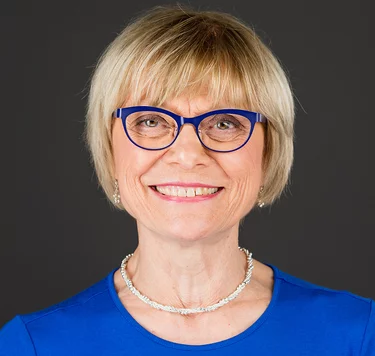
Marsha Dobrzynski, who has led the Center for Arts-Inspired Learning as its President and CEO for 27 years, will retire this summer. An endowed fund is being created in her honor that will ensure the continuation of CAL’s youth programming, including ArtWorks. Contributions can be made here. Read more about Dobrzynski’s career and accomplishments here.
ONLINE TODAY:
The only concert on the horizon is this evening’s online performance by L’Orchestre Symphonique de Montréal that features violinist James Ehnes as both conductor and soloist in J. S. Bach’s Violin Concerto in d. Andrew Wan does similar double duty in Shostakovich’s Chamber Symphony in c, (arr. R. Barshai), and Vaughan Williams’s Fantasia on a Theme by Thomas Tallis. See our Concert Listings for details.
A reminder about an opportunity we mentioned last week: Oberlin College and Conservatory will host the Crafting Change Symposium, a fully virtual series of presentations, concerts, panel discussions, and workshops, through which teachers — from kindergarten through college level — and artist-makers from a wide array of disciplines share their creative approaches to exploring science, humanities, art, and more, with an emphasis on inclusion. Crafting Change is free and runs from Tuesday, May 25 through Saturday, June 19. View a schedule of events here.
TODAY’S ALMANAC:
Anniversaries to observe on May 25 include a dazzling soprano, a cherished British composer, and two storied concert halls. Plus a memorable event that took place in yet another famous performing venue.
The soprano is Beverly Sills, born Belle Miriam Silverman on this date in Brooklyn in 1929, and known to her close friends as “Bubbles.” In addition to her brilliant career as a coloratura soprano who specialized in Donizetti and Mozart, she waded into the troubled waters of New York’s City Opera to serve as general manager of the company from 1979-1989, then crossed the Lincoln Center patio to become chairwoman of the arts complex from 1994-2002. Her final role at Lincoln Center was chairwoman of the Metropolitan Opera from 2002-2005.
Sills moved to Cleveland from 1956-1960, having married Plain Dealer journalist Peter Greenough. Their two children born there suffered from severe birth defects which led Sills to take on charity work for the prevention and treatment of such conditions.
Watch “a unique portrait-interview with rare recordings” here, and a profile of the soprano, “Worth Quoting.” here.
My most vivid recollection of Sills happened at Tanglewood, when she sang the show-stopping aria “Martern aller Arten” from Mozart’s Abduction from the Seraglio. It’s an amazing piece for several reasons, including the woodwind concertante that lasts several minutes until the soprano enters. She’s been left stranded alone onstage with nothing to do, a situation that’s perplexed many stage directors, but I recall that Sills’ magnetic personality transfixed the audience even when she wasn’t singing. She sings the aria here with Aldo Ceccato and the London Philharmonic.
Finally, Beverly Sills and Carol Burnett put their riveting stage personae together on a number of occasions. Here’s one that marked Sills’ last night at the New York City Opera on October 27, 1980. The playlist can be found in the comments.
The composer is Gustav Holst, the quiet, self-effacing trombonist who spent most of his career teaching music at St. Paul’s Girls School in London, where he wrote his most famous work, The Planets, in free periods between classes. His daughter Imogen, herself a composer, recalls her father here. He died on this day in 1934 in London.
Holst and Vaughan Williams were great and lifelong friends who spent afternoons together critiquing each other’s compositions. RVW’s interest in English folksong rubbed off on Holst, as we can hear in the latter’s carol-like This have I done for my true love, sung here by the choir of Christ Church Cathedral, Oxford, led by Stephen Darlington.
But Holst’s ability to write great, noble melodies are what have principally endeared him to the British public. Like the theme of “Jupiter” from The Planets, played here by Jonathan Scott on the organ of Huddersfield Town Hall. Made into the hymn tune Thaxed, named after the village where Holst lived, and set to the words “My Soul, there is a Country” by Sir Cecil Spring Rice, the tune has moved many a non-Brit to tears in Remembrance Day ceremonies like this one in 2013 at the Royal Albert Hall.
The concert halls include the Vienna State Opera, which opened on this date in 1869 after eight and a half years of construction with a German version of Don Giovanni. Alas, its architects, August von Siccardsburg and Eduare van der Nüil, were not in attendance, having fallen on their swords after Emperor Franz Joseph complained that the steps of the entrance stairs were too shallow.
The Teatro Colón opened its doors in Buenos Aires on this date in 1908, with Verdi’s Aïda under the baton of Arturo Toscanini, and apparently without incident even though its 20 year construction period was interrupted by the sudden death of Francesco Tamburin, its original architect, a financial crisis, and the murder of Tamburin’s partner Victor Meano in his own home in 1904, after being caught in a love triangle with his valet. Ah, opera!
Speaking of Toscanini, on this date in 1944 in Madison Square Garden, the Italian maestro conducted the combined NBC Symphony and New York Philharmonic in music by Wagner, Verdi, and Sousa in a benefit that raised $100,000 for the Red Cross. And during an intermission, Mayor Fiorello LaGuardia auctioned off Toscanini’s baton for an extra $10,000.
