

by Daniel Hathaway
 IN THIS EDITION:
. No auditions or rehearsals for this Messiah
. Rindfleisch’s music featured by ENCORE & Oberlin Opera Scenes, Act II
. Anniversaries of Il Trittico, Wozzeck & Barber’s Op. 11
TODAYS EVENTS:
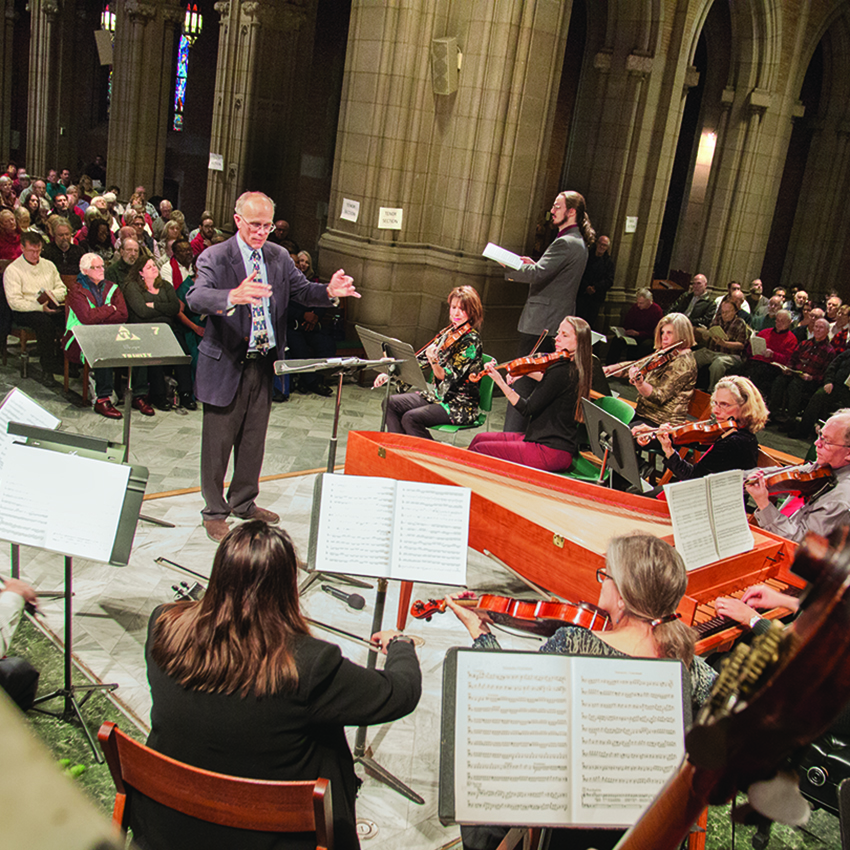
Trinity Cathedral’s Messiah Sing is back for the first time since 2019. Today at Noon, bring, borrow, or rent a score and sing the Christmas portion of Handel’s celebrated oratorio with Todd Wilson, Trinity Chamber Orchestra, Cathedral soloists, and fellow chorus members.
Tonight at 7:30 the ENCORE Chamber Music Institute String Faculty, Jinjoo Cho, artistic director, with special guests Pat O’Keefe, clarinet and Shuai Wang, piano, celebrate the music of Andrew Rindfleisch, including the Phantasmagoria for string octet (commissioned by ENCORE), Quiet Music for solo cello, Two Pieces for violin and piano, Hallucinations for solo viola, and The Lunatic for bass clarinet. Free in Drinko Hall, Cleveland State University, 2100 Euclid Ave.
7:30 pm – Oberlin Opera Scenes II, an evening of opera scenes presented by the opera singers of the conservatory, goes live from The Birenbaum in The Hotel at Oberlin. Program to be announced. Free. Click here for live stream.
ALMANAC — DECEMBER 14 IN MUSIC HISTORY:
Let’s remember some first performance anniversaries today: Puccini’s Il Trittico (comprising Il Tabarro, Suor Angelica, and Gianni Schicchi) at New York’s Metropolitan Opera on this date in 1918, Alban Berg’s Wozzeck in Berlin in 1925 after a whopping 137 rehearsals, and Samuel Barber’s String Quartet, Op. 11 in Rome by the Pro Arte Quartet in 1936.
Click here to enjoy a 2011 Royal Opera House production of Puccini’s madcap comedy, Gianni Schicchi, with Antonio Pappano in the pit and the family from hell onstage.
The quality isn’t terrific, but click here to hear what may be the only surviving recording of Wozzeck led by Eric Kleiber, who conducted its premiere. It dates from Covent Garden in 1953.
And it’s interesting to hear a much-appropriated piece in its original form and context. Click here to listen to the Barber Quartet performed by the Curtis Quartet in 1938. The slow movement has become the famous Adagio for Strings, but some think it’s more intense played by a quartet. Do you agree?
