



by Daniel Hathaway
 TODAY’S ENTRIES:
. Pirates in Wooster, McGill/McHale Trio in Kent
. Nagy receives EMA award for SalonEra, Littler hangs up his notebook in Toronto
. Schoenberg and Maazel exit, Ben Franklin creates new instrument
ON TODAY:
At 2:00 pm Ohio Light Opera continues its run of Gilbert & Sullivan’s Pirates of Penzance with a special Kids Day performance in Wooster’s Freedlander Theatre. You can purchase tickets here.
At 7:30 pm this week’s Kent/Blossom Faculty Concert features Kulas Visiting Artist, the McGill/McHale Trio — Anthony McGill, clarinet, Demarre McGill, flute and Michael McHale, piano. Program to be announced. Ludwig Recital Hall, Kent State University. Tickets are available online.
NEWS BRIEFS:
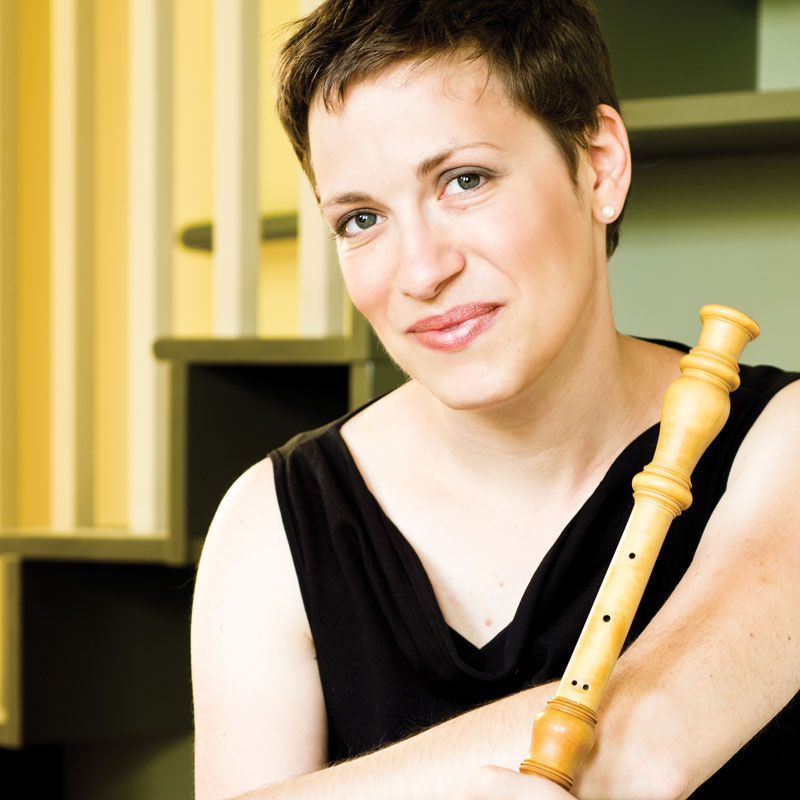
Early Music America has named Debra Nagy, founder and artistic director of Les Délices (pictured), as “the 2022 recipient of the Laurette Goldberg Award for Outstanding Achievement in Early Music Outreach for her work on SalonEra,” an early music webseries established at the beginning of the pandemic “that serves a global audience of classical music enthusiasts.” Read more about EMA’s 2022 awards here.
INTERESTING READ:
Toronto’s William Littler was hired right out of college as classical music critic for the Toronto Star. 56 years later, he has written his farewell column. “Bill remembers the myriad performers who came from abroad and his trips overseas covering Canadian ensembles: in Prague in 1968, weeks before the Soviet tanks rolled in, and in China in 1978, when everyone still wore Mao hats. Plus his North American odyssey trying to interview Luciano Pavarotti.” And his panning of The Beatles. Read that column here.
TODAY’S ALMANAC:
Austrian composer Arnold Schoenberg was obsessed with the number thirteen — so it’s notable that he died on Friday the 13th of July, 1951 at the age of 76 (7+6 = 13). For a concise introduction to his life and works, check out this ten-minute YouTube video by Samuel Andreyev.
Schoenberg is best known for his use of the compositional technique called twelve-tone serialism, which can result in a dissonant or “scary” sound. Learn more about this system and its evolution in this article in The New York Times. Even before he finalized the technique, Schoenberg embraced atonality in his earlier works, such as Pierrot Lunaire. Listen (and watch) a fantastic performance by the Israeli Chamber Project on YouTube here.
Despite Schoenberg’s association with serialism, many of his works incorporated classical forms and techniques. A great example is his Piano Concerto, which soloist Kirill Gerstein performed with The Cleveland Orchestra in 2017. In our preview for that performance, we interviewed Gerstein, who explained that “there’s a lot of dance in the concerto. There’re some waltzes, some gavottes, and some marches — really traditional musical references.”
Just like Schoenberg’s music itself, the story behind the Piano Concerto is complicated. He was commissioned to write it by one of his students at UCLA, Oscar Levant, who thought it would be a short composition. But Schoenberg fleshed it out into four movements, charging Levant an exorbitant sum which the pianist refused to pay. Though Levant eventually relented, it was another student of Schoenberg’s, Eduard Steuermann, who premiered the work in 1944.
And on this date in 1762, Benjamin Franklin announced the creation of a new instrument (pictured). Inspired by the sounds produced by swirling a wet finger around the rim of a wine glass, Franklin worked with a glassmaker to create a series of glass bowls spinning in a water bath that he dubbed the armonica. The instrument became so popular that it was featured in compositions by Beethoven, Mozart, and Donizetti, but it was largely forgotten by the 1820s.
Franklin ultimately made no money from the construction of more than 5,000 armonicas, because he refused to patent or copyright any of his inventions. As he writes in his autobiography:
“As we enjoy great Advantages from the Inventions of others we should be glad of an Opportunity to serve others by any Invention of ours, and this we should do freely and generously.”
Finally, former Cleveland Orchestra music director Lorin Maazel departed this life in Neuilly, France, on this date in 2013. A controversial successor to George Szell appointed with little input from the players, Maazel possessed a masterful baton technique, but his performances could be cold and disengaged. Cleveland conductor Martin Kessler, recently retired after leading the Suburban Symphony for 38 seasons, reports his strange encounters with Maazel in his just-published book The Podium Papers, “an irreverent and entertaining conducting memoir.” An excerpt:
His programming ideas were, to my mind, awful; to wit, a death-themed program with Ravel’s Pavane for a Dead Princess, Mahler’s Songs on the Death of Children, and Strauss’ Death and Transfiguration…
Across two seasons, he decided to program all 41 Mozart symphonies. They were always the first thing on the program, usually unrelated to the rest of the pieces, and often performed casually, almost dismissively.
