


by Daniel Hathaway
 HAPPENING TODAY:
This evening at 6 pm, the Cleveland Chamber Choir celebrates both the Madness and Melancholy of March in the Donna and James Reid Gallery at the Cleveland Museum of Art, followed by a concert at 7 pm in Gartner Auditorium by the all-female sextet Maruja Limon (pictured) from Barcelona.
Also tonight in University Circle, the Cleveland Institute of Music will present its CIM Virtuosi at 7 pm, when Todd Phillips conducts music by Mozart, Grieg, and Copland in Mixon Hall.
TODAY’S ALMANAC:
by Mike Telin
On March 25, 1881 composer, pianist, ethnomusicologist, and teacher Béla Viktor János Bartók was born in Nagyszentmiklós, Hungary, now Sânnicolau Mare, Romania.
Bartók began studying piano with his mother, and at age nine started composing dance pieces. From 1899 to 1903, he studied piano and composition at the Royal Academy of Music in Budapest. It was there that he met Zoltán Kodály and the two became lifelong friends and colleagues — they both shared an interest in folk music.
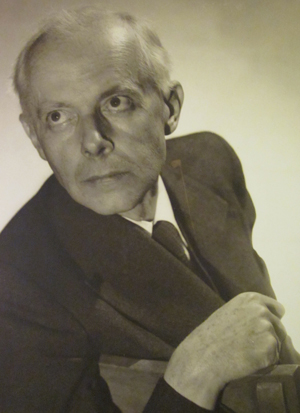 In 1908 Bartók and Kodály traveled into the farthest regions of the country to collect folk tunes, but what they discovered was that the Maygar folk melodies popularized by Franz Liszt they had previously thought of as Gypsy music were based on a pentatonic scale similar to that found in Asian folk melodies.
Although you don’t need to be an expert on all of this to enjoy Bartók’s music, here are a couple important things to remember:
- Bartók catalogued more than 9,600 melodies of Hungarian, Romanian, and Slovakian origin.
- Bartók incorporated these melodies into his compositions, often quoting them note for note.
- Bartók’s musical style is a mixture of folk music, classicism, and modernism.
If you’re so inclined, click here to listen to Thomas Little (AKA The Classical Nerd) explain all you need to know about the composer in seven and a half minutes.
If you’re looking for something a little more in-depth, click here to watch A&E’s Breakfast with the Arts’ beautiful documentary about the composer.
If you want to know more about the theory behind Bartók’s musical practices, click here to watch Axis Theory make the complicated simple — it really is quite fun.
On a personal note, my introduction to Bartók’s music came early in my teens when my junior high school band director gifted me an LP of George Szell conducting The Cleveland Orchestra in a performance of the Concerto for Orchestra. From then on I was seriously hooked.
Click here to listen to the Boston Symphony Orchestra conducted by Serge Koussevitzky give the Broadcast premiere of the piece (with its original ending) on December 30, 1944.
Click here to listen to Pierre Boulez and the Philharmonia Orchestra play The Miraculous Mandarin (you can follow along with the score).
Click here to get a bird’s-eye view of the Sonata for Two Pianos and Percussion.
And finally, click here for a performance of the Sixth Quartet played by the Jupiter String Quartet (again, you can follow along with the score).
