

by Daniel Hathaway
 IN THIS EDITION:
. A plethora of weekend performances
. News from Tri-C (National Orchestra of Ukraine next Thursday, pictured), Classical Guitar Society (appoints resident composer), and Violin Channel (homophobia cancels King’s Singers in Florida)
. Almanac remembers debut of Madama Butterfly, conductor Dimitri Metropolous, Cleveland’s own Arthur Shepherd
HAPPENING THIS WEEKEND:
Multiple performances include Herbert Blomstedt and Emanuel Ax with The Cleveland Orchestra (Fri & Sat) and Cleveland Chamber Choir in Willoughby Hills (Sat) and University Circle (Sun).
Also on Friday, BW Symphonic Winds play in Berea, and Oberlin’s TIMARA faculty compositions are featured in cooperation with Oberlin Percussion Group.
On Saturday, Fire and Grace (guitarist William Coulter and violinist Edwin Huizinga) appear at BW.
Sunday is busy with pianist Shuai Wang & friends on the Arts Renaissance Tremont series, an early Mardi Gras celebration with the Bengisu Soke Quartet at Holy Trinity Lutheran in Akron, solo violinist Maude Cloutier at Church of the Western Reserve, and the Oberlin Jazz Faculty at Finney Chapel.
See our Concert Listings for details.
NEWS & ANNOUNCEMENTS:
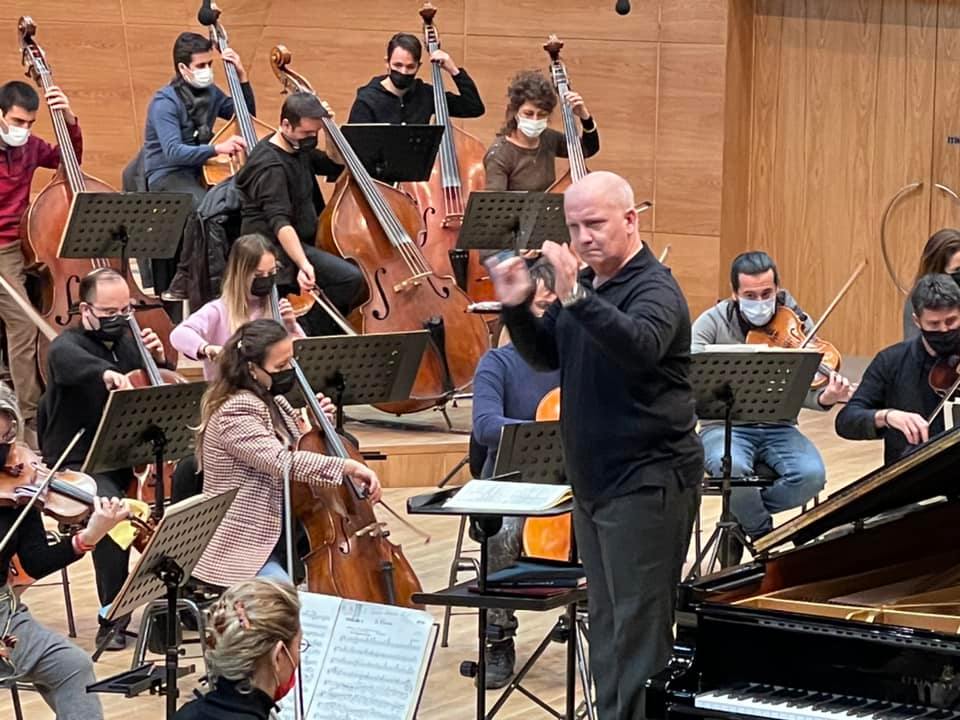
Next Thursday, February 23 at 7pm, the Tri-C Classical Piano Series will deviate from its usual pattern of presenting solo pianists to welcome the National Symphony Orchestra of Ukraine to the stage of its Metropolitan Campus.
The orchestra will be led by Theodore Kuchar, a 1982 graduate of the Cleveland Institute of Music, who became the Principal Guest Conductor of the Ukrainian State Symphony Orchestra in 1992, and was appointed Artistic Director and Principal Conductor of the ensemble in 1994, when it changed its name to the National Symphony Orchestra of Ukraine. In 2000, he became Conductor Laureate for Life.
The National Symphony is currently on an extended 40-concert tour aimed at promoting Ukrainian culture that includes a stop at Carnegie Hall (read the New York Times article here). Its concert in Cleveland, which will feature duo-pianists Emanuela Friscioni and Antonio Pompa-Baldi, marks the first anniversary of the Russian invasion of Ukraine.
Watch this site on Tuesday for an interview with Friscioni and Kuchar.
The Cleveland Classical Guitar Society has announced that Alana Amore Colvin has been appointed the 2023 Composer in Residence. Colvin is a composer, arranger, and educator currently based in Brooklyn, NY. She graduated from Berklee College of Music in 2022 with a degree in Songwriting and Music Business. In 2020, she founded Bipop, a non-profit organization that provides music instruction for women of color and the non-binary community. In the same year, she released her first EP, “jane doe”. The following year she released a single called, “wallow.” Click here for more information.
The Violin Channel has reported that a scheduled concert by The King’s Singers at Florida’s Pensacola Christian College was canceled on two hours’ notice because one of the ensemble’s members, who is gay, “openly maintained a lifestyle that contradicts Scripture,” according to a statement from the Baptist institution, which has previously presented the British group. Read the story here.
ALMANAC FOR FEBRUARY 17-19:
By Jarrett Hoffman.
 Leaving little time for rehearsals after finishing a piece of music is a classic move throughout the history of composers. But for some reason it doesn’t always turn out well.
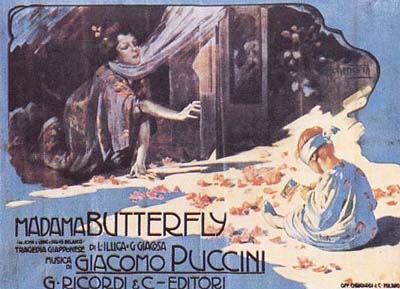
Such was the misfortune of Giacomo Puccini with Madama Butterfly, which premiered in its original version on February 17 in 1904 at La Scala in Milan. (Pictured: the original poster by Adolfo Hohenstein.)
The cast wasn’t an issue. Among its star-laden talent, the role of Cio-Cio san was sung by soprano Rosina Storchio, a fixture at La Scala who also performed in notable premieres by Leoncavallo and Mascagni. B.F. Pinkerton was portrayed by tenor Giovanni Zenatello, who would go on to sing the title role in Verdi’s Otello over 300 times. And taking the role of Sharpless was baritone Giuseppe De Luca, who would also create the title role in Gianni Schicchi at the Met a decade later.
When it came to the audience’s reaction at the premiere, the good news is that there was no throwing of fruits or other objects. Instead, those in attendance settled for politely hissing, jeering, and yelling at the stage. (It’s worth noting that, according to BBC Music Magazine, many of the composer’s detractors were present that opening night, “determined to turn the premiere into the wrong kind of spectacle.”) Puccini withdrew the opera after one night.
Not only was the opera under-rehearsed, but critics also felt that its second act (out of two in this original form) dragged. Undeterred, Puccini set about making revisions, which included dividing the second half into two parts, forming Act III. And when Madama Butterfly relaunched in Brescia three months later, it was an immediate success.
A happy ending for Puccini and the opera world…if not for the characters themselves.
By Mike Telin
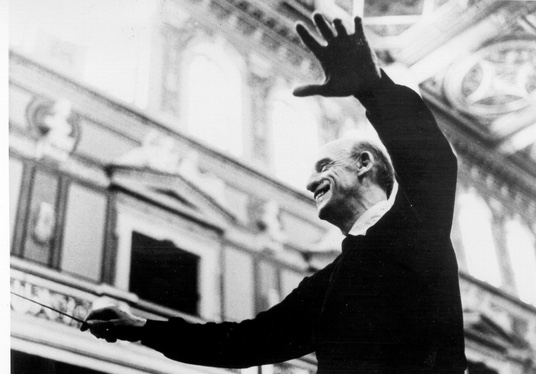 February 18 marks the birth of Greek conductor Dimitri Mitropoulos in Athens in 1896.
The young Dimitri exhibited musical talents at an early age and by his early teens hosted Saturday afternoon concerts at his home.
He studied at the Athens Conservatory as well as in Brussels and Berlin, where his teachers included Ferruccio Busoni. During the early to mid ‘20s he assisted Erich Kleiber at the Berlin State Opera.
The conductor made his U.S. debut with the Boston Symphony in 1936, and from 1937 to 1949 he was principal conductor of the Minneapolis Symphony Orchestra (now the Minnesota Orchestra). In 1949 he became co-conductor — with Leopold Stokowski — of the New York Philharmonic, and in 1951 was named the Orchestra’s music director.
In addition to making numerous recordings for Columbia Records, Mitropoulos and the Philharmonic sought out new audiences by making appearances on television and giving performances at the Roxy Theatre.
During his tenure, he expanded the Philharmonic’s repertoire by commissioning new works and championing the symphonies of Mahler. Upon his departure in 1958, he was succeeded by his protégé, Leonard Bernstein. Click here to listen to Mitropoulos conduct the New York Philharmonic in a performance of Mahler’s Symphony No. 5.
by Daniel Hathaway
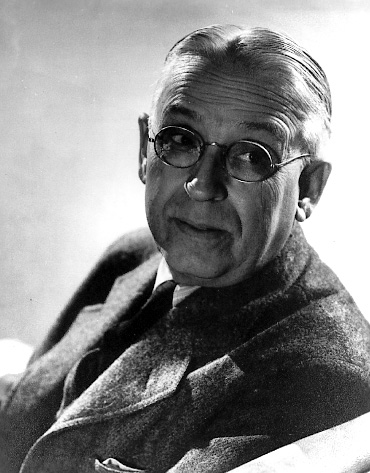 Arthur Shepherd, a prominent figure in Cleveland’s musical community for three decades, was born into a Mormon family in Paris, Idaho, on February 19, 1880. He graduated from the New England Conservatory in 1897 and moved to Utah to reorganize and conduct the Salt Lake Symphony.
After returning to teach at NEC and serving in World War I, Shepherd was hired by Nikolai Sokoloff as his assistant conductor and program annotator in 1920. Though he moved across the street in 1927 to lecture in music at Case, he held on to his program annotating job until 1930, while also serving as music critic for The Cleveland Press. He became chair when music gained departmental status at Case in 1928, “inaugurating a 20-year program of experimental opera,” according to the Encyclopedia of Cleveland History,
Listen to Shepherd’s Symphony No. 1, “Horizons” here in a recording by the Cleveland Orchestra under Louis Lane made from a radio broadcast, and here to a playlist of selected chamber works by Shepherd featuring pianist Grant Johanssen and The Abramyan String Quartet. A smattering of his smaller pieces appears here in the Petrucci Music Library.
Plain Dealer critic Wilma Salisbury wrote an article about Shepherd when he was posthumously awarded the Cleveland Arts Prize for Music in 1977.
