




by Daniel Hathaway
 NOTE: In order to give our staff a late summer break, The Diary will go on hiatus from Monday, August 18 through Wednesday, August 27, and there will be no Thursday Newsletter on August 21.
HAPPENING THIS WEEKEND:
On Friday at 12:15 noon, Friends of the McGaffin Carillon in University Circle present an all-Italian Lunchtime Carillon Concert by George Leggiero, honoring the carillon’s Little Italy neighbors on the Feast of the Assumption.
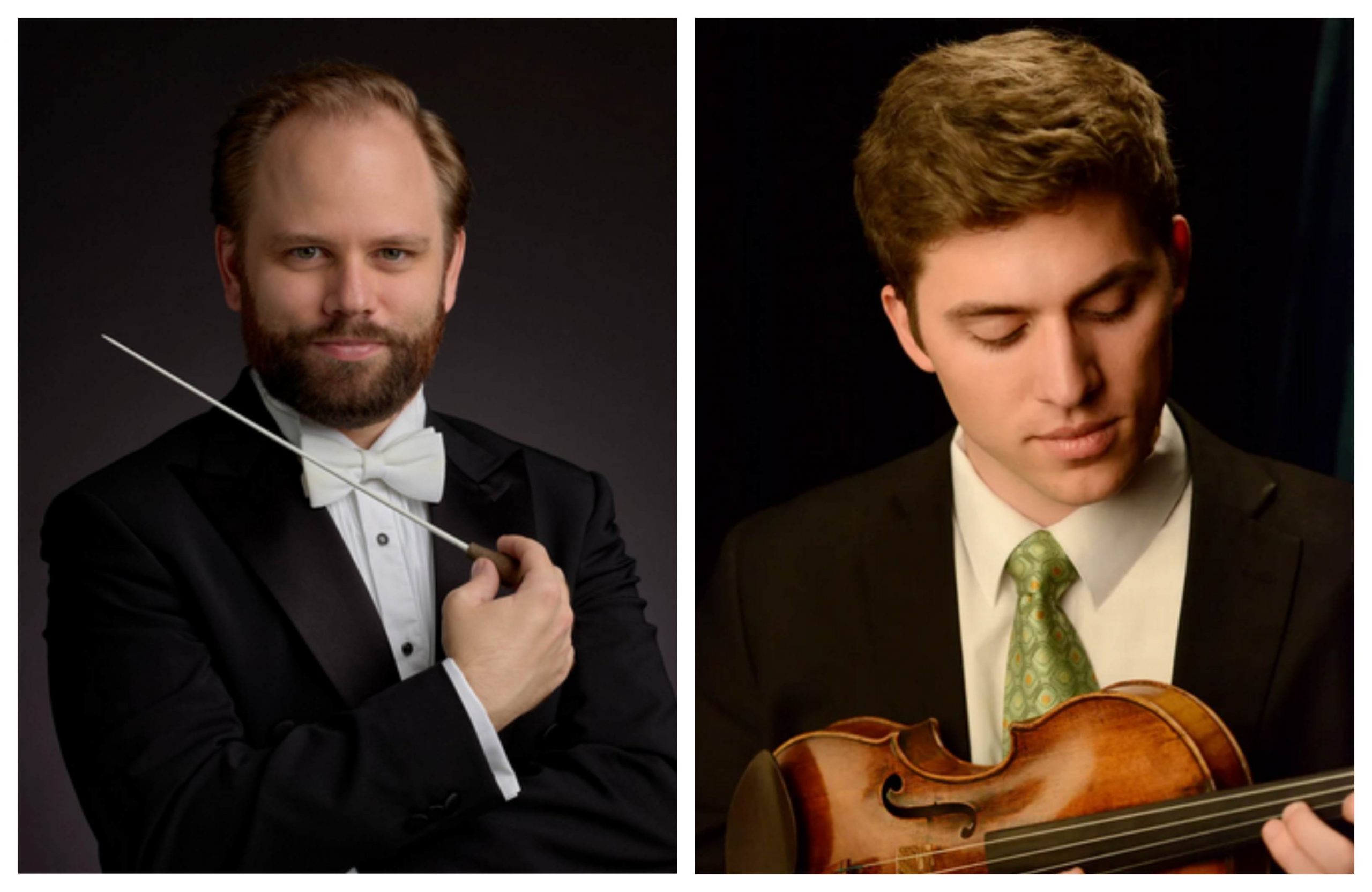
At Blossom on Saturday at 7 pm, associate conductor Daniel Reith bids farewell to The Cleveland Orchestra with Edward Elgar’s Enigma Variations, Stephen Tanavi solos in Max Bruch’s Violin Concerto No. 2, and the Orchestra debuts Gabriella Smith’s Rewilding, a co-commission celebrating the 50th anniversary of Cuyahoga Valley National Park.
On Saturday at 7:30 pm, the Canton Symphony Orchestra presents The Hunchback of Notre Dame in concert. Steven Byess, conducts the Players Guild of Canton, and the Canton Symphony Chorus in a semi-staged version of Victor Hugo’s timeless story in Umstattd Hall at Zimmermann Symphony Center,
And at Blossom on Sunday at 7 pm, The Cleveland Orchestra presents a Rodgers & Hammerstein Celebration with Andy Einhorn, conductor, and Scarlett Strallen, Jacob Dickey, & Ben Davis, vocals.
WEEKEND ALMANAC:
On August 15, 1772, German inventor Johannes Nepomuk Maelzel, who developed the metronome, was born in Regensburg, and on that date in 1875, African British composer Samuel Coleridge Taylor entered the world in London, as did Russian inventor Leon Theremin, creator of the pioneering electronic instrument that bears his name, but in St. Petersburg in 1896.
Here’s a 2013 documentary about Samuel Coleridge-Taylor’s visits to the U.S. in 1904, 1906, and 1910, and his influence on the African American Civil Rights Movement.
Watch a historic video of Leon Theremin playing one of the first electronic instruments to enter the concert world, or view another video of an extraordinary gathering of 273 Theremin players going for a Guinness World Record in Japan in 2013.
August 15 marks the Feast of the Assumption in Catholic-leaning countries, the day when the Virgin Mary was bodily assumed into heaven according to the doctrine proclaimed in 1870. It’s a good day for parades (like the one in Cleveland’s Little Italy), but also a good occasion to enjoy a setting or two of the Magnificat, the song that Mary impressively improvised in response to some surprising news brought by the Archangel Gabriel as reported in the Gospel of Luke.
There are many listening possibilities, but here are three:
Johann Sebastian Bach composed his wonderfully compact version in E-flat for his first Christmas in Leipzig, incorporating four little seasonal pieces into the traditional text (they were later removed to create the Magnificat in D). Here’s a performance by the Amsterdam Baroque Orchestra and Choir led by Ton Koopman in St. Thomas’ Church during Bachfest Leipzig 2002.
Charles Villiers Stanford’s Magnificat and Nunc Dimittis in G is a standard at Anglican Choral Evensong services, and assigns solo voices to the roles of Mary (a boy soprano, usually) and the agèd Simeon (a baritone). Follow along with the score in a 2010 performance by the Choir of St. John’s College, Cambridge here.
And for a striking recent setting, follow the score in a performance of Arvo Pärt’s Magnificat dating from 1989. Paul Hillier conducts the Estonian Chamber Choir.
