


by Daniel Hathaway
 ONLINE THIS WEEKEND:
On Saturday: CityMusic Cleveland takes the live chamber music concert it played on Friday at St. Stanislaus online, and former Cleveland Orchestra associate conductor Brett Mitchell guest conducts the San Antonio Symphony.
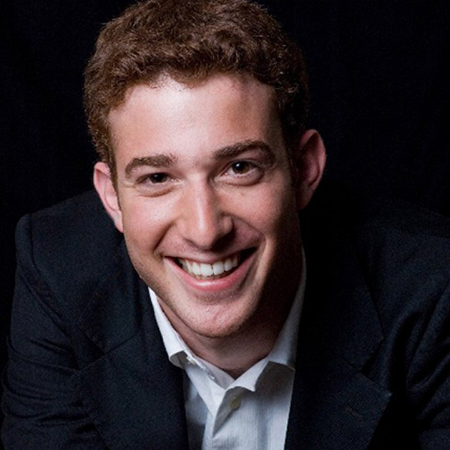
On Sunday: New York’s Bang on a Can sponsors a four-hour Marathon of Song, Harry Bickett and The English Consort visit music of J.S. Bach’s predecessors at the Wigmore Hall, Boston Early Music Festival runs a pre-recorded performance of André Campra’s Le Caranaval de Venise starring Amanda Forsythe, Live from the Barbican debuts Dido’s Ghost, a new opera by Errolyn Wallen, and PianoCleveland’s president Yaron Kohlberg (pictured) appears on the Music from the Western Reserve series in a recital featuring Beethoven’s last piano sonata.
Details in our Concert Listings.
NEWS BITS:
Cleveland Institute of Music student Dominik McDonald from Ames, Iowa, has won 1st place in Division 1 and 2nd Place in Division 2 of the Modern Snare Drum Competition, held last week at CIM.
INTERESTING READS:
New York Times critic Zachary Woolfe suggests that orchestras interested in diversifying their conducting staff should look at what their assistant or associate conductors bring to the podium. Woolfe especially mentions Cleveland’s No. 2. “…during the coronavirus pandemic, when many artists abroad were grounded, some assistants took on new prominence. Vinay Parameswaran, the Cleveland Orchestra’s associate conductor, who had spent a few years mainly doing family concerts and leading the ensemble’s youth orchestra, unexpectedly found himself conducting multiple major programs on Cleveland’s subscription streaming platform.” Read the article here.
And in a New York Times interview, the distinguished pianist Andras Schiff explains his surprising about-face regarding period instruments. “What converted me was when I first played Mozart’s piano in Salzburg, in the room where he was born. This must have been the second half of the 1980s. It was the first time I met an instrument — an original instrument, not a copy — that was in wonderful condition. Subsequently, there were many occasions to find wonderful instruments. I’m now getting to a place where I will find it very difficult to play music on modern pianos.”
Schiff has now extended his interest in historical performance to include Brahms, whose concertos he has recently recorded both as conductor and soloist with the Orchestra of the Age of Enlightenment. The 50-piece orchestra plays on gut strings, and Schiff performs on an instrument made by Julius Blüthner in Leipzig in 1859. Read the interview here.
TODAY’S ALMANAC:
Midwives and morticians had their hands full on June 5 and 6 in classical music history.
On the 5th, Boston composer Daniel Pinkham was born in Lynn, Massachusetts in 1923, Argentine pianist Martha Argerich was born in Buenos Aires in 1941, and American conductor Victoria Bond was born in Los Angeles in 1945. Death notices on June 5 included Elizabethan composer Orlando Gibbons in Canterbury in 1625, and composer Carl Maria von Weber in London in 1826.
On the 6th, English composer and scholar Sir John Stainer first breathed the air in London in 1840, as did Armenian composer Aram Khachaturian in Tiflis in 1903, American composer Vincent Persichetti in Philadelphia in 1915, French pianist and conductor Philippe Entremont in Rheims, Dutch composer Louis Andriessen in Utrecht in 1939, and American composer Mary C. Wright in Cleveland in 1960. And departures included Belgian composer and violinist Henri Vieuxtemps in Algiers in 1881, and Russian composer Sergei Taneyev in Dyud’kovo.
Most of these figures are well-known, so I’ll suggest a few tracks less listened to.
Andriessen was the son of a celebrated Dutch composer, but took a very different tack with his music. His Worker’s Union, symphonic movement for any loud-sounding group of instruments, leaves many decisions to the performers (view the score here). Members of The Cleveland Orchestra played it on a Composers Connect program in Severance Hall in June, 2010. Watch a performance by eighth blackbird and friends in February, 2011 at New York’s Park Avenue Armory.
And Andriessen’s Hoketus is interactive. Its name comes from the medieval technique of ‘hocket,“ quick alternation of notes between musicians meant to resemble hiccups. In this 2015 performance by Ensemble Offspring at Eugene Goossens Hall in Sydney, Australia, “the audience becomes piggy-in-the-middle in an aural game of volleyball, as competing ensembles on either side battle it out.”
Bond is profiled in a video by Los Angeles storyteller Ty Kim, and two of her full-length Cutting Edge concerts are available here (April 12, 2021) and here (April 19, 2021).
And further evidence that new music doesn’t have to frighten audiences out of their seats comes in the form of Bond’s The Page Turner, recorded at New York’s St. Peter’s Church with pianist Kathleen Supove and actor Oleg Dubson on April 26, 2011.
Finally, I searched for more information about Cleveland-born composer and sound artist Mary C. Wright, who holds degrees in music theory from the Cleveland Institute of Music, and music composition from the California Institute of the Arts and Princeton University, but came up only with a website featuring her Symphony #1. Subtitled Travelogue of the Locusts, and written in collaboration with Jody Hughes, it premiered in Portland, Oregon on August 1, 2009, but becomes very topical in 2021 with the arrival of the 17-year cicadas.
Her website describes the work as “10 pieces that revolve around the themes of the cycle of life, circadian rhythm, and the non-human cultural habits of nature. This production is similar to a play, where characters come and go, affecting the dynamic of the work. In this case, the characters, or players, are the musicians, who enter and exit the performance space in a fluid, uninterrupted manner as they are needed. Therefore, a particular song may begin with a tuba alone on stage, continue adding strings and horns, and may end with two flutes playing alone on stage. The instrumentation of each song is unpredictable by the audience.” That’s all I can turn up about this “work in progress,” but samples of the songs are available here.
