

by Daniel Hathaway
 ONLINE AND IN-PERSON TODAY:
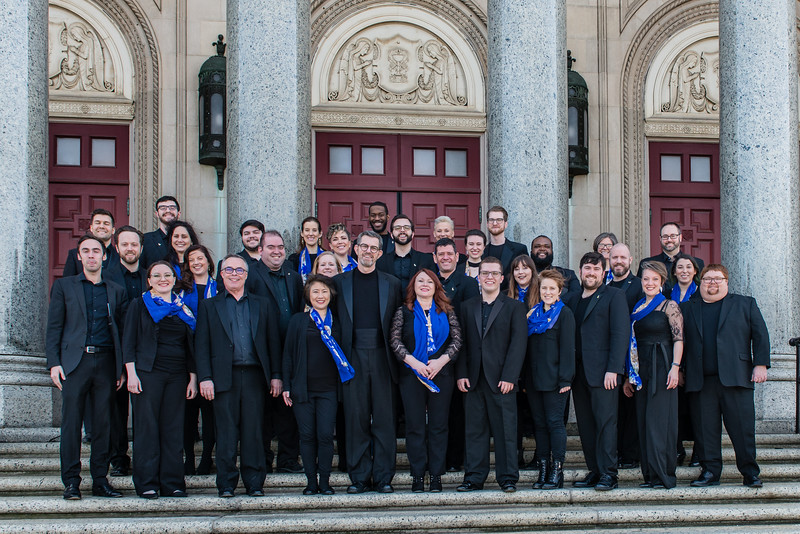
Cleveland Chamber Choir, sidelined by the pandemic, has found ways to rehearse together and record. On Saturday, Scott MacPherson leads them in “Madrigals for All Times,” a pre-recorded program that contrasts different settings of the same poetry composed many years apart.
Although classes have ended for the year at the Oberlin Conservatory, there are still performances to be aired on its Stage Left platform, including Saturday’s large ensembles’ performances of works by David Clay Mettens, Eleanor Alberga, and Jennifer Higdon.
Speaking of Oberlin, on Sunday, alumna organist Katelyn Emerson returns to the area for a progressive recital at two churches in Canton. And speaking of organs, the Stambaugh Organ Series is back with a recital by Joshua Stafford that can be attended in person or watched online on the Stambaugh Auditorium app.
North Coast Winds plays a Sunday concert at Lakeside Chautauqua under the auspices of the Firelands Symphony, including an arrangement of Dvořák’s Wind Serenade that pares the performing forces down from 15 to 5.
And baritone Allan Mosher and pianist Cicilia Yudha wrap up the weekend with a Youngstown State faculty recital pre-recorded at the McDonough Museum. There’s only one piece on the program: Schubert’s Winter Journey.
THIS WEEKEND’S ALMANAC:
The list of anniversaries is very short for May 15 and 16. Venetian printer Ottaviano de’ Petrucci published his Odhecaton A — the first of three volumes, with B and C to follow — on May 15, 1501, marking the first occasion when a collection of polyphonic music (chansons in this case) was printed from moveable type, making Petrucci the Gutenberg of Renaissance music. Although his process required passing each page through his press three times, his accomplishment was still a milestone in the dissemination of printed music. It’s not for nothing that the wonderful online library of public domain music in pdf format has been named the Petrucci Music Library.
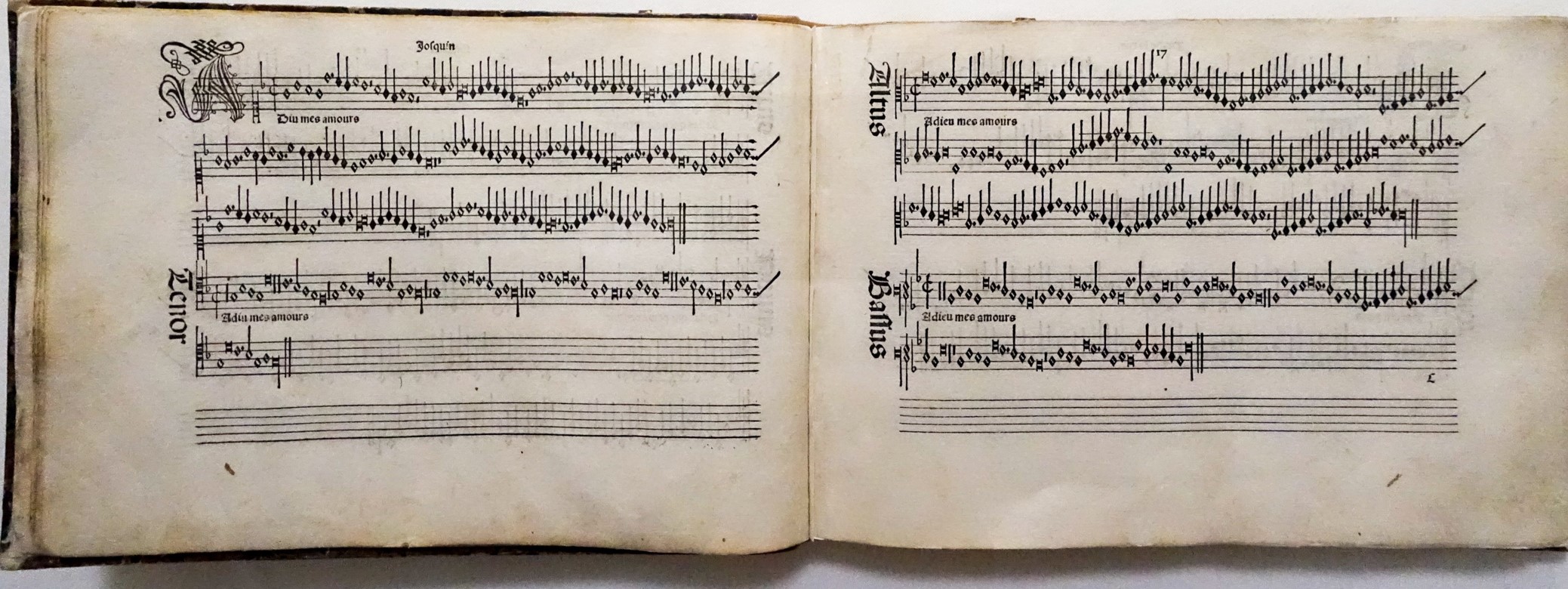
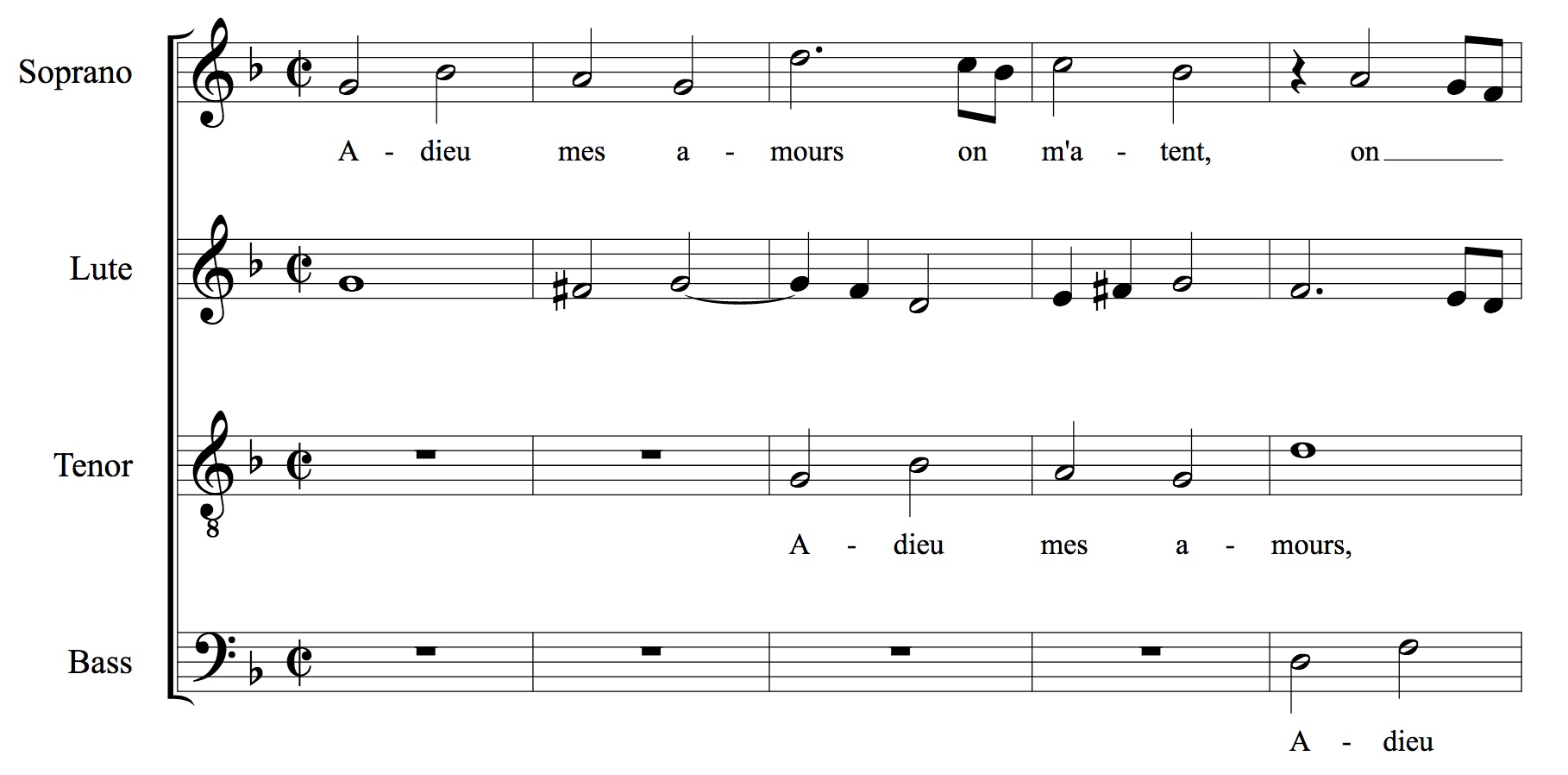
Here’s Josquin des Prez’ chanson, Adieu mes amours in Petrucci’s elegant printing of the first Odhecaton volume. It’s laid out in typical Renaissance fashion with each of the four voices printed in a separate quadrant rather than on top of each other in score (as the chanson appears below). Watch a performance here by Fuse di Venere.
 The great Italian composer Claudio Monteverdi was born either on May 15 or 14, 1567 in Cremona, later serving the household of the Duke of Mantua and the “most serene republic” of Venice, and launching the early Baroque period with a flurry of inventive works including opera, church music, and madrigals.
Jeannette Sorrell and Cleveland’s Baroque Orchestra, Apollo’s Fire, have programmed a lot of Monteverdi’s music in various halls in Northeast Ohio as well as across the U.S. and Europe. Here are a few videos from their archives.
We’ll start with a collection of secular works from the 2020 program, “L’AMORE — Love and Rejection in Old Italy,” performed at St. Paul’s in Cleveland Heights. (It begins with a piece by Barbara Strozzi, then goes on to selections from L’Incoronazione di Poppea, and the Scherzi musicali. Watch here.
One of the composer’s monuments is the Vespers of 1610, written for the Mantuan court, which has required some reassembly, having been published as individual pieces. One of the motets editors haven’t quite known what to do with but has to be included because of its powerful declamation, Duo Seraphim was sung by tenors Jacob Perry, Nathan Hodgson and Nathan Dougherty at First Baptist Church in October, 2019. Watch here.
Like all Vespers services, Monteverdi’s setting concludes with the Magnificat. His bravura setting covers most of the stylistic bases available to the composer, including wonderful echo effects (I heard a performance at the Edinburgh Festival where the conductor had the echo tenor sing his part from the Gents’ just off the balcony of the performing venue — a perfect location.) Apollo’s Fire performs it here in Trinity Cathedral in November of 2014.
Finally, here’s an exquisite performance by tenor Karim Sulayman of Monteverdi’s Si dolce è il tormento (How sweet the torment) from an Apollo’s Fire “Blues Café 1610” performance on Valentine’s Day of 2015 at the Music Box Supper Club in Cleveland.
The only other anniversary of note is the birth of American composer Richard Wilson in Cleveland on May 16, 1941. Having imbibed concerts by The Cleveland Orchestra under George Szell at an early age, he went on to study at Harvard and Rutgers, then taught at Vassar from 1966 to 2016. Wilson was awarded the Cleveland Arts Prize in 1988.
He has a long list of compositions in every genre, so it’s worth wondering why we don’t hear more of his music in his hometown. For a taste of Wilson’s style, read about his “shaggy dog” opera, Aethelred The Unready, here, then watch a performance conducted by the composer and directed by Drew Minter here.
