

by Daniel Hathaway
 HAPPENING THIS WEEKEND:
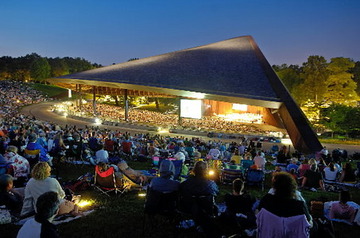
Outdoor concerts reign on Labor Day weekend, with Richard Kaufman leading The Cleveland Orchestra in film scores by John Williams both on Saturday and Sunday evening, and Carl Topilow hosting baritone Lester Lynch in an evening of music by Queen, Broadway tunes, and Americana classics with Cleveland Pops Orchestra in Elyria’s Town Square on Sunday.
Check our Concert Listings for details.
CLASSICAL MUSIC FOR LABOR DAY:
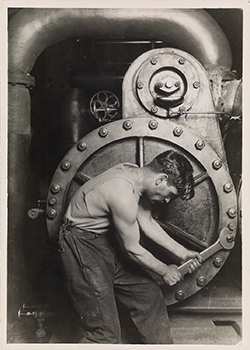
By the time that Labor Day was established as an official national holiday in 1894, in response to the widespread unrest exacerbated by the Pullman Strike of that year, 30 states were already setting a day aside to honor workers — an observance that became increasingly vital as the effects of the Machine Age unfolded. Among others, photographer Lewis Wickes Hine captured laborers with dignity in his fine art “photo stories” (below, his Powerhouse Mechanic, c. 1921).
“Work” has expanded to encompass a wide variety of human activity, as evidenced by a 2014 WQXR poll that asked listeners to nominate classical works that best capture the spirit of Labor Day. Submissions ranged from Handel’s Harmonious Blacksmith to Shostakovich’s Symphony No. 2, from Copland’s Fanfare For the Common Man (countered by Joan Tower’s Fanfare(s) for the Uncommon Woman) to Frederic Rzewski’s The People United Will Never Be Defeated,
One interesting suggestion was Haydn’s “Farewell” Symphony (No. 45), the musical documentation of a labor dispute between Prince Nikolaus Esterházy and his court orchestra that seems ironic during the COVID era, when musicians of all kinds have experienced furloughs, layoffs, and the disappearance of work.
INTERESTING READ:
The Metropolitan Opera is scheduled to reopen on September 27 with Terrence Blanchard’s 2019 stage version of New York Times columnist Charles Blow’s Fire Shut Up in My Bones. Click here to read the New York Magazine “Vulture” article about baritone Will Liverman, who will sing the title role.
THIS WEEKEND’S ALMANAC:
On September 4, collaborative pianist Irwin Gage was born in Cleveland in 1939, and Alsatian medical missionary, theologian, and Bach scholar Albert Schweitzer died at his hospital in Lambéréne, Gabon (then French Equatorial Africa) in 1965 at the age of 90.
On September 5, a long list of debuts and departures includes Johann Christian Bach (“The English Bach,” born in 1735), Canadian pianist and composer Marc-André Hamelin (born in 1961), and Hungarian-born conductor Sir Georg Solti (knighted honorarily in 1971 and substantively in 1972 when he became a British citizen, who died in 1997). Other names that pop up on the fifth day of September: German opera composer Giacomo Meyerbeer (born 1791), Amy (Mrs. H.H.A.) Beach (born 1867), American revolutionary John Cage (born 1912), English composer Peter Racine Fricker (born 1920), and Mexican conductor Edouarda Mata (born 1942).
The September 6 class includes three birthdays — American composers Emerson Whithorne (Cleveland, 1884), Wayne Barlow (Elyria, 1912), and William Kraft (also a percussionist and conductor, in Chicago, 1923) — as well as the passing of American conductor Henry Hadley (in New York, 1937).
To dig a bit deeper into the lives of four of this weekend’s honorees, watch
Albert Schweitzer: My Life is My Argument, which explores his decision to give up a prestigious career as a musician and philosopher to become a medical doctor and serve native inhabitants of Gabon, Africa.
Living the Classical Life: Episode 84, in which host and pianist Zsolt Bognár interviews Marc-André Hamelin about his preparation for a Carnegie Hall appearance “and how Hamelin has managed to find a zone of performance completely free of the nerves that often plague others,”
and listen to
Emerson Whithorne’s Poem for Piano and Orchestra (1927), played by John Kozar with the Haddenfield (NJ) Symphony Orchestra, Arthur Cohn conducting, “striking music, severe and granitic, with a determined shattering of its melodic line and persistently syncopated rhythms.”
and Henry Hadley’s tone poem The Ocean (1921), performed by John McLaughlin Williams and the Ukraine National Symphony, to experience the compositional legacy of an American figure who served as the first conductor of the San Francisco Symphony, scouted out the future location of Tanglewood, and had a World War II Liberty Ship named in his honor.
In their time, Whithorne and Hadley enjoyed performances of their works by major American orchestras. Is it time to rediscover them?
