

by Stephanie Manning
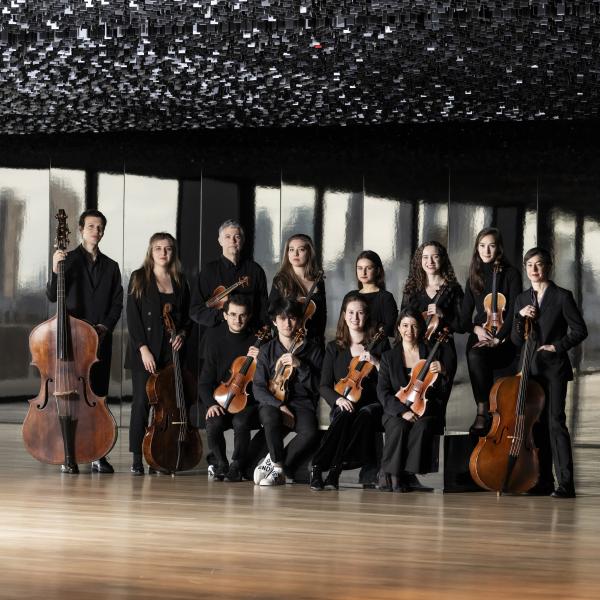 Performing a work as ubiquitous as Antonio Vivaldi’s The Four Seasons requires a delicate balance. At its best, the musicality and intention must be crystal clear, so that the end result feels as fresh as it does familiar. It’s a high bar, but one that Les Arts Florissants cleared with the utmost ease.
On November 18, the renowned French baroque ensemble visited Tuesday Musical to celebrate the 300th anniversary of Vivaldi’s famous quartet of violin concertos. Soloist Théotime Langlois de Swarte led the spirited group in the Vivaldi-focused program, which also included works by Marco Uccellini and Claudio Monteverdi.
Les Arts Florrisants are a spectacular model of ensemble playing, with each performer so engaged with their colleagues that the result feels effortless. Swarte’s placement in the middle of the E.J. Thomas Hall stage made him the focal point, but his musical relationship with the orchestra was one of equals — no doubt helped by the fact that Swarte has been a regular member since 2014.
The violinist’s beautifully pure tone cast a spell over some of the evening’s early pieces, like Vivaldi’s Concerto for strings and basso continuo, RV 129 (“Madrigalesco”) and Marco Uccellini’s Bergamasca. The pacing of the program flowed seamlessly, segueing quickly between works like Vivaldi’s Concerto in D minor, RV 813 and a transcription of Monteverdi’s Adoramus te, SV 289.
Despite the long list of works on paper, the first pair of Vivaldi’s Seasons arrived in what felt like no time at all. Swarte, addressing the audience, encouraged us to try to forget the times we’ve heard these pieces in elevators and commercials, and instead pretend that they were written yesterday.
From the beginning of the Concerto No. 1 in E Major, “Spring (La primavera),” the group inhabited this idea with an approach full of curiosity. Their tasteful phrasing drew even the smallest musical motions to the fore, like the importance of the viola’s two-note figures in the second movement.
The lighting behind the players fading from green to red signaled the beginning of the Concerto No. 2 in G minor, “Summer (L’estate).” Rather than attacking its fiery moments with blunt force, the group’s enthusiasm fueled these passages without overplaying their hand. The influences of nature could clearly be heard in the later movements, where they conjured a gusty storm shaking leaves off the trees.
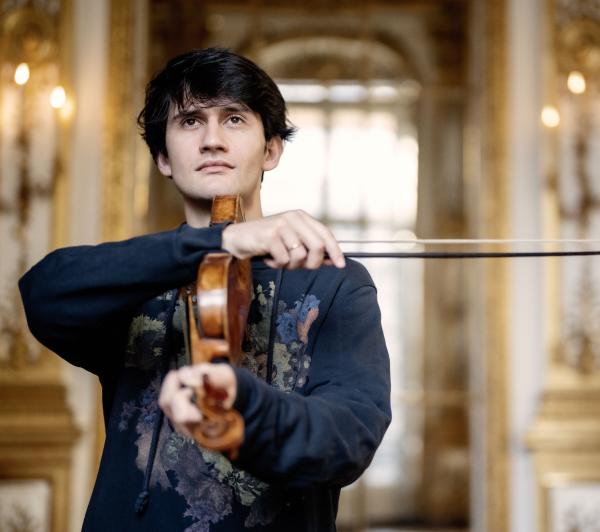 After intermission, Swarte found some humor in the short, cheery notes of Vivaldi’s Overture to La Fida Ninpha (The Faithful Nymph) before the dialogue between him and the harpsichord continued during the Concerto No. 3 in F Major, “Autumn (L’autunno).”
Continuing his remarks to the audience, he came off as charming and quippy, contextualizing the history of the pieces through personal stories, like his time spent gazing at a painting of the Piazza San Marco at the Cleveland Museum of Art. But he also took a firm stance on audience behavior, stopping the opening of the “Spring” concerto to insist that someone turn off their flash — earning him encouraging applause from the rest of the crowd.
The unusually chromatic “Grave” from Vivaldi’s Violin Concerto in B-flat Major, RV 370 then flowed into the final Concerto No. 4 in F minor, “Winter (L’inverno)” and its often menacing intensity. That evening, Northeast Ohio’s true winter had not yet arrived, but in hindsight, it felt like foreshadowing of the real-life weather to come.
Published on ClevelandClassical.com December 4, 2025.
Click here for a printable copy of this article
