


by Mike Telin
 When composer Margi Griebling-Haigh happened across English author A.E. Coppard’s The Higgler while in high school, she knew the short story about life’s missed opportunities was fodder for an opera.
On Saturday, June 7 at 7:30 pm at Disciples Christian Church Griebling-Haigh’s tragi-comic chamber opera The Higgler will receive its world premiere, directed by Marla Berg and conducted by Steven Smith.
The cast includes tenor Brian Skoog in the title role, soprano Gabrielle Haigh as Mary Sadgrove, mezzo-soprano Elizabeth Frey as Mrs. Sadgrove, mezzo soprano Denise Milner Howell as Mrs. Witlow, and soprano Lisl Wangerman as Sophy Dawes. The production will be repeated on Sunday, June 8 at 3:30 pm. Tickets are available online.
I caught up with conductor Steven Smith and began by asking him how he prepares to conduct the premiere of a new work.
Mike Telin: Thank you for taking the time to talk. It’s interesting to have a discussion about an opera that nobody has seen or heard.
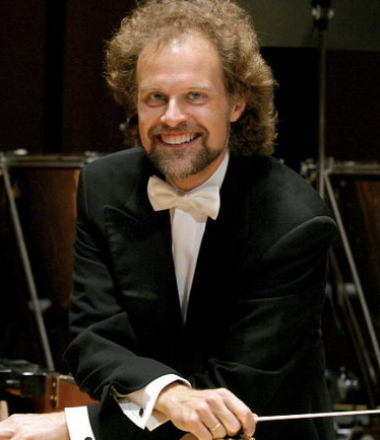 Steven Smith: We actually performed two scenes from this opera with Cleveland Chamber Symphony a couple of years ago. We did a project with the Composers Guild and performed opera scenes by a half dozen local composers and Margi’s was one that we chose. We did a pair of scenes from the second act. But as you said, it’s really a brand-new opera.
MT: What’s the first thing you do when you open an opera score?
SS: People say it’s like peeling back layers of an onion. But it depends — if I’m opening an opera score that is more familiar, then it’s a different process. But with a new piece, I really like to get an overview of the cast of characters and synopsis. Then I begin to look a little deeper. How large is the cast? How large is the orchestra and are there going to be balance issues? Is it complicated? How much time is going to be required? All these things run through your head.
Then I like to page through relatively quickly, reading at normal speed just to get a sense for the shape and the flow. How long are the scenes? How many characters are in each scene? How do characters come in and out? How do they match the story? How does the music support the drama? What is the orchestration and how does that support the different characters? And little by little, you sort of pull the layers apart and delve into each character individually.
Conducting an opera is different from conducting a symphonic work because you have this added layer of stage and pit and how the music reinforces the dramatic action of the different characters as they interact on stage.
MT: How much conversation have you had with Margi over the past couple of months?
SS: Again we did this as part of the scenes project so we talked a lot about it then and more when she began to play around with the idea of producing the entire thing. So over the last couple of years we’ve talked about how to approach the different aspects — practical, philosophical and musical.
We haven’t had a complex discussion of what she did and why, it’s been more about nuts and bolts. And I think that’s good because I want her to feel like the piece is in good hands. So if I have questions I certainly ask and she responds. I think she wants to be able to trust me and allow me to work with it in whatever way I see best. I think that’s very healthy because we each can retain our own side of the equation. And I know from working with her over the years that we work very collaboratively with each other.
MT: I had a nice conversation with the director, Marla Berg. Have you worked with her before?
SS: Actually we worked together on that opera scenes program with Chamber Symphony. They were not staged scenes, but we wanted it to be more than just people standing there singing. So we asked her to help us create some very light staging and blocking, just to create some sense of drama and interaction.
I loved working with Marla. She had fantastic ideas and she was so practical about understanding what could and couldn’t be done in any given situation. I’m excited that she’s going to be directing this because she really will be able to pull a lot together in a short period of time.
MT: The relationship between the director and the conductor is always interesting — but here you have the composer in the room as well.
SS: And that’s going to be a wonderful thing. I love dealing with composers. I’m a composer myself, so I understand the way we all work.
As a conductor you always have questions. Lord knows there are questions I’d love to ask Beethoven and Brahms if I had a chance to, but I don’t. So it’s terrific to actually work with a composer directly, to be able to ask them exactly what they want here and there.
It’s great to have a team like this. Margi and Marla are just wonderful collaborators and it’s really exciting to enter this process with the three of us being able to communicate together. And to pass that on to the cast and the orchestra.
MT: You have a wonderful cast.
SS: I do. Lisl Wangermann was part of the Opera Scenes project so she’s revisiting the role of Sophy Dawes. And I worked with Gabby Haigh, who is singing the role of Mary Sadgrove, on the recording Voices From the Other Side. As for the rest of the cast, I met a couple of them, but I haven’t worked with them directly. And the orchestra is a great group and I’m looking forward to collaborating with all of them.
MT: How would you describe the music? I know that’s a tough question.
SS: I think Margi has a very interesting musical vocabulary that doesn’t really fit in a box, which I like. And not just in this piece, but in other pieces of hers that I’ve known or done. She draws on a lot of different influences. At times it’s almost like neoclassical Stravinsky and other times it’s much more biting in terms of harmonic connection. It’s sometimes quite tonal, at other times not, although it doesn’t ever become strikingly atonal for any length of time.
I think she’s great at using dissonance to create specific effects and colors. But then at other times, there’s just a gorgeous major chord that fits the mood perfectly.
I also think her sense of rhythm is extraordinarily crisp. There’s always something rhythmically inventive going on. And she often thinks very polyphonically, so there can be numerous strands moving at a single time, or one that’s being supported. And in the case of an opera, I think that happens more often than not.
I think she’s got a great ear for color and timbre, particularly in the orchestra. This is a small chamber orchestra, but virtually every color is represented in every family of instruments. And she’s got such a great ear for instrumental sonority and how that can blend and support the characters and the overall drama.
MT: Is there anything else that you’d like to add?
SS: It’s a fascinating story. Margi describes it as tragi-comic and I think that’s exactly right. There’s great tragedy and great comedy, and it’s a blend of all of those experiences. I think it offers a very personal look into the life of this man, the Higgler, and all of his trials and tribulations. But I think like all great operas, it transcends that. You can put yourself in that kind of position in a lot of different ways. So I think it has something to offer to everyone.
Published on ClevelandClassical.com May 30, 2025
Click here for a printable copy of this article
