

by Daniel Hathaway
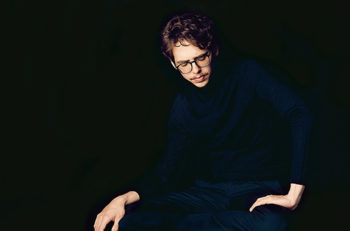 French pianist Lucas Debargue inspired a standing ovation after only the second piece he played during his Cleveland debut in Reinberger Chamber Hall at Severance Hall on Friday evening, February 3. That tribute from a rapt audience might have come even earlier had he not made a direct segue from Domenico Scarlatti’s Sonata, K. 132 into Chopin’s Ballade No. 4. No wonder he wowed both critics and audience at the 2015 Tchaikovsky Competition.
The 27-year-old pianist’s ruminative playing of the Scarlatti led seamlessly into the Chopin, an enthralling, mercurial performance full of nuances and surprises. Debargue was so concentrated on the task at hand that you felt like you had almost guiltily snuck into a private practice session.
A Frenchman might be expected to bring special sensibilities to music by Maurice Ravel, and indeed, Debargue’s reading of Gaspard de la Nuit was something special. The pianist’s effortless technique gave exceptional lucidity to his interpretation of “Ondine” with its rhythmic explosions. “Le Gibet” was solemn, stark, and beautifully voiced, while “Scarbo” was flawlessly impish.
After intermission, Debargue gave the packed house Sonata No. 1 by Nikolai Medtner, a composer he counts as one of his “rare repertoire” interests. The highly-organized work, which dates from 1901-03, is endlessly intriguing, and Debargue brought extreme clarity to its textures and motivic content.
The audience raved to hear more after the Medtner. Lucas Debargue complied with Erik Satie’s amusing Gnossienne No. 1, its title a neologism of the composer’s own coinage that probably derives from the Greek gnosis, meaning “knowledge.” A second encore was almost a shoo-in, and here Debargue shucked off his jacket and turned to jazz, another of his interests, for his own dazzling arrangement of Thelonious Monk’s ‘Round Midnight.
Debargue’s performance has to count as one of the most refreshing and engaging piano recitals of the season. You have to wonder what the Tchaikovsky jury was thinking two years ago when they awarded him only fourth prize. Rumor has it that his technique was unconventional. At least the critics and the audience got it right.
Published on ClevelandClassical.com February 13, 2017.
Click here for a printable copy of this article
