


by Stephanie Manning
 The galleries at the Cleveland Museum of Art are no stranger to classical music performances. But on October 10, the Resonance Project held a celebration of the museum’s artwork that happened entirely off-campus.
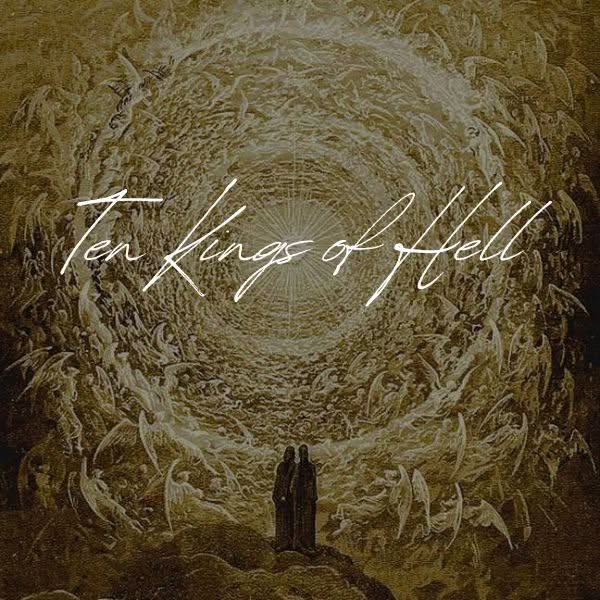
“Inspired by ‘Ten Kings of Hell,’” presented at the Resonance Project’s home base of Forest Hill Church in Cleveland Heights, was exactly as its title described. The group themed the program around the Museum’s recently-opened exhibition on medieval Korean art, “Ten Kings of Hell,” which runs through January 3.
The extensive, three-part evening took some unexpected turns, and some pieces connected with this inspiration better than others. But this cross-disciplinary celebration of art produced plenty of beautiful moments — and likely inspired a few people to visit the “Ten Kings of Hell” exhibition themselves.
Medieval Korean Buddhists believed in a purgatorial afterlife guarded by these Ten Kings, who took turns judging souls on their path to atonement and salvation. Pianist Irwin Shung explained that the first section of the program, “A Departure,” collected three laments from the perspective of those whose loved ones had passed on.
Shung’s rendition of the melancholic second movement of Franz Schubert’s Sonata in B-flat Major brought to mind the the glowing, ethereal sculpture Bending Willow Branches by artist Anicka Yi — one of the pieces highlighted by curator Sooa Im McCormick in that evening’s prelude talk.
Fazıl Say’s Black Earth and J.S. Bach’s “Wie jammern mich doch” from BWV 170 also contributed to the melancholic mood, although the Schubert alone encompassed everything pretty neatly.
The second section, “Visions,” symbolized the experience of those on the other side of death and their journey from judgment to redemption. Shung gave a fittingly otherworldly air to Olivier Messian’s La Colombe, and harpsichordist Qin Ying Tan did the same with François Couperin’s The Wandering Shades.
The next set of three art songs, with their Christian lyrics, sometimes felt harder to connect with in a program that encouraged its audience to contemplate Korean Buddhist concepts. Charles Ives’ General Booth Enters Into Heaven, with its Biblical message about being “washed in the blood of the lamb,” ultimately felt like an outlier.
Still, Schubert’s Gruppe aus dem Tartarus and Benjamin Britten’s At the Round Earth’s Imagined Corners kept things lyrically more general and described the pain and suffering of the dead — which aligned better with the judgments doled out by the Ten Kings. Soprano Anna Jung Eun Rathbun gave a particularly impassioned performance of the Britten.
Shung and Tan then took turns flexing their impressive technical dexterity. Tan’s declarative interpretation of Bach’s Chromatic Fantasy and Fugue, BWV 903, was her brightest moment to shine. And Shung appeared absorbed in his performance of Franz Liszt’s Après une lecture du Dante: Fantasia quasi Sonata.
Although the program had yet to engage directly with Korean musical tradition or influences, that changed at the end with the third section, “Another Departure.” This section contained just the Korean traditional song Arirang, which is hundreds of years old and highly meaningful in Korea.
Shung’s arrangement for piano, harpsichord, and soprano emphasized the song’s wistfulness, maintaining the melody in the soprano while adding a more mysterious and inconclusive accompaniment. Hearing Arirang brought the program back to one of its core inspirations — celebrating how Koreans have expressed themselves through art, whether visually or musically.
Published on ClevelandClassical.com October 29, 2026
Click here for a printable copy of this article
