

by Mike Telin
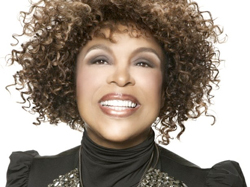 GRAMMY award-winning vocalist Roberta Flack will be the featured performer with Carl Topilow and the Cleveland Institute of Music Orchestra at CIM’s Severance Hall benefit, “Set the Night to Music” on Saturday, January 26.
Ms. Flack, who is well-known for her narrative skills as a singer and for the breadth of her musical interests, which range from pop, soul and folk to jazz, began studying classical piano at an early age and won a scholarship to Howard University when she was 15. Jazz musician Les McCann discovered her singing at Mr. Henry’s nightclub in D.C. and she rapidly rose to stardom after signing with Atlantic Records and recording a series of hits. She received a star on Hollywood’s Walk of Fame in 1999.
Ms. Flack has founded the Roberta Flack School of Music at the Hyde Leadership Charter School in the Bronx, NY to provide a free musical education to underprivileged students.
We reached Roberta Flack by telephone to talk about her illustrious career.
Mike Telin: In an interview you said “The romantics are my guys.”
Roberta Flack: Yes! Chopin, Schubert, Schumann, Liszt and Rachmaninoff. I love all of them, they are all heavy on the melody.
MT: You studied piano at Howard University; how did studying classical piano influence your solo singing career?
RF: On the way to becoming blessed with the opportunity to sign a recording contract as a singer, I had worked in Washington DC as a teacher in the secondary schools, teaching music of course. I also moonlighted, which was very much against the rules, in Georgetown in a place called Tivoli Opera Restaurant, so I had a chance to use my keen sightreading ability.
I could also transpose at sight. I had learned some of the [arias] just making my way through university, but I didn’t study voice, I studied piano. And, when I decided to get [a degree] that would give me work, I went into music education. So here I am at the Tivoli Opera Restaurant and all these kids are singing. Someone would come from the back singing Radamès and someone in the front was singing Nessun dorma, all that as well as the soprano arias and the duets and quartets and it was my job to play for them.
So that’s what happened and I used my piano studies and the hours and hours of practice to help me get though. But it was really my love of Chopin, Schubert, Schumann and their melodies that got me into my career in terms of the song choices that I made. First Time Ever I saw Your Face — I thought it was so beautiful, the melody as well as the words, it’s simple and direct. It has everything that I admire about a good song.
MT: I still find that song hauntingly beautiful, and your voice, it’s never out of tune.
RF: That’s because when I was a student at Howard I sang with the choir and the choir was a big deal if you got the chance to audition and were accepted, to sing with Dean Warner Lawson. We sang with the National Symphony and traveled to New York. But he would say to me, Roberta, go into the tenor section, and that is because he wanted me to keep them on pitch. At that point in my life I had this incredible ability to sing right on the center of the pitch. I would divide the [notes] into three parts, the bottom and upper and the middle, and the middle was dead on and that’s where I tried to go. That was just a wonderful experience which resulted in my love for singing and it transferred to songs like First time, Killing me softly and most of my earlier songs.
MT: But you need this type of training so that you don’t hurt your voice.
RF: That’s so true, and you need to be aware of that. Although I never had the personal opportunity to teach singing, I now have a struggling school in the Bronx called The Roberta Flack School of Music. It’s hard because young people today have so many options. I’ll say to them, let me give you a treat. I’ll buy the movie Amadeus so you can watch it and see what a young genius is like, someone who was composing symphonies at the age of four.
MT: Speaking of teaching, you have also said that you hope you were a good teacher. I Found many comments online from former students such as this: I had the honor of having her as my junior high school music teacher when she was first playing clubs at night and teaching during the day. She opened our hearts and souls to all music. She told us there was something else out there besides the Sound of Motown and introduced us to classical (“there are 23 instruments in this movement — name them!”); she never let us sing in English…
RF: I was teaching when I was very young. My first year of teaching I taught in North Carolina and those kids were my age and many were parents already. [At that time] in the South there were the regional choral competitions, everybody sang the same song or chose from the same list of songs. Everyone was given a grade from the adjudicators. These kids had never participated and when the notice about the competition came around I started talking it up to the kids and before I knew it I had a choir that was anxious to learn Ave verum corpus, and I told them that I was nineteen and I learned the piece at Howard and if I can do it they can too. It was hard, but they learned it and by the time I got through, [students] were skipping classes in order to listen to rehearsals and begging to join the choir. The principal was awfully upset but the kids loved it.
I also told them that you can sing in a language, even if you don’t speak the language, but you need to know that this is a beautiful song. So I was able to get through to the kids because I had such enthusiasm for what I was doing and I still do.
MT: So what keeps you young? — Because you are very young!
RF: Oh thank you. I think spirit and heart keep you young. People ask me what I think of the music of the kids today and I say I love it. I love it because it has managed to tap the heartbeat of what is happening in the world today. If we were still back in the days of Grand Master Flash that would be different, but we’re not. When Kanye did his first hit, Jesus Walks, he used a symphonic approach, and what made it hip hop was the pulse. I said, OK, that’s not too far from Sam Cooke or Mahalia Jackson. If you put that beat under their music it could be a hit.
Published on clevelandclassical.com January 15, 2013
