
by Daniel Hathaway
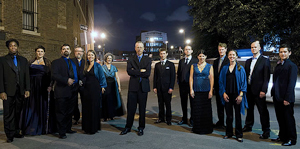
 One of the most versatile early music ensembles in the country, Minneapolis-St. Paul’s Rose Ensemble offers touring programs that range from the life and deeds of St. Francis of Assisi, to an exploration of the roots of Bluegrass, to “Sibyls of the Rhine — Hildegard von Bingen and the Minstrel’s Song of Songs.” On Wednesday, September 30, Jordan Sramek brought his twelve singers to St. John’s Cathedral to perform “Slavic Wonders: Feasts and Saints in Early Russia, Poland, and Bohemia,” a wonderfully varied and superbly performed program. [Read more…]
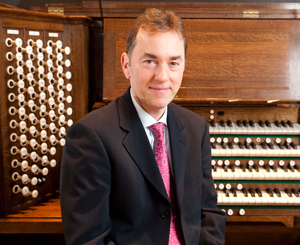
 Jonathan Rudy, winner of the most recent American Guild of Organists National Young Artists Competition, made his Cleveland debut on Friday evening, November 14, on the Holtkamp organs at the Cathedral of St. John the Evangelist. The audience was enthusiastic but sparse, undoubtedly because of heavy snowfall and several major highway closures. Currently a doctoral student at Indiana University, Rudy played a widely varied program that showcased his considerable musical ability.
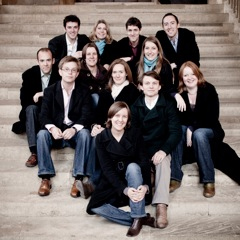
 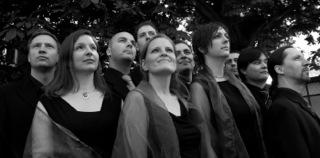 Up and down the streets of Cleveland Friday night wandered the usual Halloween goblins and ghouls, but inside the Cathedral of St. John the Evangelist were spirits of a more heavenly persuasion. Vox Luminis, a young Belgian choir specializing in early music, presented a beautifully crafted program that was at once passionate and serene.
 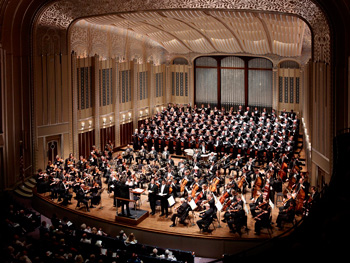 In conjunction with performances of J.S. Bach’s Mass in B Minor (October 16 and 18) and one of his solo cantatas by soprano Yulia van Doren (October 23, 24 & 24), The Cleveland Orchestra, Cleveland Orchestra Chorus and Youth Chorus will offer a free concert of the Kyrie and Gloria from the Mass at St. John’s Cathedral in downtown Cleveland on Friday, October 17 at 8:00 pm, and a “Make Music! Marathon” at Severance Hall on Saturday afternoon, October 18.