

by Caitlin Winston
 TODAY’S ALMANAC:
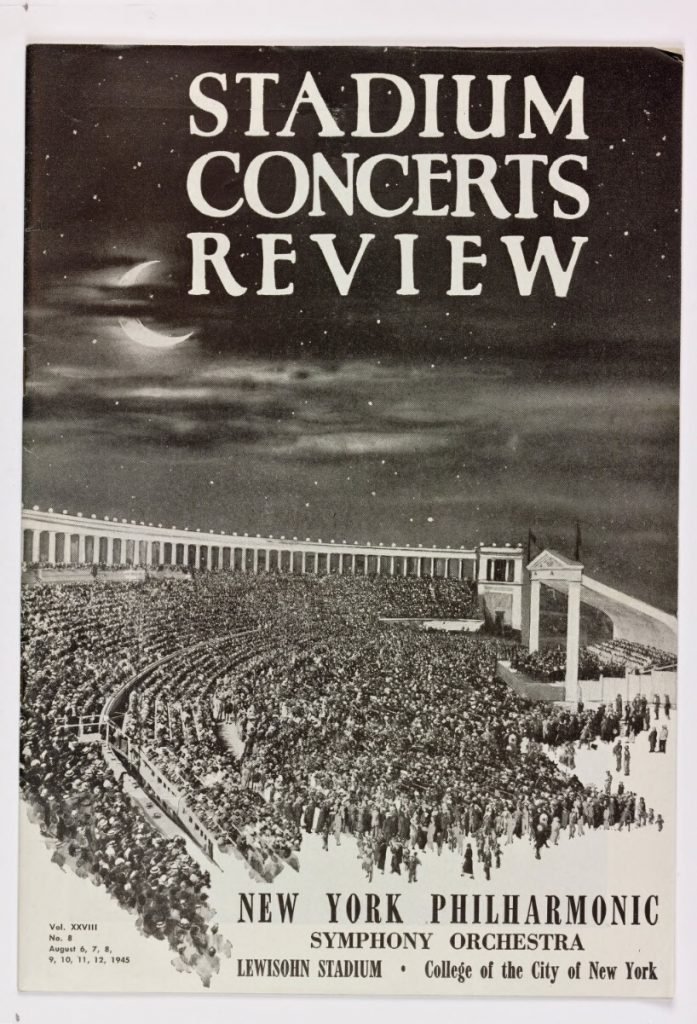
The New York Philharmonic was one of the first orchestras to offer live radio broadcasts of their concerts, and on this day in 1922, the Philharmonic was heard live on the airwaves for the first time. The program, held in the Lewisohn Stadium on the campus of City College of New York, featured the Overture to Ambroise Thomas’ opéra comique Mignon, Franz Schubert’s entr’acte music from the play Rosamunde, Karl Goldmark’s “Rustic Wedding” symphony, and the Dream Pantomime from Engelbert Humperdinck’s Hansel and Gretel, and closed with two trumpet solos by Franz Schubert. On the podium: Willem van Hoogstraten, the Orchestra’s regular summer-event director.
The stadium, built in 1913 with a seating capacity of 8,000, was demolished in 1973. More information on New York Philharmonic history can be found in the archives section of their website.
French-Canadian mezzo-soprano Huguette Tourangeau, a musician remembered for her mind-blowing range, vocal agility, and rich chest voice, was born on this day in 1938. Tourangeau was a student at the Conservatoire de musique du Québec à Montréal, and made her operatic debut as Mercédès in Carmen in 1964, shortly before winning the Metropolitan Opera National Council Auditions. After her win, she performed the opera’s title role with the Metropolitan Opera National Company in a 56-city tour.
Throughout her career, she was known as a frequent performance and recording partner to Joan Southerland, whose dramatic coloratura paired perfectly with Toruangeau’s beautifully dark “almost baritone.” Tourangeau’s voice was heard frequently on the stages of the New York City Opera and the Met, as well as in opera houses in London, Seattle, Santa Fe, Vancouver, and San Francisco. Click here for Tourangeau and Southerland’s 1977 performance of Donizetti’s Maria Stuarda.
American composer and master of the postwar avant-garde John Cage died on this day in 1992, at age 79. While Cage is commonly remembered as the person who makes us sit through more than four minutes of sometimes-enlightening, mostly-awkward silence, we also honor him as the composer who challenged musicians to re-approach their performance methods, and encouraged audiences to reconsider their preconceptions of what music is.
Cage’s indeterminate compositional style shifted much of the control over his music’s tone, shape, and scale to the performer and their interpretation of his notation. His innovative approaches to form and sound production continue to influence music composition today. Click here to watch New England Conservatory faculty member Stephen Drury demonstrate the process of piano preparation for Cage’s Sonatas & Interludes.
 HAPPENING TODAY:
 HAPPENING THIS WEEKEND:
 CIPC MOVES TO SEVERANCE:
 On this date in
  TODAY’S ALMANAC:
  EVENTS TODAY:
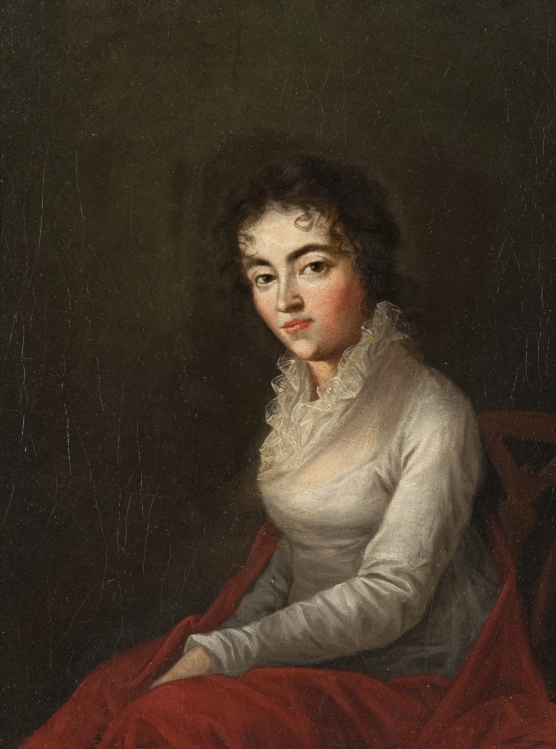 On this day in 1782, Wolfgang Amadeus Mozart married his wife Constanze, née Weber (pictured). One of four daughters, all of them singers, Weber was a musician in her own right and would later go on to inspire some of Mozart’s most renowned compositions.
 TODAY’S EVENTS:
 IN THE NEWS:
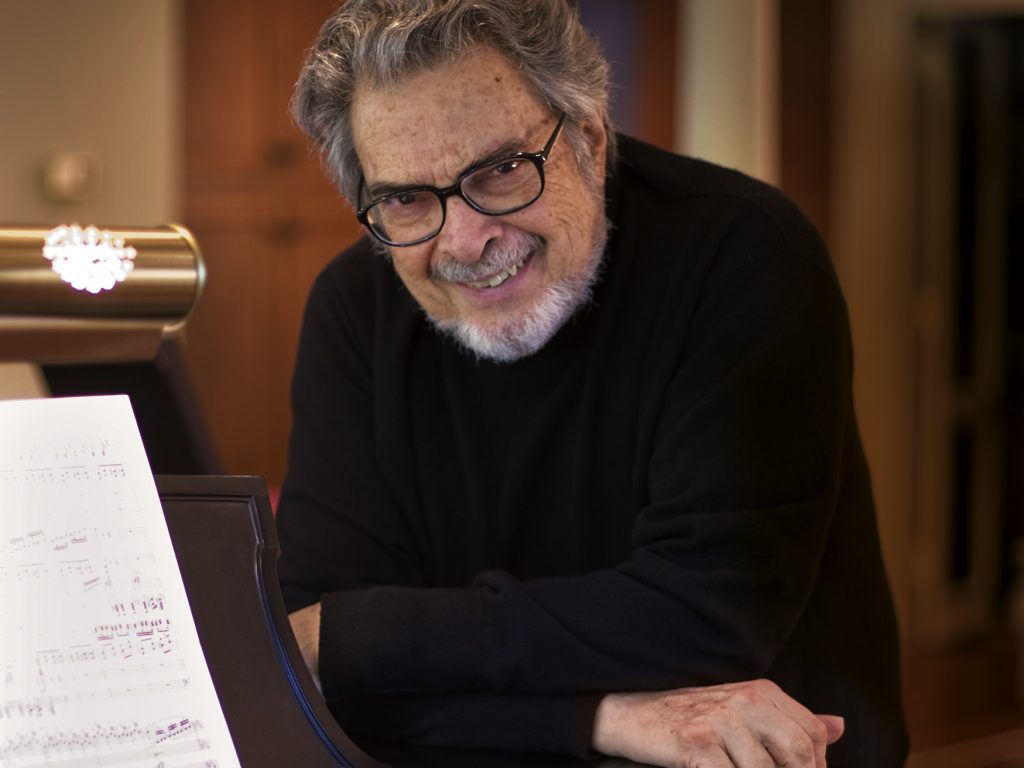 Today marks one year since pianist and conductor Leon Fleisher died in Baltimore, Maryland, at the age of 92. A child prodigy, Fleisher performed at Carnegie Hall with the New York Philharmonic at the age of 16.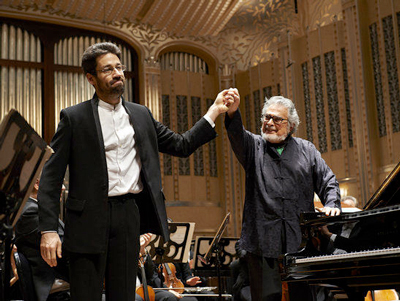
 WEEKEND EVENTS:
  TODAY’S EVENTS:
 On this day in 1970, George Szell, Cleveland Orchestra music director for 24 years, died in Hannah House at University Hospitals — during a Blossom concert conducted by Pierre Boulez.