

by Mike Telin
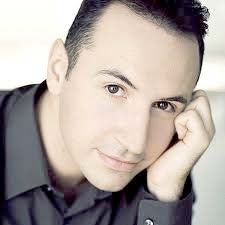 This week at Severance Hall, Robin Ticciati will lead The Cleveland Orchestra in concerts that feature Liadov’s Enhanted Lake and Sibelius’s Symphony No. 2. The program also includes one of the most popular piano concertos in the repertoire, the Concerto No. 2 by Sergei Rachmaninoff, with Macedonian pianist Simon Trpčeski as soloist.
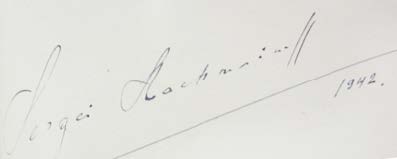
Given the popularity of this concerto, we took the opportunity to once again visit the Orchestra archives to see what archivist Deborah Hefting could tell us about Rachmaninoff’s personal appearance and performance of the piece with the orchestra in 1942. We also spoke to Simon Trpčeski and asked him about the challenges of playing such a well-known piece.
“I need to say that it is a great challenge, as I think it is for any pianist who is playing such a popular piece like the Rachmaninoff 2nd concerto”, Trpčeski told by telephone from his home in The Republic of Macedonia. “One always tries to find something, even if it is a little thing [to do differently] in each performance, since it has been played millions of times.” [Read more…]
 Preparing for interviews and the writing of features is interesting as well as fun, in that through the internet and social media sources such as Facebook, Twitter, and YouTube, one can usually discover at least some “human interest” facts about most artists.
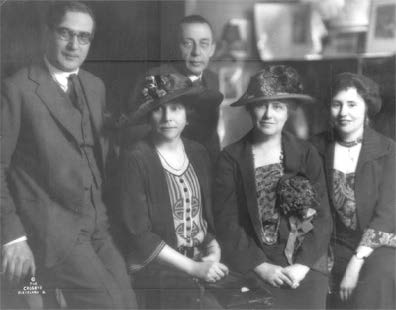 Rachmaninoff first came to Cleveland in 1923 to perform his second piano concerto at Masonic Auditorium on March 29 and 31, an event that coincided with the 25th anniversary of Adella Prentiss Hughes’ reign as Cleveland’s musical impresario. He returned in 1932 just after the Orchestra moved to Severance Hall, and four more personal appearances followed: November, 1937 (the Rhapsody on a Theme of Paganini), October, 1939 (Piano Concerto No. 1), March, 1941 (Beethoven Concerto No. 1 & the Paganini Rhapsody) and January, 1942 (Piano Concerto No. 2). The 1923 and 1932 engagements were led by Nikolai Sokoloff, the rest by Artur Rodzinski. (Above, photo of Sokoloff and Rachmaninoff, Mrs. Rachmaninoff, Adella Prentice Hugues & Lyda Sokoloff, 1923 photographer unidentified, courtesy of The Cleveland Orchestra Archives).