

by Mike Telin
 In his program note, Franz Welser-Möst writes that: “Fidelio is not only an opera; it’s a philosophical statement about courage, liberty, love, and the triumph of the human spirit. Every stage director I’ve met wrestles with the same question when putting on Fidelio: How do you make it relevant to the time we live in? Here, we present it in concert to bring attention to the extraordinary ways that Ludwig van Beethoven’s music is philosophy set to sound.”
On Saturday, May 16 at 7:00 pm in Mandel Concert Hall at Severance Music Center, Franz Welser-Möst will lead The Cleveland Orchestra and Chorus in the first of three performances of Beethoven’s only opera as part of the Jack, Joseph, and Morton Mandel Opera & Humanities Festival.
The all-star cast includes Sara Jakubiak as Leonore, David Butt Philip as Florestan, Tomasz Konieczny as Don Pizarro, Raymond Aceto as Rocco, and Dashon Burton as Don Fernando. Click here for Festival details. The program will be repeated on Thursday, May 21 at 7:00 pm and Sunday, May 24 at 3:00 pm. Tickets are available online.
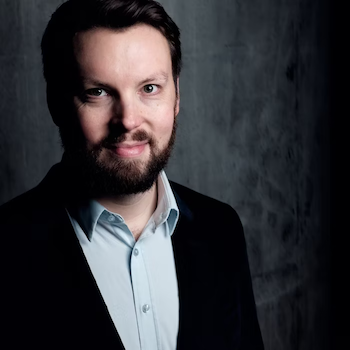
I caught up with David Butt Philip by phone earlier in the week. I began our conversation by welcoming him to Cleveland.
DBP: Thank you. I arrived on Sunday, and it was lovely to see the hall for the first time. And I’m looking forward to rehearsing with the orchestra for the first time this evening.
Mike Telin: Does the cast have rehearsals before getting together with the orchestra?
DBP: We had one piano rehearsal yesterday just to go through the whole piece once with Franz, just to make sure that everyone’s on the same page regarding tempo and text — that kind of stuff.
The orchestra had one rehearsal without us and we had one rehearsal without them, and now we rehearse together on Tuesday, Wednesday, and Thursday.
DBP: Actually for me it’s quite relaxed because the thing about Florestan is that he’s only in the second half of the show. In the entire first half people are talking about him, but you never actually see him.
Mike Telin: Fidelio is your Cleveland Orchestra debut.
David Butt Philip: That’s right. It’s also my first time in the State of Ohio and of course my first time in Cleveland, as well as my first time in Severance Hall, which is absolutely spectacular — and the acoustic in particular is wonderful. It’s nice for me to have experience of these great historic halls, but also with the world-class symphony orchestras that you have in the States. I’ve been lucky to sing with the Boston Symphony Orchestra a couple of times and at The Met several times. But the history and the prestige of The Cleveland Orchestra is a nice thing to be associated with.
MT: You have performed this role before with Franz: what does he bring to the Opera that you admire?
DBP: I think his years of expertise, specifically in this repertoire, as a Beethoven interpreter, and an interpreter of German 19th century music. There are not many people who are more experienced or have a greater depth of knowledge than him.
I have done the role six or seven times with Franz in Vienna, and he’s also very good at what great conductors have to be good at, which is teaching and coaching where it’s appropriate, but also allowing the artist to express themselves and to give their interpretation of the role where that’s appropriate. And that is always a balancing act.
I’m a big sports fan, so I’m always drawing sports analogies with what we do. But it’s a bit like being a great coach of an elite level sports team: it’s a question of to what degree do you micromanage, and to what degree do you allow great players to be themselves and to express themselves. And I’ve found that he’s very good at managing that.
MT: It’s always difficult to convince people who have never been, to go to an opera: what would you tell people who are skeptical to buy a ticket and go to Fidelio?
DBP: Fidelio is a very unusual piece in many exciting ways. I remember when I started my career ten or fifteen years ago, I sang a lot of Puccini, and my mother used to joke when she came to my shows, that everyone always dies, and when am I going to do something with a happy ending? And Fidelio has possibly the greatest happy ending in all of opera.
It’s absolutely thrilling to be on stage during the finale, which is one of the great hymns to freedom, and love, and joy that has ever been composed. It’s very exciting. And to experience that live is a very special thing.
MT: I agree completely. Is there anything else you think people should know about the work?
DBP: There are many positive aspects to Fidelio. One of them is it’s not that long for an opera. Another one is that it’s a fantastic showcase for a great orchestra like Cleveland. Also, it’s a terrific cast that we have. There’s Tomasz Konieczny, who I did the piece with at The Met last year. We have the wonderful Sara Jakubiak who is making her role debut as Leonore, and who I’ve sung with before. She’s a fantastic artist. And there’s the wonderful Raymond Aceto as Rocco, who I have also sung with when I was just starting out at the Royal Opera House in London.
So it’s very exciting to be here for this project. It’s also a piece that means a lot to Franz, so to do it here with him, where he has such a special history and relationship with the Orchestra is fantastic.
Photo by Andrew Staples
Published on ClevelandClassical.com May 14, 2026
Click here for a printable copy of this article
