

by Stephanie Manning
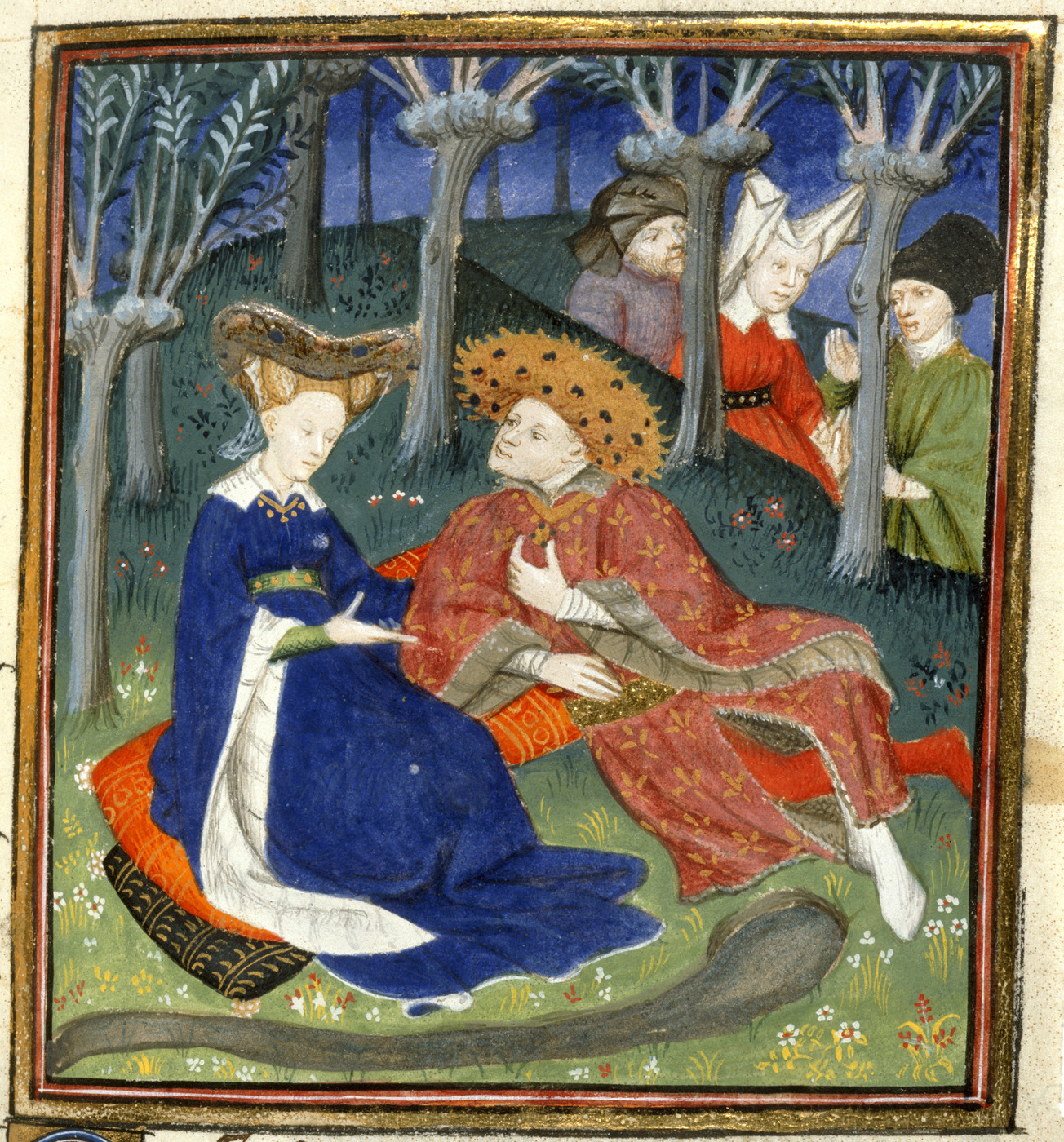 Obviously, the male perspective was not the main focus in a program called “The Lady of Medieval Song.” On May 23, Trobár’s audience at West Shore Unitarian Universalist Church primarily heard repertoire written by or about women, favoring female voices and perspectives as much as possible.
However, more than five centuries removed from this music’s origin, these kinds of pieces are rare. And the reasons why are inextricably tied to the men who undervalued it — and often preferred their own point of view instead. Four of the selections listed in the program appeared under the headline “The Male Gaze,” with the pointed logic behind that choice to be revealed as the concert went on.
Although the pool of surviving music by women is limited, Trobár tapped into the larger availability of woman-authored texts, borrowing tunes from elsewhere when needed. In one delightful early example, “I may well say,” Allison Monroe strummed her psaltery as she sang a text by Margaret Douglas over an early-16th-century tune. Along with the narrator’s delighted descriptions of her faithful lover, percussionist Allen Otte struck a pair of sweet-sounding chimes.
Some other pieces shared this upbeat feeling, like “Toute seule passerai,” an estampie from the Robertsbridge Codex, and “La second estampie” from the Manuscrit du roi. But most of the female-voice texts leaned more somber, focusing on lullabies and laments. Soprano Naomi McMahon delivered a heartbreaking “Dueil angoisseux,” a poem by Christine de Pizan set to music by Binchois, accompanied passionately by Monroe and Scott Metcalfe on vielles.
Later, McMahon, Monroe, and Metcalfe blended their singing voices in consonant three-part harmony during Guillaume Dufay’s “Ave maris stella,” only one of many tunes praising the Virgin Mary, the female subject of choice for many Christian poets and musicians. This theme resurfaced throughout the program, including in two settings of John Bedyngham’s poem “O rosa bella.” The final piece of the evening, the 11th-century tune “O Maria due maire,” returned to the earlier three-voice harmony while the sound of Otte’s bells echoed in the room.
The program’s path took us through sections of music from England, France, and Occitania, with brief stops at the “Male Gaze” works. During these four portions, Allen Otte took up a different kind of drum or tambourine and moved downstage, dramatically speaking the texts while illuminating them with steady rhythms.
It was easy to see why these works earned that label, as they represented a complete dismissal of women’s inner life or experiences. “Alysoun” from Harley Manuscript 2253 asserts a level of ownership over the woman the narrator is in love with, and Arnaut de Mareuil’s “Lady, by you and love itself” acknowledges that the object of his affection has protested such flamboyant declarations of love, but he decided to continue anyway.
Without commentary from the stage during the hour-and-a-half long set, a few elements of the program could have used more elaboration. Although the images projected along with the texts were a fun addition, it was somewhat unclear if these artworks were related to that particular piece or were simply representing the program in general.
Still, the clever effectiveness of the male gaze sections needed no such adjustment. The contrast between language that objectified and language that engaged with a woman’s internal experience simply spoke for itself.
Published on ClevelandClassical.com June 3, 2026
Click here for a printable copy of this article
