


by Daniel Hathaway
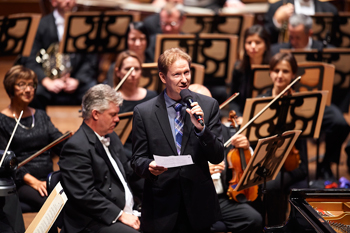 Three-quarters of their final score had already been totted up when the four finalists in the 2016 Cleveland International Piano Competition made their last lap around the track at Severance Hall on Friday and Saturday evenings, August 5 and 6. Handsome cash prizes were waiting at the end, but appearing with Bramwell Tovey and The Cleveland Orchestra was its own distinguished reward. (Photo: CEO Pierre van der Westhuizen welcomes the audience.)
Enroute to those important moments in the spotlight, Georgy Tchaidze, Nikita Mndoyants, Leonardo Colafelice, and Dinara Klinton each had four previous opportunities to make an impression playing a variety of repertoire. In this final round, the four contestants presented the jury and audience with vastly different pieces on which to base the last 25% of their decision.
The 2016 finals included two performances of Tchaikovsky’s first concerto and one each of Prokofiev’s third and Beethoven’s fourth. Try to imagine three pieces that are more different!
The Tchaikovsky is a full-blooded, Romantic work that requires both flashy technique and a deep understanding of the pre-revolutionary Russian soul.
The Prokofiev calls for surgically precise fingerwork as well as an ability to capture the composer’s mercurial moods — sometimes as sarcastic as often as they are sassy and comical.
The Beethoven — an outlier in his five concertos — demands a long overview and an understanding of the work’s philosophical underpinnings. Not the sort of piece that allows a performer to grab and hold your attention through sheer feats of pianism, it makes its most powerful impression through gentle persuasion and affecting lyricism.
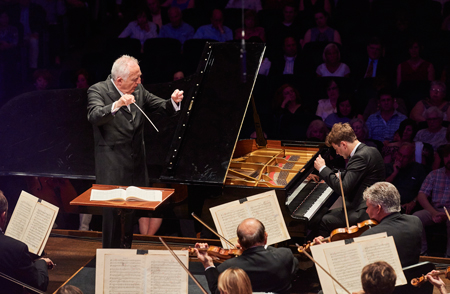
First to play on Friday evening, Russian pianist Georgy Tchaidze (28) demonstrated a full-figured, big-hearted approach to the Tchaikovsky. Tovey and the Orchestra’s splendid horn section began the work at a noble pace, sending it out of its launching slip like an ocean liner. Tchaidze played his opening phrases with a correspondingly robust, dark tone, but soon displayed a tendency to overcook phrases, pointing up too many special moments and breaking the first movement up into episodes.
Tchaidze’s powerful technique served him well in the work’s virtuosic moments, and there were passages of alluring lyricism as well. But as the concerto went along, the pianist seemed at times oblivious to the Orchestra, producing ragged ensemble even in uncomplicated passages (notably against the beautiful wind solos in the second movement). If the first movement was on the slow side, the finale took us off on a raucous ride — exciting, but sometimes less than tidy.
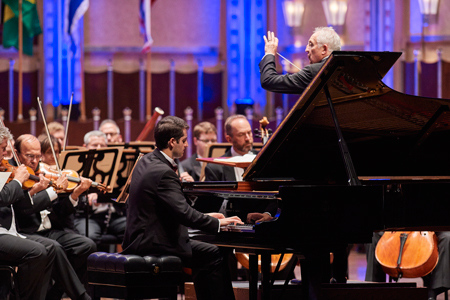 Friday’s second competitor, Russian pianist Nikita Mndoyants (27), brought a fluent sense of style and deep understanding to Beethoven’s fourth concerto, and he couldn’t have enjoyed a more seasoned ensemble to explore it with.
Clarity, evenness of touch, and a savvy sense of scale distinguished Mndoyants’ performance of the opening movement. In the second — one of Beethoven’s most remarkable, wordless recitatives — he answered the impassioned strings with aloof responses, reminiscent of the Druids in Charles Ives’s The Unanswered Question. Then, he warmed to the subject of the conversation himself, crafting a powerful concluding argument.
In the concluding rondo, Mndoyants conspired with Tovey and the Orchestra to rein in the tempo, allowing the pianist room to exert perfect control over the nuances in his solo passages. This was a calm, genial performance that put musical values distinctly in the foreground.
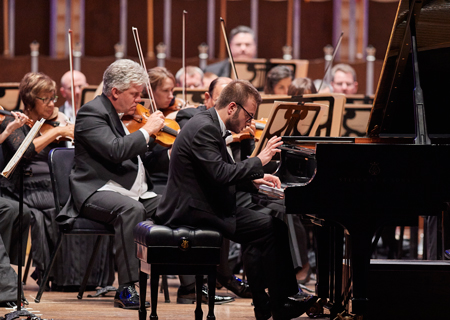
On Saturday evening, Italian pianist Leonardo Colafelice (20) brought steely fingers to Prokofiev’s third concerto, playing with rhythmic precision and a penetrating tone that often served the piece well.
The theme-and-variations second movement gave Colafelice the welcome opportunity to explore some different moods and colors. He did that admirably, even though the movement turned out to be more episodic than cohesive.
With the finale, the pianist again took off in a dizzying flurry of notes, not always perfectly in sync with the Orchestra. His breathless performance won Colafelice an enthusiastic ovation for keyboard facility, if not a lot of points for soul.
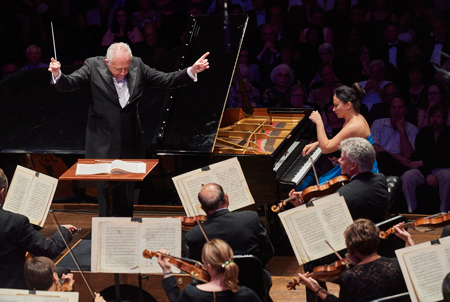 Ukrainian pianist Dinara Klinton (27) ended the final round with the second performance of Tchaikovsky’s first concerto. Saving her full power for later, she began with a stylish flourish of chords, then joined virtuosic passages to lyrical ones in a consistent narrative.
The Andante semplice lived up to its name, its amiable wind solos beautifully matched by Klinton’s phrases. The pianist ended the concerto by capturing the fire Tchaikovsky prescribed in his tempo marking, demonstrating a wealth of virtuosity without trying to burn the house down.
Throughout the two evenings, Bramwell Tovey and The Cleveland Orchestra provided warm support to the four pianists. The contestants who most deserved their places onstage with this ensemble were also those who most respected that partnership — during the performances as well as in their acknowledgement of conductor and Orchestra afterward. That may not figure in the scoring system, but it’s an important factor in the whole scenario.
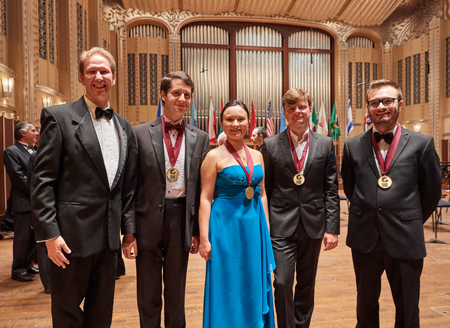 After waiting out the tabulation of scores, the audience heard the jury’s results. Nikita Mndoyants was awarded the Mixon First Prize, Leonardo Colafelice second prize, Dinara Klinton third prize, and Georgy Tchaidze fourth prize, with other special prizes to be bestowed at the Awards Ceremony and Winners’ Recital on Sunday.
Photos by Roger Mastroianni.
Published on ClevelandClassical.com August 8, 2016.
Click here for a printable copy of this article
