


by Daniel Hathaway
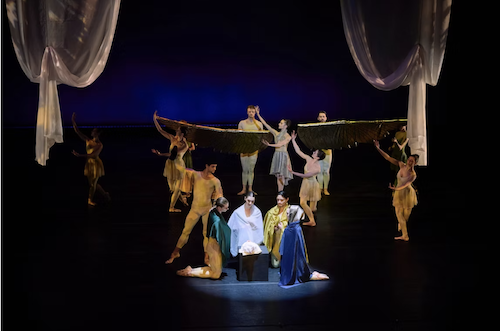 Three of Cleveland’s flagship organizations joined forces for gripping performances of George Frideric Handel’s Messiah at KeyBank State Theater from March 20 to 22.
Handel’s 1741 oratorio has firmly established itself in the U.S. as a Christmas religious tradition, although it was first performed in Dublin’s Fishamble Street Musick Hall at Easter time, when performances of Italian opera had fallen out of favor in London.
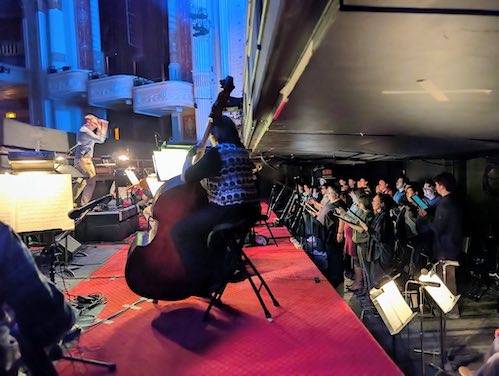
Cleveland Ballet’s productions restored Handel’s most celebrated oratorio to its original context in a theater, with some 50 excellent Blue Water Chamber Orchestra and Cleveland Chamber Choir musicians performing from the orchestra pit under the sensitive direction of CCC’s artistic director Gregory Ristow.
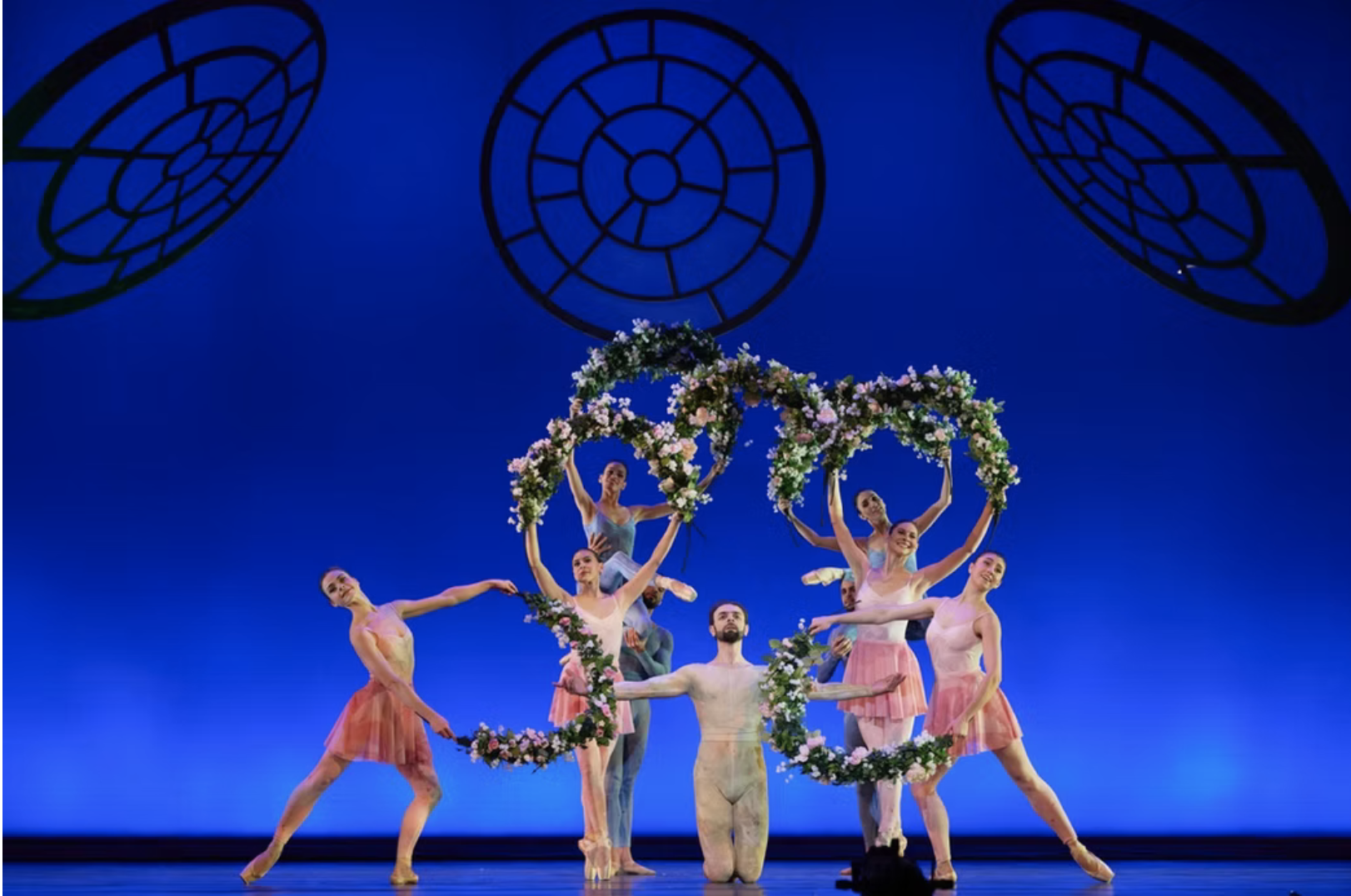 Returning the work to the theater restores some of the ambiguity that makes Charles Jennens’ libretto so fascinating. Though drawn exclusively from the texts of the King James Bible, it’s more a series of meditations on the promise of a Messiah than a dramatic narrative with a religious message.
The addition of choreography by Robert Weiss and colleagues, and staging by Dameon Nagel, added a visual layer to the story where Jennens’ text and Handel’s music welcome some enhancement. Cleveland Ballet’s attractive athleticism and its dancers’ ability to form beautiful tableaux kept your eyes glued to the stage for 2½ hours.
The vocal soloists were uniformly excellent, immediately capturing the affects of each of their arias and tastefully decorating final cadences.
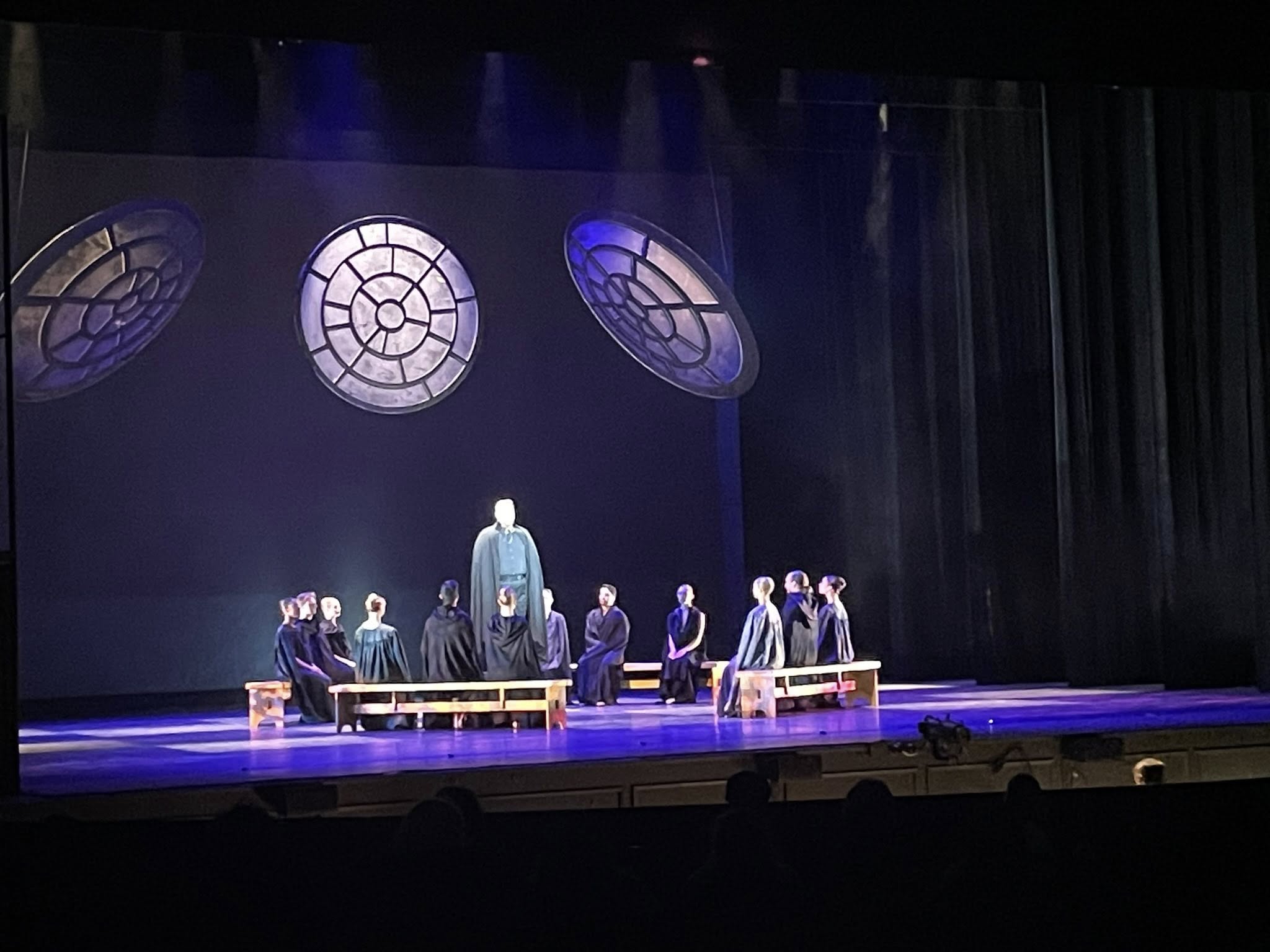 In his opening recitative and aria, tenor Mark Murphy Vogel gently comforted his people before confidently proclaiming that the Messiah would make the crooked straight and the rough places plain. Later he brought a fierce sense of judgement to the rage aria “Thou shalt break them with a rod of iron.”
Bass Albert Donze assured the people that walked in darkness that they would see a great light. Later, he gloriously announced that “The trumpet shall sound and the dead shall be raised,” accompanied by brilliant playing from trumpeter David Duro.
Alto Kimberly Lauritsen brought glad tidings to Zion, told her listeners that the Messiah would feed his flock like a shepherd, and sang a slow, show-stopping “He was despised and rejected of men.”
 Soprano Ashlee Foreman brightly announced the birth of the Messiah to shepherds in the fields, invited the Daughters of Zion to “Rejoice Greatly,” and proclaimed her confidence that her redeemer lives and shall stand at last upon the earth. She had the last word of the oratorio in her striking aria, “If God be for us who can be against us?”
Among its contributions, the Cleveland Chamber Choir masterfully negotiated complicated melismas in “For unto us a child is born,” tossed off “His yoke is easy and his burthen is light,” and closed the first section of the performance with a stirring “Hallelujah!” chorus. Later, they brought deep empathy to the persecution of the Messiah, and weight and festive solemnity to the closing chorus, “Worthy is the Lamb that was slain,” and the magnificent double fugue Amen.
Throughout, Gregory Ristow drew refined playing from his chamber chorus and from the top-notch BlueWater Chamber Orchestra. Kudos to cellist Linda Atherton and keyboardist Natalie Mealy for their attentive continuo work.
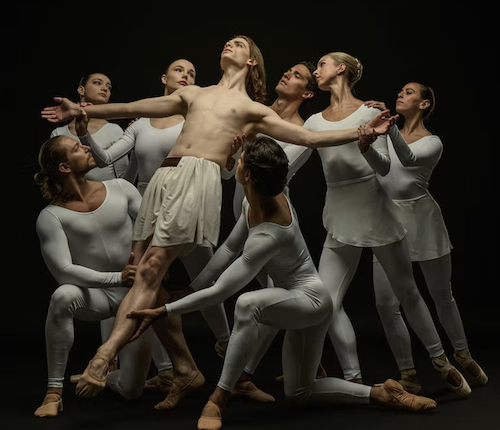
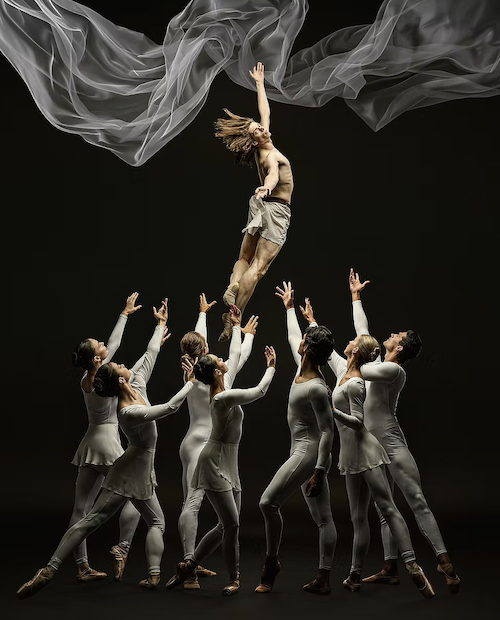 Dancers Narek Martirosyan (The Messiah), Albina Ghazaryan & Emmanuel Martirosyan, Gabriela Checo & Alexander Guzmán (The Principal Couples), and Alia Federico, Nashializ Gomez Orengo, Gabrielle Romano-Toppetta, and Alexandra Veronese-Milin (The Soloist Women) crafted meaningful tableaux and executed elegant unison movements. Especially effective was the choreography for “Why do the Nations so furiously rage together” and the all-white costume design for the corps de ballet.
The Messiah was an enormous undertaking for the three organizations that collaborated on its conception and execution. It was a brave move to produce it in the KeyBank State Theater, but it paid off handsomely to have the benefit of one of the most spacious stages between New York and Chicago rather than play it safe with a more modest production.
And conductor Gregory Ristow richly deserves a final ovation not only for his masterful job of keeping everything together, but also for bringing out revelatory musical details and memorable nuances in music we thought we already knew inside and out.
Published on ClevelandClassical.com April 7, 2026
Click here for a printable copy of this article
