

by Ben Giesen
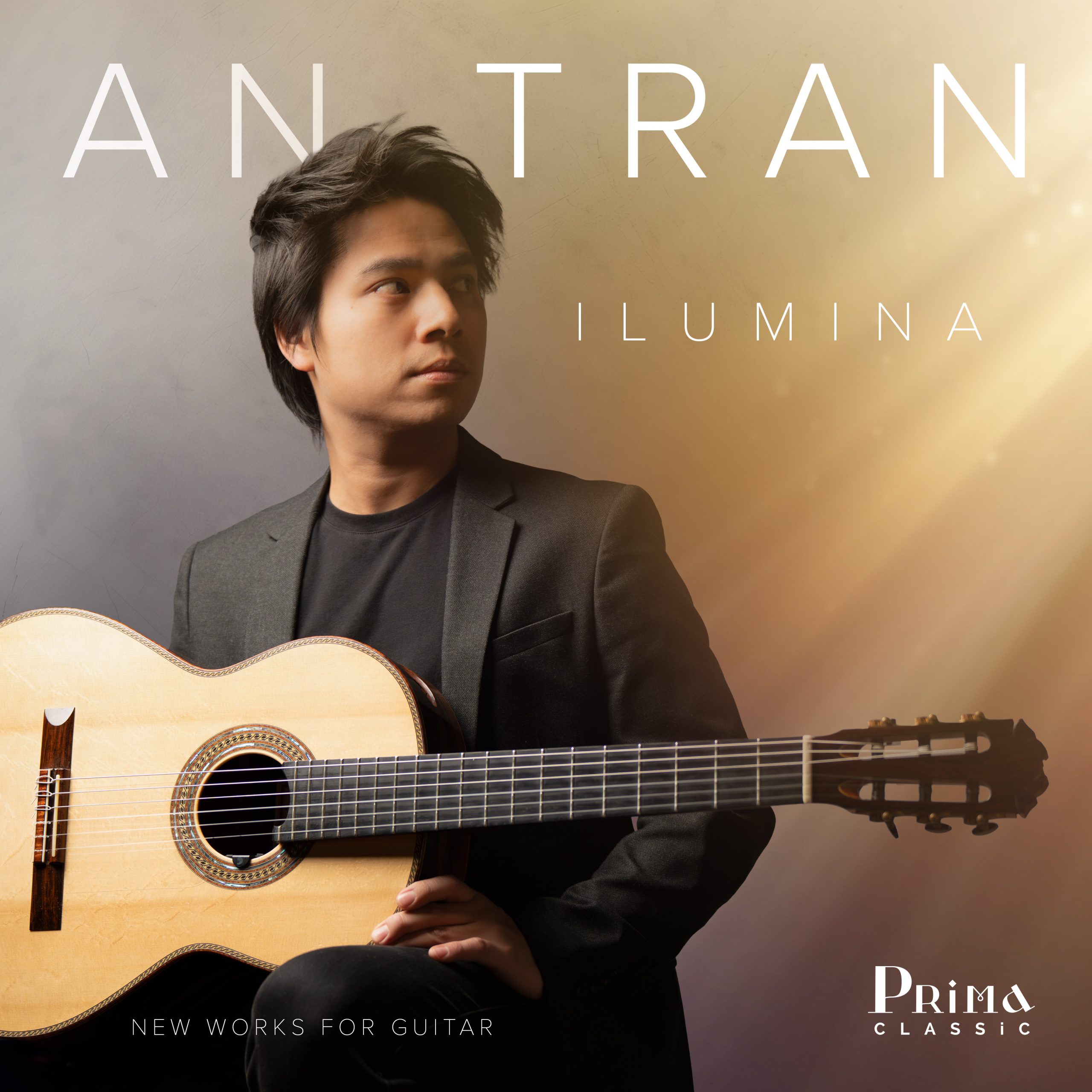 On August 28th, the esteemed Vietnamese-born classical guitarist An Tran will debut his third album, Ilumina: New Works for Guitar. Consisting of 13 tracks composed for Tran by friends and contemporaries, this release offers a comprehensive exploration of the range of expression that is possible through contemporary classical guitar. The project features ten world premiere recordings.
The album begins with “Bella di Papà” — a warm introduction to the lyrical side of Tran’s playing. As he gracefully traverses the tessitura of his instrument, Tran’s keen attention to articulation and dynamics allow his phrases to take the shape of wind blowing through a wheatfield. If this seems like the kind of piece that might lure unsuspecting listeners into a slumbe, composer Sarah D’Ippolito Reichert attests that she wrote it while “imagining how Tran might lull his daughter Ana-Lucía to sleep.”
Tracks by Paul Ibbotson, Olga Amelkina-Vera, and Juan Erena illustrate why Tran’s musicality represents so much more than just technical mastery. Although every component of his playing involves a high degree of precision, it never sounds rigid. As he winds his way through the playful melodies of Ibbotson’s “Little Dancer,” the distant, silky tone that he plucks from his higher strings make it seem as if he spontaneously switched instruments. From tone, to attack, to brief moments of vibrato, Tran’s use of inflection throughout the album makes even the most simple musical figures sound like they are being imagined for the first time.
It is especially refreshing to observe the emotional relevance of Tran’s choice of music — something that is often overlooked by composers in favor of writing solo repertoire that only highlights a performer’s virtuosity. Even though the title “Étude No. 8” is not the most eye-catching, this Juan Erena composition is an excellent example of Tran’s intention to capture a specific emotion or moment in time. The most striking moment is when the final chord of the piece emerges from an uneasy sea of textures with a presence that stings like the betrayal of a close friend.
Ilumina comes full circle with the final five tracks which combine delicate strumming, superb tone, and a meticulous attention to pulse in order to create an emotionally satisfying conclusion. Khiem Nguyen-Duy’s Toccata on “Lý Kéo Chài,” a traditional Vietnamese melody, allows Tran to evoke the heft of a full orchestra while playing with grit. The last track, Nathan Stade’s “The Park Bench,” is a brief cascade of complementary motifs that capture the subtle serenity of a public bench.
Beyond marking an important milestone in the career of a promising artist, this solo guitar project represents manifestation of an unrelenting, exploratory attitude towards classical music. Whether you enjoy the genre or not, Ilumina is an excellent listen for anyone interested in music spawned from authentic, lived emotion.
Published on ClevelandClassical.com, July 20, 2026
Click here for a printable copy of this article
