

by Daniel Hathaway
 November became Northeast Ohio’s unofficial Opera Month as a number of institutions unveiled productions during the first two weeks. Particularly dense was the weekend of November 4-6, when Opera Circle Cleveland, Kent State Opera, and Baldwin Wallace Opera Theater — in cooperation with Cleveland Opera Theater — all brought titles to the stage.
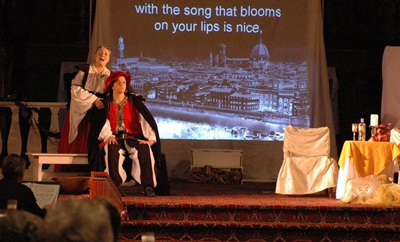
On Friday evening, November 4, Opera Circle Cleveland presented the first of ten performances of Pietro Mascagni’s Zanetto at the Shrine Church of St. Stanislaus in Cleveland’s Slavic Village (above). Eminently portable with only two singers and two instrumentalists, Mascagni’s “Lyric Scene” will tour all around the region through December 16 (full schedule here).
The 50-minute show, set in Renaissance Tuscany, tells the story of Sylvia, a wealthy and comely hostess of a country hotel who dreams of attracting a lover but spurns everyone who comes calling. Zanetto, a minstrel fond of his roving life, enters the scene. What should become a dream relationship doesn’t work out. Sylvia conceals her identity and pretends to be poor. The non-lovers part ways at the end.
Full of continuous, lyrical music but little in the way of action, Zanetto is a challenging piece to stage, especially in a large venue like St. Stanislaus, whose spacious acoustics and colorful decoration can distract both the ear and the eye.
Soprano Dorota Sobieska (Sylvia) and mezzo-soprano Megan Thompson (singing the trouser role of Zanetto) matched each other nicely in vocal prowess. Pianist Jacek Sobieski and violinist and violist Wanda Sobieska provided skillful instrumental underlay, though much detail got lost in the vast space. Projections and supertitles were effective. It would have been helpful to have more than a two-sentence synopsis printed in the program.
As the tour of Zanetto progresses, a few wrinkles will surely be ironed out. On Friday, Zanetto’s first appearance behind a screen far away from the lute-simulating violist made it difficult for Thompson to hear pitches. And shouldn’t singers who are addressing one another actually face each other?
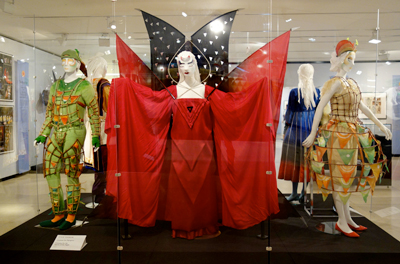 Kent State Opera Theater’s “Scenes from The Magic Flute” took advantage of a splendid exhibit of costumes in the University Museum conceived for Mozart’s Masonic opera by famous designers. The company presented four performances of an attenuated version of the opera right around the corner in the Museum’s Murphy Auditorium.
Devised and scripted by stage director Marla Berg, the utterly unpretentious production made no attempt to compete with the nearby costumery. The singers’ street clothes were accessorized with things you might find in a well-stocked attic, nicely chosen by Chloe Wingard.
WCLV’s Bill O’Connell narrated the show from Berg’s witty script, which had some fun with Mozart’s multiple baptismal names and poked a finger in the direction of the presidential elections. Pianist Chen Geng masterfully stood in for an orchestra, and on Saturday, November 5, graduate assistant Alexander Popovici conducted from the front row of the small auditorium.
Standouts in the student cast included Spencer Boyd as Tamino, Jason Howie as Papageno, and Brontë Lucci as the Queen of the Night — who nailed all of her high notes with frightening malevolence. The cast also included faculty singers Melissa Davis (Pamina) and Jay White (Third Spirit and Speaker, as well as the production’s music director).
With no room for scenery or much in the way of stage business, some entrances and exits made good use of the central aisle. The scenario was suggested by projections designed by Jeremy Dobbins — sometimes used humorously, as when Papageno tried to hang himself by throwing a noose over a virtual tree branch.
 Baldwin Wallace Opera Theater and Cleveland Opera Theater share a director in Scott Skiba, who initiated BW’s fall production by inviting Amsterdam-based stage director and conductor Timothy Nelson to create a pared-down version of Handel’s 1738 opera Serse (sometimes known as Xerxes — Prince of Persia).
Nelson managed to cut the three-hour show down to 90 minutes, reducing the number of characters, trimming musical elements, and linking the remaining material with the poetry of the medieval Persian poet Rumi.
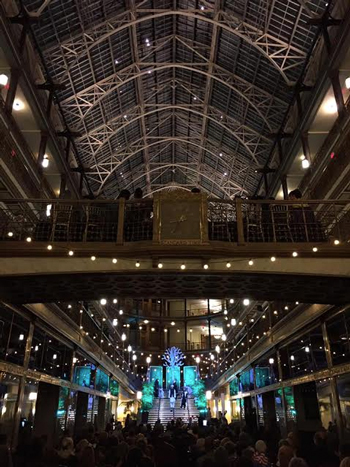
After two performances in Kulas Hall at BW, the show moved downtown to The Arcade on Sunday evening, November 6 for a gala evening produced by Cleveland Opera Theater.
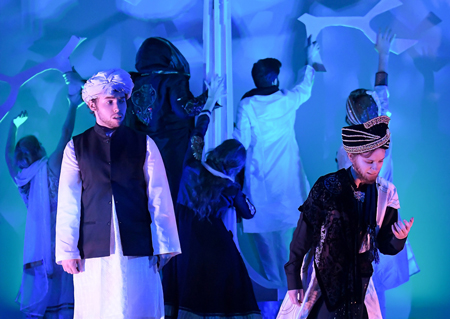
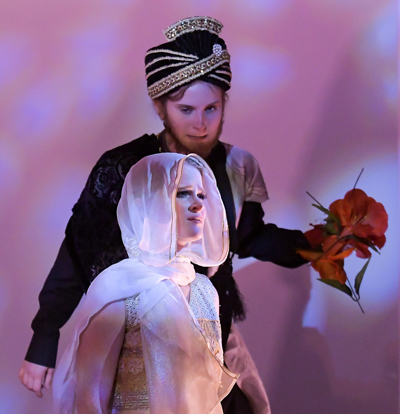
The beautiful, simple production made effective use of the grand staircase in the space (now part of a hotel), the show’s iconic tree crowning the top landing. A fine cast of singers included Adriana Ellis as Serse, Lauren Falk as Romilda, Dawna Warren as Atalanta, Robin Senser as Amastre, Luke Lemmieir as Arsamene, and Matthew Case as Ariodate. They joined baritone Jake Dufresne, who sang Elviro and pronounced Rumi’s timeless lines about life and love in mellifluous, soothing tones, to put across Handel’s complicated story. (Don’t try to follow the plot!)
With the help of assistant stage director Jason Aaron Goldberg, Timothy Nelson cleverly adapted the staging to fit the second venue, and led a tight, nuanced performance from the harpsichord. The professional orchestra of oboes, recorder, and strings raised the level of all boats in this production.
 What didn’t work so well was the sound design. Singers were fitted out with body mics, but through no fault of their own, certain soloists boomed out, while others sounded distant or tinny.
Timothy Nelson’s reworking of Serse should be very attractive to opera companies who want to produce Handel but shy away from lengthy productions full of da capo arias. Handel himself tried to attenuate this work, under pressure from “ballad” shows like The Beggar’s Opera, but Nelson has handily finished the job.
Published on ClevelandClassical.com November 15, 2016.
Click here for a printable copy of this article
