



by Daniel Hathaway
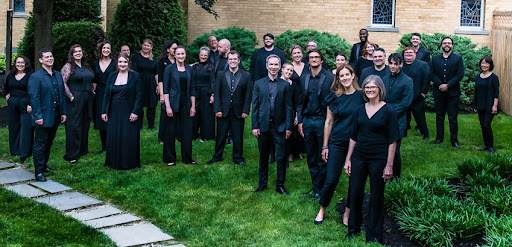
 Since it made its impressive debut in 2015, Scott MacPherson’s Cleveland Chamber Choir has enlivened the choral music scene in Northeast Ohio with superb performances of carefully curated, interestingly-themed programs that so far have added more than 32 new commissioned works to the repertoire.
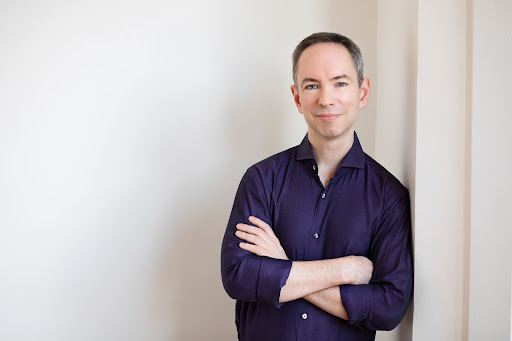
That tradition is now continuing under the leadership of Gregory Ristow, associate professor of conducting and director of vocal ensembles at Oberlin, who has been appointed acting artistic director of the ensemble following the mid-season announcement of MacPherson’s retirement.
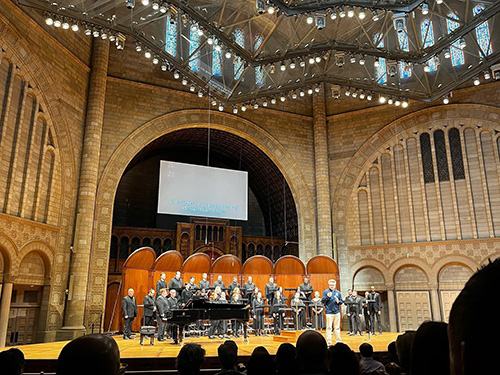
At the Maltz Performing Arts Center on Sunday afternoon, February 19, the Choir, whose tagline is “more than music,” presented Of Sound Mind: From Darkness into Light, a program that “explores the universality of grief and sorrow, helping us to embrace our common humanity in the struggles we individually and collectively experience.”
 In an interview with this publication, Ristow noted that midway through, the program turns the corner from despair to hope, a change of direction heralded by the opening piece, a repeat of Cecilia McDowall’s On the Air (Dear Vaccine), a prayer for a return to normalcy. Unlike last season when the singers performed with face masks, the 32 performers could now sing “We are the choir unmasked, unveiled, unmuted,” and so they did with obvious relish in what followed.
Brahms’ “Sehnsucht” and “Nächsten,” from the Op. 112 Quartets introduced the Romantic theme of longing. Beautifully sung with the sensitive collaboration of pianist Javier González, they posed the eternal artistic question of whether contentment can inspire great art (just imagine what the symphonies of a happy, well-adjusted Gustav Mahler might have sounded like).
Autism was responsible for Giulio De Carlo’s odd but intriguing Into the Orange. The composer’s son, who is “on the spectrum,” learned to communicate only through a computer, and described his feelings of isolation in terms of color (“Into the orange I fell, and there I got lost.”)
Just as interesting, Leila Adu-Gilmore’s “Coloring-in Book” is part of the cycle of Carols after a Plague commissioned from a dozen composers by Philadelphia’s avant-garde choir The Crossing.
 The first half ended with Elaine Hagenberg’s The Music of Stillness, conducted by assistant conductor Jelani Watkins, a setting of Sarah Teasdale’s “There Will Be Rest,” in which the poet finds serenity by gazing into the heavens in her native Iowa as winter approaches.
At the intermission, Elise Leitzel, one of the Choir’s Board members, introduced Walter Patton of Ghetto Therapy, a Cleveland midtown resident and activist who gave his very personal and impassioned view of life in a Cleveland housing project — whose conditions are often linked with feelings of isolation and can lead to deteriorating mental and physical health.
Chorally, things turned the corner into light and hope with Dale Trumbore’s Perhaps, and Aron Accurso’s three-movement You Are Enough: A Mental Health Suite — but not before Eric Whitacre’s arrangement of Trent Reznor’s Hurt raised the disturbing topic of self-mutilation (the chilling soprano soloists were Lauren Vanden Broek and Jacqueline Josten).
The program culminated in choir member Corey K. Rubin’s spectacular, sometimes wildly dissonant, but ultimately triumphant Gold on Every Cloud (text by Rabindranath Tagore) and Shawn Kirchner’s spacious modern arrangement of the Rev. J.K. Atwood’s spiritual Unclouded Day.
This was yet another intriguingly-designed and masterfully-sung program by Cleveland Chamber Choir. Perhaps a bit long for a Sunday afternoon (two hours including speeches — was that intermission necessary?), with perhaps too many similar pieces in that beautiful but amorphous and harmonically non-committal style popular with 21st-century composers, but commendable nonetheless. The ensemble should make an impressive showing at the forthcoming American Choral Directors Association conference in Cincinnati.
Published on ClevelandClassical.com February 24, 2023.
Click here for a printable copy of this article
