

by Jarrett Hoffman
 Last summer, according to Cleveland Orchestra violinist Isabel Trautwein, musicians from the Orchestra played 90-100 outdoor events. “These were driveway concerts and porch concerts with friends and students,” Trautwein said by telephone from her farm in Geneva (where she recently put on a program called Barnegie Hall.) “We thought, why don’t we give that a name, so that it has more of an impact, and so we all know we’re part of something larger.”
That something larger has become MusiCLE Yours, an initiative by a group of Orchestra members to share solo and chamber music — particularly but not exclusively by under-represented composers — with a range of communities throughout the area.
They started with recordings posted on YouTube, including a few that were filmed at the Crawford Auto Aviation Museum at the Cleveland History Center, with vintage cars visible in the background.
The next undertaking from MusiCLE Yours takes place at another venue off the beaten path, this time live, outdoors, and themed around social justice. “I can’t help with all the woes in our world, but I think we musicians — we must tackle the social justice issues surrounding our art form, especially classical music,” Trautwein said.
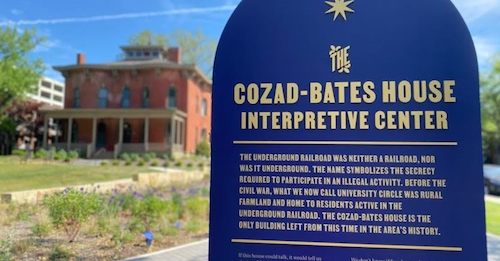
The setting for this free “Porchestra Concert” on Sunday, October 3 at 3:00 pm (rain date October 10) is the porch of the Cozad-Bates House in University Circle, an area that prior to the Civil War was home to residents active in the Underground Railroad.
Cozad-Bates is the only building in the area that remains from that time in history, and the house’s new Interpretive Center highlights both the area’s anti-slavery activists and those who sought freedom. The interior exhibits of the Interpretive Center will be open from 2:00 until 5:30 following the concert.
The program from MusiCLE Yours features chamber works by eight Black composers spanning from the early 19th century to the present day, several of them with local connections: William Grant Still, H. Leslie Adams, Coleridge-Taylor Perkinson, Justin Holland, Dolores White, Allison Loggins-Hull, George Walker, and Brian Raphael Nabors.
Performers include oboist Frank Rosenwein, flutist Joshua Smith, violinists Kathy Collins, Elayna Duitman, Emma Shook, and Isabel Trautwein, violists Eliesha Nelson (who will also deliver thoughts on the program) and Sonja Braaten, cellist Charles Bernard, and keyboardist Carolyn Warner. They’ll also be joined by three friends of the Orchestra: keyboardist Dianna White-Gould, soprano Brenda Pongracz, and guitarist Damian Goggans.
And there’s a featured speaker: Restore Cleveland Hope founder Joan Southgate, who embarked on a 519-mile walk across Ohio, Pennsylvania, New York, and Canada beginning in April 2002 to increase awareness of the history of the Underground Railroad.
Attendees are encouraged to bring their own chairs, blankets, food, and drink, though tents are not permitted, nor is alcohol. Masks will be available for free, though they are not mandated on the front lawn.
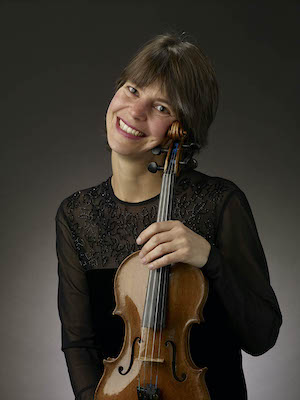 Trautwein (left) and I began our discussion of the program’s Cleveland connections with the name Justin Holland, whose Carnival of Venice Fantaisie will be performed by guitarist Damian Goggans. A 19th-century guitarist and composer who settled for a time in Cleveland, Holland was also an activist and abolitionist who was active in the Underground Railroad.
As Trautwein said, “He’s this incredible find, a Clevelander who has been lost to most of us. Why don’t we know about Justin Holland? He should be in every Cleveland history book, and every schoolchild in Cleveland, or beyond, should know about him.”
We moved from Holland, the oldest composer on the program, to Brian Nabors, the youngest, born in 1991 in Birmingham, Alabama.
A graduate of the University of Cincinnati College-Conservatory of Music, Nabors recently — and musically — revisited his Ohio background. This summer brought the virtual premiere of his string quartet Ohio Sketches by musicians from The Cleveland Orchestra, Cincinnati Symphony Orchestra, and Columbus Symphony.
The first three movements were, as Stephanie Manning wrote in a review, “tailored to each orchestra’s home city, with a final movement that brings all three groups together.” It was created as part of the Mindful Music Moments program, with Nabors incorporating feedback from schoolchildren in his composition process.
The MusiCLE Yours program will conclude with the final two movements of the quartet: “Cleveland Rock” and “All-Ohio!” As Trautwein said, “We asked Brian, and he was really in favor of it, especially in a situation where more people in the community would hear it.”
The Nabors was a suggestion from violinist Kathy Collins, who was part of the Cleveland Orchestra cohort that recorded it for the premiere. “The way we went about this concert is that we asked our colleagues for input — what they would like to play,” Trautwein said. “All the selections were volunteered, which is exactly the energy we were hoping to have with MusiCLE Yours.”
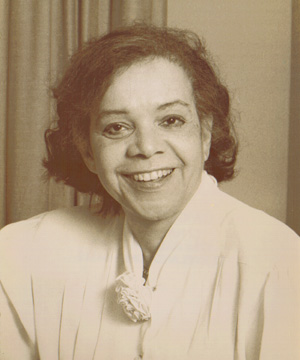 Continuing with connections to The Cleveland Orchestra, cellist Donald White, who was the first Black musician in the Orchestra’s history, and who passed away in 2005, is survived by both his wife, Cleveland-based composer Dolores White (left), and their daughter Dianna White-Gould, one of the two keyboardists performing on the program.
The third movement of Dolores White’s Blues Dialogues will shine a solo spotlight on Trautwein. “Dolores is an absolutely outstanding composer,” the violinist said, recalling her own experience listening to Rachel Barton Pine’s album also titled Blues Dialogues, which is devoted to music for violin by Black composers, and which includes the White.
“It is just ridiculously good music,” Trautwein said. “I think Rachel Barton Pine is doing such a great service to the classical music world. When people haven’t heard of a piece, don’t know how it sounds, or don’t know where to get the music, the chances of it being played are low, and that’s what racism looks like in classical music. It’s a very practical problem.”
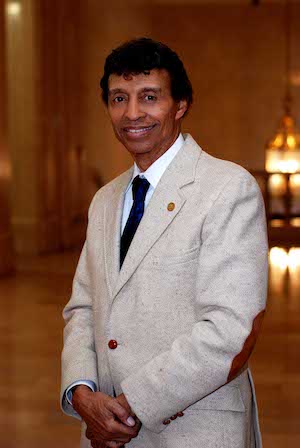 The other Cleveland-based composer on the program is also a Cleveland native: H. Leslie Adams (right), who will be represented by two arias from his music drama Blake. As Adams writes, it tells the story of a slave “who resolves to lead his people out of bondage and to a life of dignity.”
Reflecting on the era of slavery in the United States, Trautwein noted that her grandfather was born in 1897. “That means that 30 years prior to someone well within my imagination, people were slaves. The thought of it — isn’t that crazy? So H. Leslie Adams’ Blake deals with exactly that transition. And I spoke with him on the phone, which was exciting. He’s thrilled, and it looks like he’ll be present, as will Dolores White.”
Among other local connections on the program, Adams, White, Holland, William Grant Still, and George Walker all attended Oberlin.
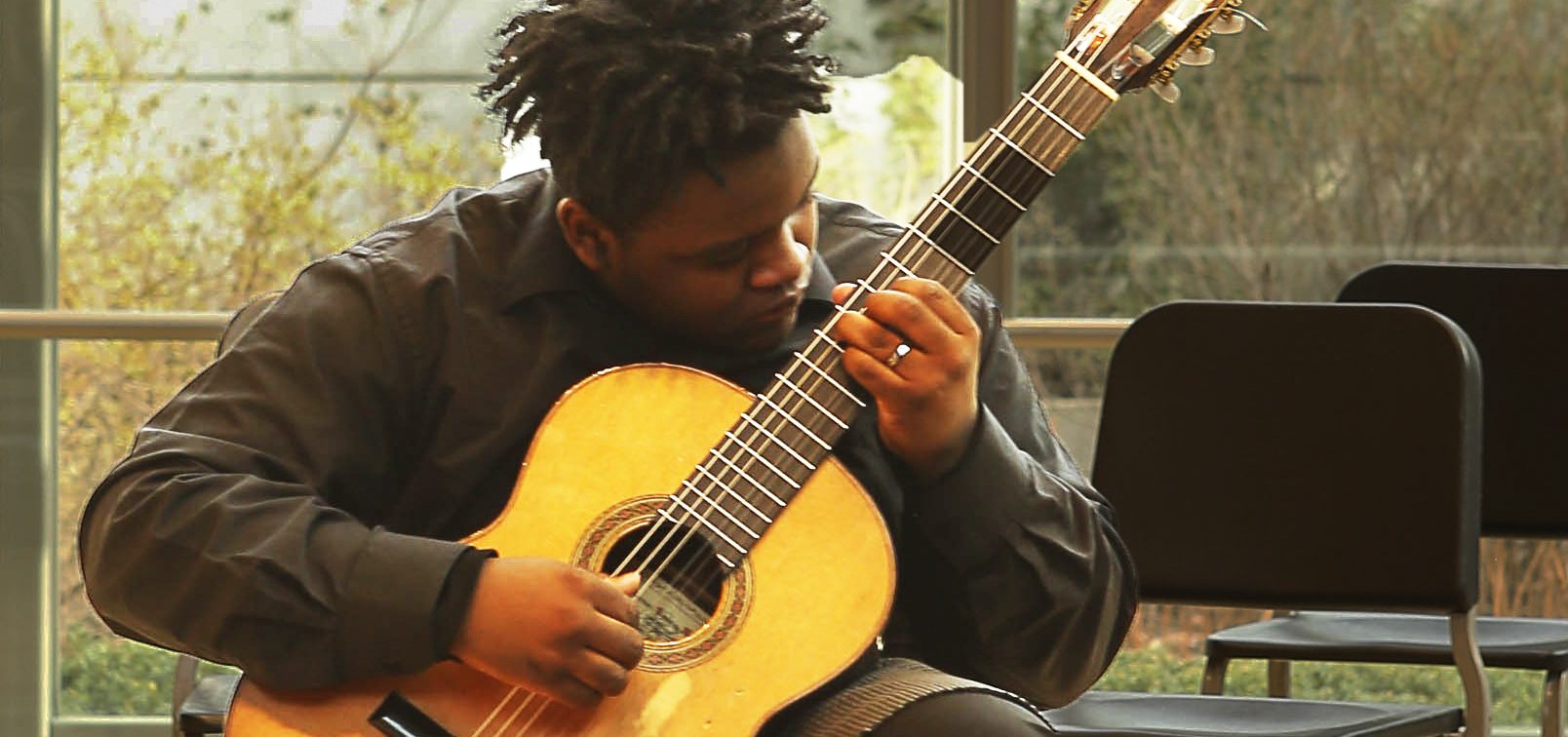 And speaking of the Yeomen — the guitarist playing the Holland, Damian Goggans (left), will begin his freshman year at Oberlin this fall, studying classical guitar on full scholarship. “So he’s in these footsteps,” Trautwein said.
In addition to the Holland, Nabors, White, and Adams works discussed above, the program includes William Grant Still’s Incantation and Dance, Coleridge-Taylor Perkinson’s Lament, Allison Loggins-Hull’s Homeland, and George Walker’s Lyric for Strings.
Published on ClevelandClassical.com September 29, 2021.
Click here for a printable copy of this article