by Peter Feher
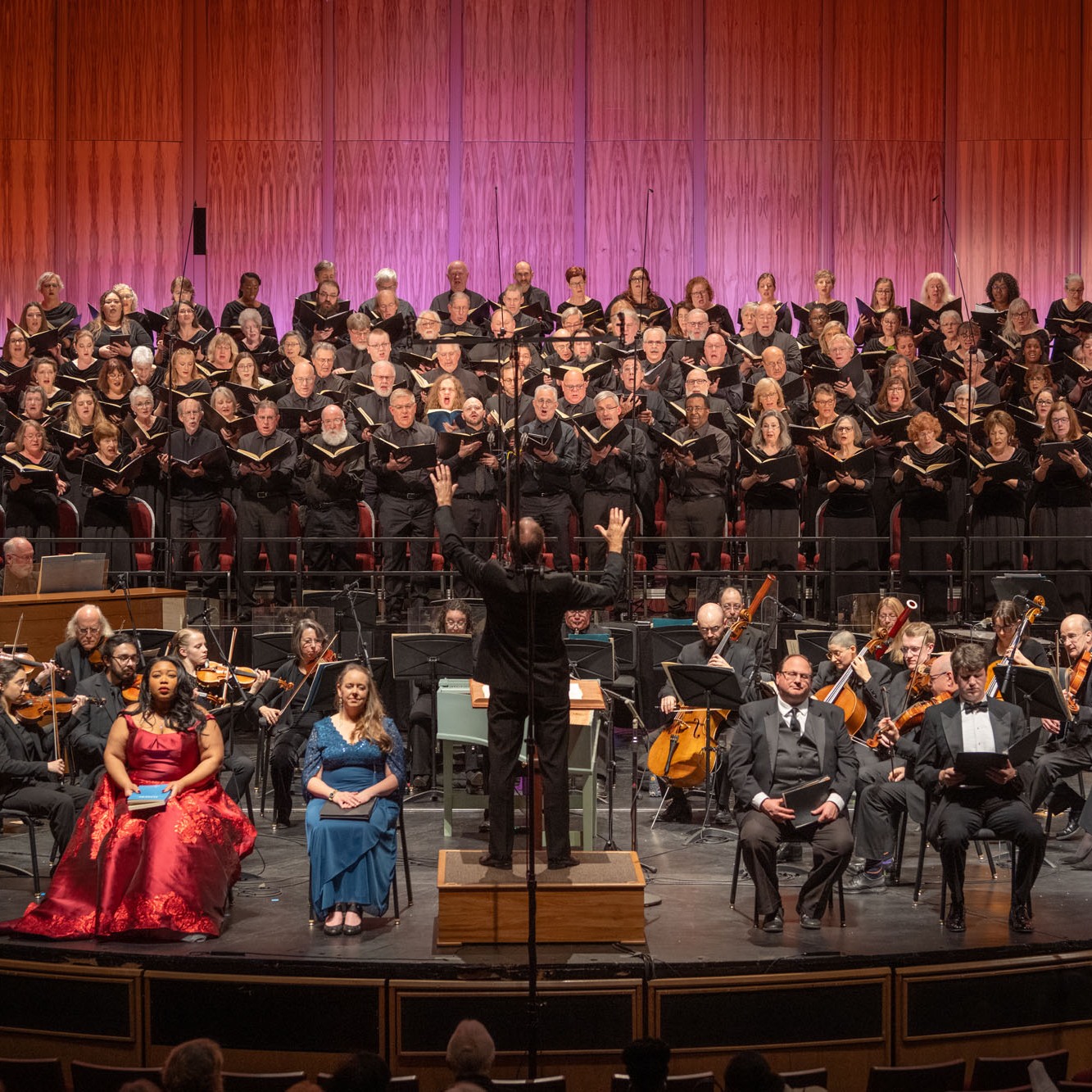 The holiday season got off to an early start at E.J. Thomas Hall over the weekend, with the Akron Symphony and Chorus reveling in a performance of Handel’s Messiah.
In truth, it’s tradition for this great oratorio — which embraces the New Testament theme of Jesus as savior — to arrive ahead of schedule. Handel intended the work to be presented each year during Lent, when theaters were otherwise closed and only entertainment of the most ennobling character was allowed. But in the centuries following its 1742 premiere, Messiah crept up the concert calendar to become a Christmas favorite.
Never mind that the famous “Hallelujah” Chorus comes from Part 2 of the oratorio, which recounts Christ’s death and resurrection. Part 1 includes the Nativity, and it was to this opening section that the Akron Symphony and music director Christopher Wilkins devoted themselves on Saturday, November 15.
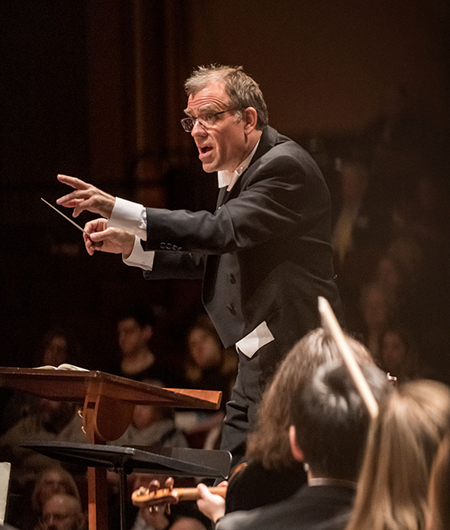 There was an unspoken tension between the composers on the Akron Symphony’s January 18 concert. Gustav Mahler’s hour-plus Fifth Symphony dominated the one-night-only program at E.J. Thomas Hall, which also featured an uncharacteristically short work by Richard Wagner — no slouch when it comes to profundity and grand gestures in his own music. Yet Wagner’s somewhat humble place on the program provided a conceptual key to Mahler’s self-contained, sometimes overwhelming symphony.