

by Peter Feher
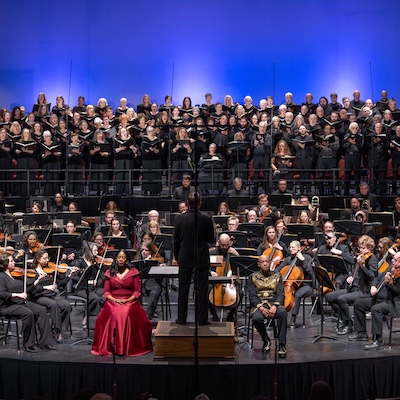 For a moment during the Akron Symphony’s season-finale performance of Carl Orff’s Carmina Burana, conductor Christopher Wilkins seemed to consider inviting the audience to sing along.
It would have been very much in keeping with the spirit shared throughout E.J. Thomas Hall on Saturday evening, May 9. The orchestra winningly combined local pride and popular classics to conclude the concert year, and as if on cue, the community turned out in enthusiastic response.
With Orff as the main offering, the Akron Symphony attracted its biggest audience for a classical program in a decade, according to the organization’s own tally.
Called on as choristers, any crowd could probably manage a passable imitation of the famous opening “O Fortuna” — those fateful clashing chords that set the wheel of Carmina Burana spinning. But someone listening attentively to the piece might be tempted to join in whenever a refrain starts up.
Three times through is the magic formula for many of the most memorable movements, from the recurring rush of “Fortune plango vulnera” to the glory, triumph, and rejoicing of “Ecce gratum.” The tune never changes, only the lyrics, which are chiefly in Latin (per Orff’s medieval source material).
This isn’t to downplay the massive preparations made by the 100-plus members of the Akron Symphony Chorus. Their careful study of the hourlong score clearly showed. They sang with outstanding diction in every language, including the occasional stanza of Middle High German or Old French. And they never lost sight of the little details amid the repeats, such as the same music now marked at a different dynamic.
Kudos to Chorus director Chris Albanese, who also stepped briefly into the solo spotlight, taking on the comically terrifying tenor aria with utmost calm. The evening’s other highwire vocal display came courtesy of soprano Sonya Headlam, whose career has flourished in the decades since her student days at the University of Akron. Rounding out the featured lineup was baritone and local favorite Brian Johnson.
That’s not to forget the key role played by the Firestone Treble Chorus, prepared by Megan Meyer. The high school singers brought infectious joy to the refrains of “Tempus est iocundum,” heard a total of five times near the end of the piece. Not coincidentally, it was during one of these repeats that Wilkins turned around on the podium, cueing the soloists front of stage with a gesture that seemed to embrace the entire audience.
It would only have been natural to hum or tap a foot along to the concert’s ubiquitous opening selection, Maurice Ravel’s Boléro, a masterpiece made of simple melody and rhythm. Settling into a slightly slower tempo than Wilkins initially set, the Akron Symphony’s performance soon found its groove and crescendoed at a steady pace from there.
No less accessible was Cleveland composer Margaret Brouwer’s Rhapsody: Concerto for Orchestra, which concluded the program’s first half in the welcome space between familiar sound worlds. Reminiscent of Gustav Holst one moment, Aaron Copland the next, and yet wholly unique in its synthesis of orchestral styles, Brouwer’s work more than held its own beside the classical blockbusters.
Published on ClevelandClassical.com May 21, 2026
Click here for a printable copy of this article