by Mike Telin
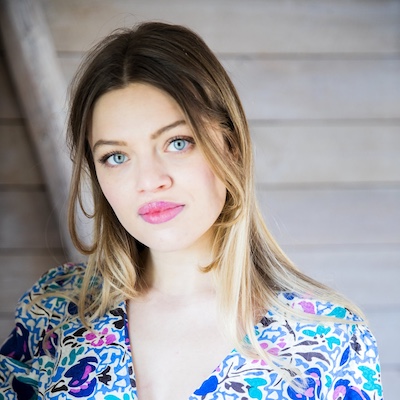
Photo credit: Amélie Chapalain
We are talking now of summer evenings in Knoxville, Tennessee, in the time that I lived there so successfully disguised to myself as a child. —James Agee, in the preface to A Death in the Family
While searching for a text for the solo piece with orchestra that would become Knoxville: Summer of 1915, Samuel Barber said that Agee’s prose-poem particularly struck him because it reminded him so much of evenings when he was a child at home.
“I found out, after setting this, that Mr. Agee and I are the same age, and the year he described was 1915, when we were both 5,” Barber told James Fasset during a 1949 interview. ‘You see, it expresses a child’s feeling of loneliness, wonder, and lack of identity in that marginal world between twilight and sleep.”
Swedish soprano Johanna Wallroth said during a Zoom call that “Knoxville: Summer of 1915 is one of my absolute favorite pieces, and I’m very excited about making my Cleveland Orchestra and U.S. debut with it.”
On Thursday, February 12 at 7:30 pm at Severance Music Center, conductor Barbara Hannigan will lead The Cleveland Orchestra in an all-American program that features Barber’s haunting work along with George Crumb’s A Haunted Landscape, Charles Ruggles’ Sun-Treader, and George Gershwin’s Porgy and Bess: A Symphonic Picture (arranged by Robert Russell Bennett). The program will be repeated on Saturday at 7:30 pm. Tickets are available online.

 What is there not to like about Homer’s Odyssey? The ancient Greek epic chronicles the warrior Odysseus’s ten year journey home following the Trojan War during which he is confronted by storms, monsters, and temptations.