


by Mike Telin
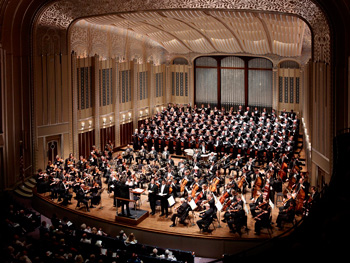 This week at Severance Hall conductor David Robertson will lead The Cleveland Orchestra and Cleveland Orchestra Chorus in four performances of Mozart’s beloved Requiem with guest soloists Jessica Rivera, soprano, Elizabeth DeShong, mezzo-soprano, Garrett Sorenson, tenor and John Relyea, bass-baritone.
The origins of the Chorus can be traced back to the Orchestra’s third season when, in October of 1920, founding Manager Adella Prentiss Hughes issued the following invitation: “A Chorus is now being organized, to be known as The Cleveland Orchestra Chorus. As the name implies, this new organization is designed primarily as an adjunct to the Cleveland Symphony Orchestra, for the purpose of enlarging its activities and enriching its repertoire.”
The invitation went on to note that works such as Beethoven’s 9th Symphony, Liszt’s Faust Symphony, and Mahler’s 8th Symphony all call for a chorus, and continued, “The opportunity to join this chorus is now open to all who are interested in choral singing and who wish to be identified with the performance of great masterpieces in conjunction with our splendid Symphony Orchestra. Rehearsals will be held at regular intervals in the Ballroom of the Hotel Winton.” The Chorus, led by then Orchestra Assistant Conductor Arthur Shepherd, lasted less then one year. [Read more…]
 Soon after arriving at the Dana School of Music at Youngstown State University, composers Robert and Gwyneth Rollin founded the Dana New Music Society and the New Music Festival. This week, the Festival celebrates its thirtieth anniversary with a series of performances and premieres on Wednesday, April 30 and Thursday, May 1.
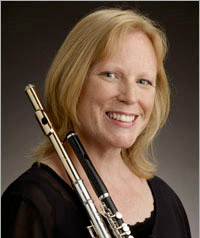 “As a child, I loved classic fairy tales as collected and told by the Brothers Grimm, Hans Christian Andersen, and others,” American composer Gabriela Lena Frank writes about her new work, Will-o’-the-Wisp: Tone Poem for Piccolo and Orchestra. “As a composer, I’ve often enjoyed using some my childish and fancifully personalized re-interpretations of myths to inspire pieces, with varying degrees of overt Latin American musical (especially indigenous Indian) influences. [And this] is one such piece.” On Thursday, May 1 beginning at 7:30 pm in Severance Hall, Cleveland Orchestra Principal Piccolo Mary Kay Fink performs the world premiere of Frank’s new concerto under the direction of David Robertson.
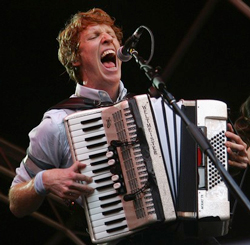 Today, we complete our preview of eighth blackbird’s repertory for the ensemble’s program next Tuesday, April 29 at 7:30 in Waetjen Auditorium at Cleveland State University. Spokesman and flutist Tim Munro shares his personal reflections about pieces eighth blackbird will perform composed by Richard Parry, Brett Dean, and Steven Mackey.
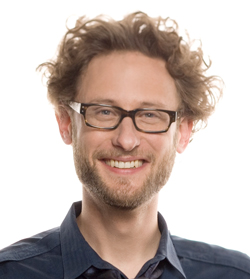 “Expect the unexpected,” eighth blackbird’s spokesman/flutist Tim Munro told our readers in the first of these previews, but he didn’t mean that patrons should go in uninformed. Today, Tim delves into the background of two of the pieces on the ensemble’s program next Tuesday, April 29 at 7:30 in Waetjen Auditorium at Cleveland State University.
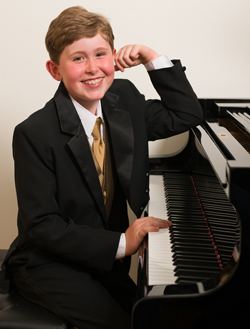 In its 79 years as an organization, the Cleveland Women’s Orchestra has invited many young soloists to perform with the ensemble, sometimes giving them their first opportunity to play with an orchestra.
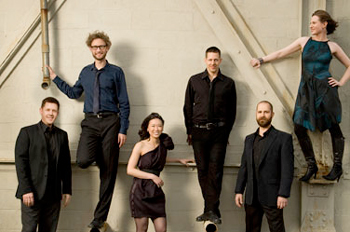 What does eighth blackbird flutist Tim Munro want audiences to know about their Cleveland Chamber Music Society program titled Still in Motion? “There are a lot of things that I love about this program, the surprising twists and turns that it takes. But I would say to expect the unexpected.”
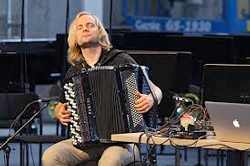 On Sunday, April 27 beginning at 7:30 pm, CMA Concerts at Transformer Station presents Norwegian virtuoso classical accordionist Frode Haltli. The program features music by Hans Abrahamsen, Magnar Åm, Arne Nordheim and Aldo Clementi. “Even though this program is classical contemporary music, I think it reflects my interests in different kinds of music,” Haltli said during a telephone conversation from his home in Norway. “It’s not your ordinary contemporary music, it [ventures] out into many different directions.”
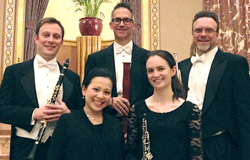 On Sunday, April 27 beginning at 3:00 pm in Pilgrim Congregational Church, Arts Renaissance Tremont presents a concert of chamber music for woodwinds and piano performed by Cleveland Orchestra members Mary Lynch, oboe, Robert Woolfrey, clarinet, Barrick Stees, bassoon and Richard King, horn, with Cicilia Yudha, piano.
 For thousands of years humans believed the earth was flat and if you traveled too far you would eventually fall off the edge. It was the third century Greek scholar Eratosthenes who first began to calculate the circumference of the Earth. In the twentieth century, Ohio and specifically Cleveland, has played an important role in furthering space research. Founded in 1941as the Aircraft Engine Research Laboratory by the National Advisory Committee for Aeronautics (NACA) NASA’s John H. Glenn Research Center actually predates NASA by 17 years and is named in honor of former senator John H. Glenn, an Ohioan who was the first American to orbit Earth.