


by Mike Telin
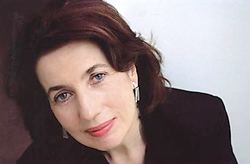 British pianist Imogen Cooper and British conductor Jane Glover will both be making their Severance Hall and Cleveland Orchestra debuts this weekend. I reached Imogen Cooper in London to talk about Beethoven’s first piano concerto, a piece that I tell her still gives me goose bumps and puts me in a good mood every time I hear it.
Cooper agrees. “I’m glad to hear you say that. I have played it a lot but each time I do, I think of what a masterpiece it is. It requires inner and outer energy, vast amounts of it, because it needs some very fast tempi. The first movement is definitely an allegro con brio and not an allegro maestoso.”
The pianist recently saw a 1970s performance on YouTube that supported her view. “It was incredibly ponderous and slow. That is the way you used to hear Beethoven #1 in those days: tempi much slower, much heavier, a very big orchestra. I must say that I don’t really see it like that. I think the first movement should go like the wind. It’s also such an incredibly witty work. During the outer movements we should be smiling a lot of the time. And that extraordinary middle movement in such an unexpected key as A-flat is so glorious.” [Read more…]
 Just a year ago, Boston-based soprano Amanda Forsythe dazzled Apollo’s Fire audiences with memorable performances in “Mozart and Papa Haydn”. Writing for this publication about arias she sang from the young Mozart’s Lucio Silla in Finney Chapel at Oberlin, Nicholas Jones said, “Ms. Forsythe gave us a rendition of pyrotechnics…that convinced us of its value, even as we recognized the immaturity of the composer. Staccato arpeggios, long legato lines, a mad scene with its requisite oddities — all were entirely enthralling.”
 The Cleveland POPS Orchestra (Carl Topilow, conducting) and Chorus will present five Friday evening subscription concerts at Severance Hall next season, in addition to “The Magic of Christmas” at the Palace Theatre on November 30 at 2pm and its 19th annual New Year’s Eve Concert and Dance at Severance Hall on December 31 at 9 pm.
 Brazilian vocal sensation Kenia wants to remind audiences of one thing about Friday’s Cleveland Orchestra Friday’s @ 7 post-concert: “Remember to bring your dancing shoes,” she exclaimed. “People should expect to take a little trip to Brazil and I’d love it if they would close their eyes and find themselves transported to Rio in the midst of Carnival.”
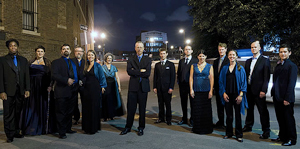
 “I think it’s going to be a great experience playing this program, especially in Finney Chapel”, Takacs Quartet violist Geraldine Walther told us by telephone from Colorado. “It’s a gorgeous place and we love playing there.”
 On Saturday, April 12 the Akron Symphony, under the direction of Christopher Wilkins, will present its final Classic Series Concert of the season with performances of Walton’s Crown Imperial March and Beethoven’s Symphony No. 5. The concert, which begins at 8:00 in E.J. Thomas Hall also features The Akron Symphony Chorus, Maria Sensi Sellner, chorus director, in Rossini’s Stabat Mater.
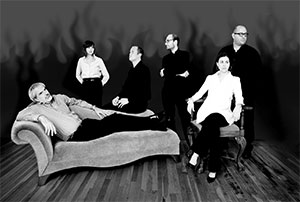 On Friday, April 11 in SPACES, the contemporary music ensemble No Exit begins their spring concert series, three extraordinary evenings of music. In addition to SPACES, concerts will take place at Heights Arts on Saturday, April 12, and in Cleveland State University’s Drinko Hall on Monday, April 14. All performances begin at 8:00 PM. Performances include two world premieres performed by Cara Tweed, violin, James Rhodes, viola, Nicholas Diodore, cello, Sean Gabriel, flute, Nicholas Underhill, piano, and Luke Rinderknecht, percussion.
 MOCA Cleveland will launch the first edition of a new music competition on Thursday, April 10 beginning at 8:00 pm, when student composers from Cleveland State University and Baldwin Wallace Conservatory of Music compete for the title of “Avant-Garde Idol.” The contestants are Zach Albrecht, (BW), Joshua Fadenholz, (CSU), Nathaniel Frank, (BW), Sean Hussey, (BW), Jacob Kingzett, (CSU), James Kunselman, (BW), Aubrie Powell, (BW), Buck McDaniel, (CSU) & Neal Todten, (CSU).
 Since making her debut at age eleven as a surprise guest soloist with the New York Philharmonic under Zubin Mehta in 1982, violinist Midori has become recognized as a master musician and a devoted and gifted educator. In addition to her many achievements as a performer, Midori is an active music educator for underserved communities. She runs several successful programs that have reached hundreds of thousands of children since the early 1990s, especially at New York public schools.