by Max Newman

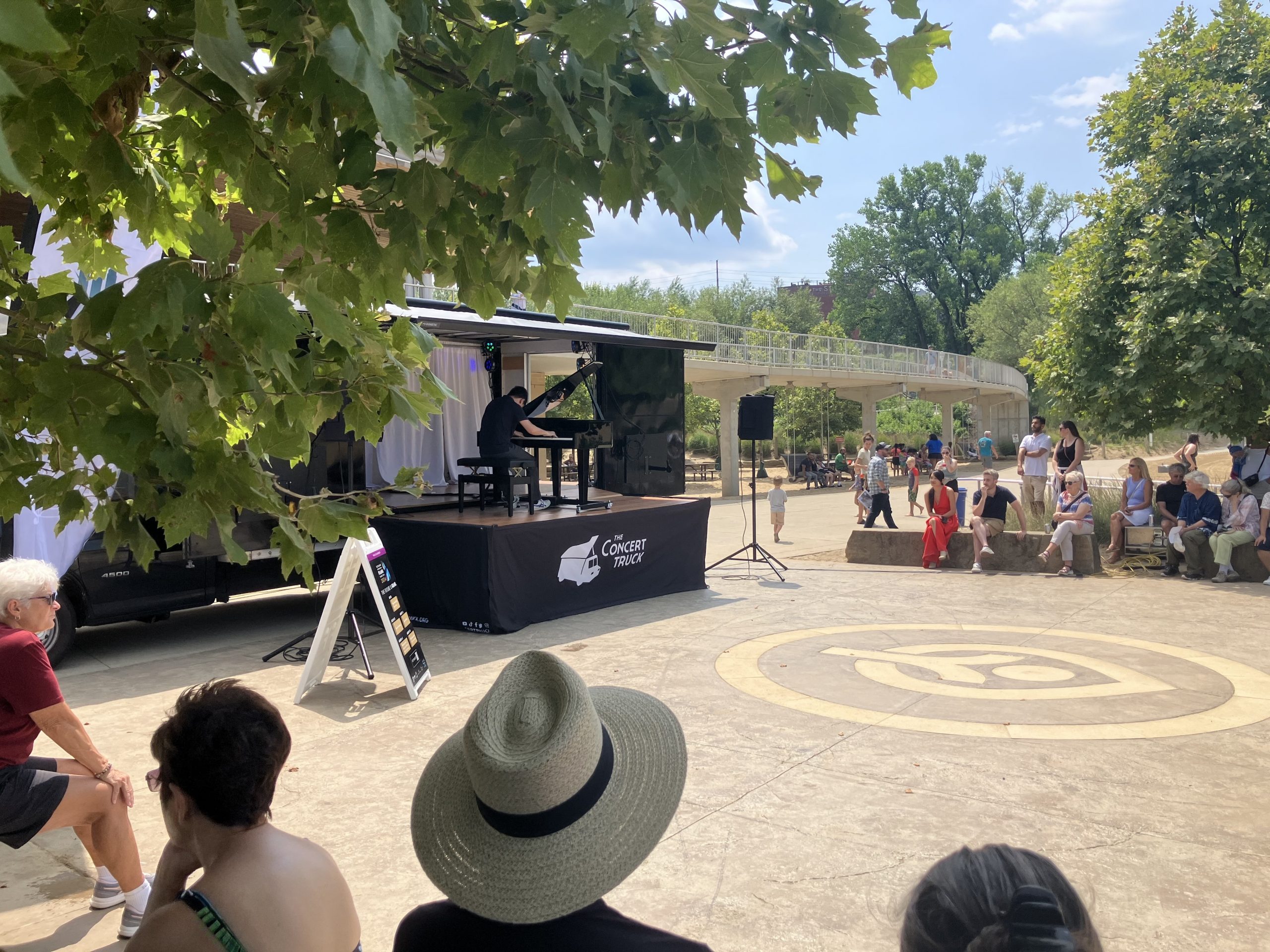
Centered around the parking lot of the Nature Center, the sunlit late-morning event at Shaker Lakes had an inviting, family-friendly atmosphere. [Read more…]
by Max Newman
by Max Newman

Centered around the parking lot of the Nature Center, the sunlit late-morning event at Shaker Lakes had an inviting, family-friendly atmosphere. [Read more…]
by Daniel Hathaway

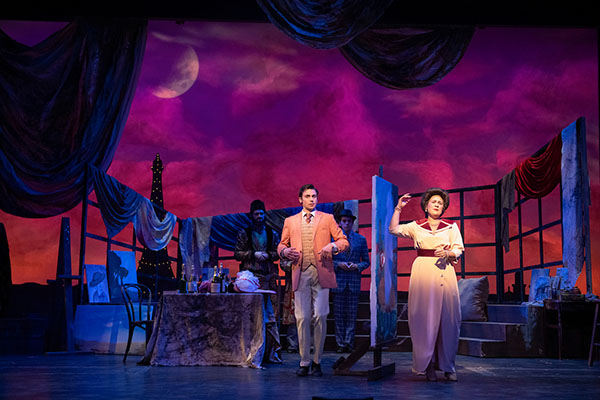
Marking its 45th season as a company and its 40th in Freedlander Theater at the College of Wooster, OLO delivered handsome productions of these venerable shows by the creative teams of Frank Loesser (music and lyrics) and Jo Swerling & Abe Burrows (book) in the case of Guys and Dolls, and Richard Rodgers (music), Oscar Hammerstein II (lyrics), and Howard Lindsay & Russell Crouse (book) for The Sound of Music.
by Stephanie Manning

The ENCORE Music & Ideas Festival drew a packed crowd at the Cleveland Museum of Natural History on June 15, and audience members were in for a treat at this concert in the visitor hall. The skeleton of Dunk may have been the closest to the action, but the bright and airy space was filled with other neat creatures for attendees to peruse. (On the left was a reconstruction of Lucy, the most famous human ancestor fossil, and to the right were the bones of Happy, a “reptile hipped” dinosaur.)
by Peter Feher
by Peter Feher

The theme behind this year’s programming, “Sacred and Profane,” was front and center for the first concert. So was the overriding idea that guides ChamberFest every season: bringing together great musicians and great music. Wonderfully, these aims aligned on Wednesday in an arresting performance of Claude Debussy’s Danse sacrée et danse profane featuring harpist Bridget Kibbey. It was the shortest work of the evening, but also the standout.
In exploring the fundamental dichotomy between heaven and earth, eternity and reality, the spirit and the body, Debussy was simply trying to demonstrate everything that a modern harp could do. He had been commissioned by a French manufacturer to write a showpiece for the company’s new instrument, yet the resulting work wasn’t strictly contemporary when it premiered in Paris in 1904.
by Max Newman
by Max Newman

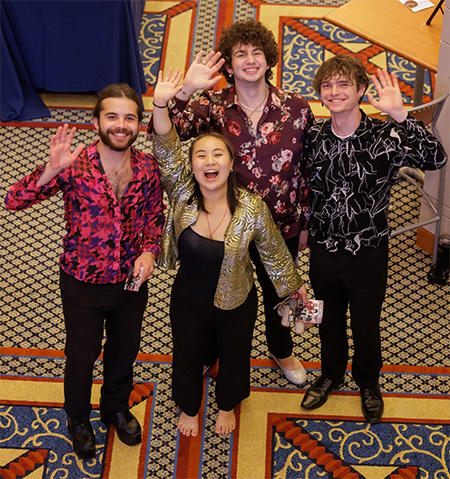
On the evening of June 9 at the Cleveland Institute of Music’s Mixon Hall, the competition’s four finalists went toe-to-toe over the course of an hour that was as much a joyous celebration of music as it was an entertaining competition.
Although Californian Elle Davisson, a 16-year-old native of the Bay Area, eventually came out on top with the grand prize, all the performers showcased astonishing skill and should come away feeling proud. [Read more…]
by Kevin McLaughlin

Kibbey was also lively with the microphone, giving an engaging introduction to André Caplet’s 1924 Conte Fantastique (Fantastic Tale). After the performance, she mingled among the crowd — not so much a star gesture as a genuine one that made her performance even more memorable.
Given that André Caplet orchestrated and conducted some of Debussy’s works, many associate the two composers. To say Caplet’s musical language is impressionist-adjacent is partly true but hardly encapsulates his unique, ahead-of-his-time voice.
Kibbey made the most of Caplet’s action-packed work — part harp concerto and part tone poem, based on Edgar Allan Poe’s short story The Masque of the Red Death.
by Stephanie Manning

The Friday night program at Harkness Chapel saved the most traditional selection for last: Johannes Brahms’ Piano Trio No. 2 in C. Pianist Roman Rabinovich, violinist Joseph Lin, and cellist Oliver Herbert gave a spirited performance, taking advantage of the Chapel’s tastefully dry acoustic to accentuate moments of uber-quiet playing.
by Daniel Hathaway

On June 9, in a collaboration with the Cleveland Humanities 2024 Festival, bird and insect song was the subject of an engaging, illustrated, half-hour lecture, “The World’s First Musicians” by composer and naturalist Lisa Rainsong. On June 16, in “Earth Makes Us Equal,” the songs of male humpback whales (the females don’t sing!) was the topic of a fascinating talk by David Rothenberg, Distinguished Professor of Philosophy at the New Jersey Institute of Technology, who brought his bass clarinet along to engage in expressive duets with some of his subjects.
by Max Newman
by Max Newman

The performance, the penultimate event of the Cleveland International Classical Guitar Festival, spanned four exhilarating Czech works. On this particular afternoon, golden sunbeams streaked in through Mixon’s floor-to-ceiling windows, drenching the stage with a light that underscored the otherworldly quality of Poláčková’s playing. One would be hard-pressed to find a more musically exhilarating way of closing out this magnificent series. [Read more…]
by Daniel Hathaway

The extra strings on that instrument added range and resonance to Spera’s program, which began and ended with famous works from the passacaglia family, with a contemporary piece at its center.
At the end of his “Mystery” Sonatas — fifteen little suites for violin and continuo based on the Joyful, Sorrowful, and Glorious Mysteries of Christ represented by the beads on the Rosary — Heinrich Ignatz Franz Biber added a postlude in the form of a passacaglia for solo violin based on a four-bar descending bass figure. [Read more…]