

by Daniel Hathaway
WEEKEND WRAP-UP:
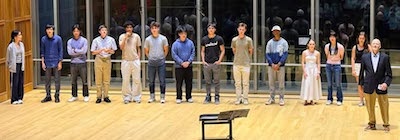 On Sunday evening following the last concert of the Cleveland International Classical Guitar Festival, the four finalists in the James Stroud Youth Competition played 15-minute sets of repertoire of their choosing on the stage of Kulas Hall at the Cleveland Institute of music.
Half an hour later, Colin Davin, Jonathan Leathwood, Kevin Loh, Petra Polácková, Nicolò Spera, Jason Vieaux, and Hao Yang, judges for the final round, had chosen the winners:
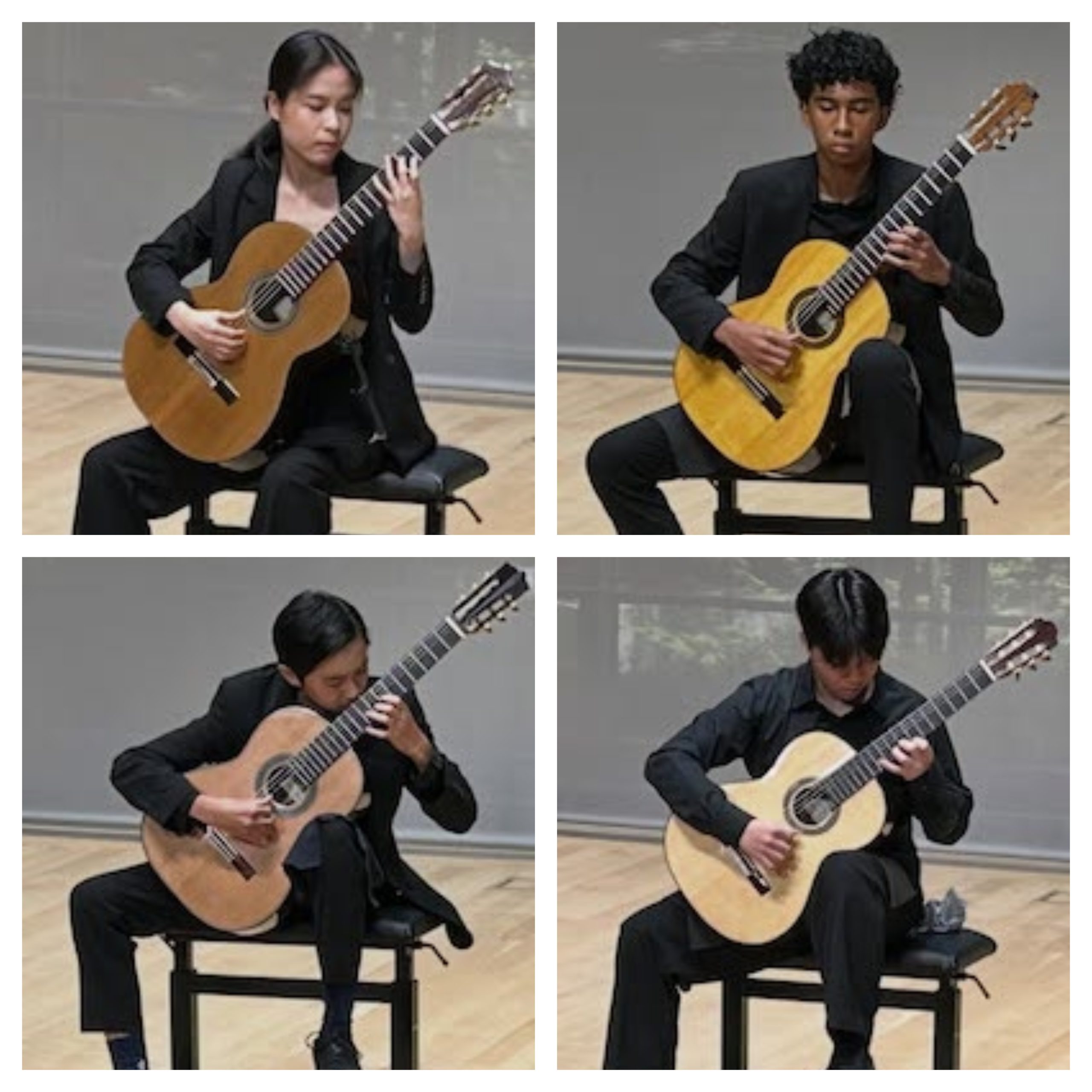 First Prize $10,000: Ruqi Jiang
Second Prize $5,000: Micah Montgomery
Third Prize $2,500: Tae Kim
Fourth Prize $1,250: Justin Chen
Best Performance of the Competition Set Piece $500.00: Catalina Wert
STARTING UP THIS WEEK:
ChamberFest Cleveland will feature four concerts from Wednesday through Saturday, ENCORE Gates Mills Music & Ideas Festival will host performances on Friday and Saturday, and Ohio Light Opera will open its season of six shows at the College of Wooster with a matinee performance of My Fair Lady on Saturday. There are more concerts to enjoy — visit our Concert Listings for details.
TODAY’S ALMANAC:
Composer Robert Schumann was born on this date in 1810 in the German Saxon town of Zwickau.Pianist Roberto Plano wrote in an earlier anniversary posting on Facebook, “To remind you, I propose a little known composition: Variationen über ein Nocturne von Chopin. Chopin’s theme variations were allegedly composed in the mid-1830s, and left unfinished. They were recently published and completed by Joachim Draheim. The composition consists of three variations on the Nocturne op. 15, no. 3 by Chopin and as per the manuscript, consists of 89 jokes (including the theme). Watch Plano’s performance here.
A few years before Schumann’s birth, Johann Wolfgang von Goethe published the first part of his play Faust, which became one of the urtexts of early German Romanticism. Schumann, the poster boy for German Romantic music, wrote his Szenen aus Goethes Faust backwards from 1844-1853, beginning with the ‘Chorus Mysticus’ finale and ending with the overture, a period during which he became less and less mentally stable, a situation some commentators think is reflected in the music.
The Scenes are infrequently performed these days — a pity because the music is glorious. I can recommend a performance by Erich Leinsdorf and the Boston Symphony from 1966, in which I participated as a member of the Harvard Glee Club and Radcliffe Choral Society (joined by the New England Conservatory Chorus). The soloists — Hermann Prey, Beverly Sills, Charles Bressler, Thomas Paul, Veronica Tyler, Tatiana Troyanos, Florence Kopleff, and Batyah Godfrey — are spectacular.
I can’t resist telling a story. The first chorus/piano rehearsal on the Symphony Hall stage did not go well. Leinsdorf had the flu and we were singing from scores that only printed our individual voice lines with cues like instrumental parts. Leinsdorf grew more and more impatient and finally said, “I am going to leave you in the hands of your chorus masters and if you can’t learn the music, we’ll replace it with … the Brahms Academic Festival Overture.” And he strode offstage through the central door between the two halves of the chorus — after which we terrified singers spent another hour and a half drilling cues.
I learned only years later that Leinsdorf had never used that door before — which only led to a room where they stored timpani and the organ console. Having made a dramatic exit, he could hardly have crept back onstage again, so he paced for 90 minutes until the stage was clear. (The performances went beautifully, by the way!)
