


by Mike Telin
 In his composer note for Sonnets, Robert Honstein writes, “At a time of high poetic modernism, [Edna St. Vincent] Millay injects the ancient form with vitality and stylistic ingenuity. In her hands the sonnet feels fresh and urgent.”
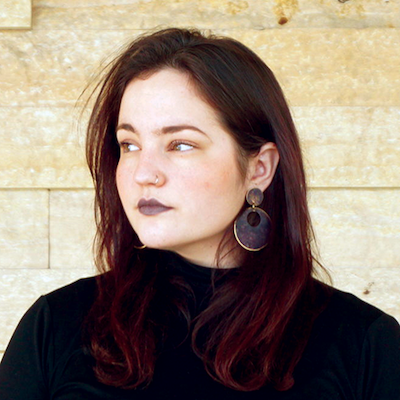
On Thursday, May 28 at 7:00 pm at Waterloo Arts No Exit will present “Songs, Soundscapes and Sonnets” featuring soprano Anika Kildegaard. The setlist features Robert Honstein’s Sonnets, as well as Annika Socolofsky’s Don’t say a word, and Timothy Beyer’s Malekhamoves. The program will be repeated at 7:00 pm at The Bop Stop (May 29) and Heights Arts (May 30). As always, No Exit concerts are free.
I reached Anika Kildegaard by phone and began by asking her about Hohnstein’s piece.
Anika Kildegaard: This is a work that Robert wrote for No Exit a few years ago. Five of the songs were premiered by soprano Lauren Pearl. I’ll be singing those plus three new ones.
Tim Beyer wanted to reprise the piece because No Exit is working on an album of vocal works with ensemble. So, besides the concerts, we will be going into the studio to record the Hohnstein pieces.
Mike Telin: I enjoy Millay’s poems very much.
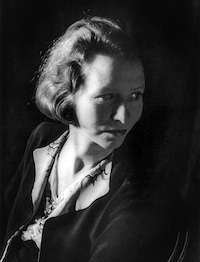 AK: She is a beloved poet. I come from a family of literary folks — my mom is a poet, my dad’s mother was a librarian and very well-read, and my dad’s sister just retired as a professor of English. The women of my family have always admired her poetry. She’s kind of like a protofeminist paving the way for a shift in women’s expression of their sexuality.
And all of these poems are — I wouldn’t say explicit in any way — but they are very clear about how they’re dealing with carnal desire.
In a lot of them, Millay is saying she has a lover, and she wants him to know that they’re going to have a great time together right now, but this is not a forever thing. We will both move on with our lives. Maybe you’ll get too old, or I’ll fall in love with someone else. She’s sort of insisting on being present in the physical space of the moment.
MT: Can you describe Robert’s music?
In some ways what Robert has done is written an art song cycle. But it is a little different, because we think of art song as something for voice and piano, and obviously this is voice and ensemble.
But when you think of some of the standard art song cycles, there’s a kind of homogeneity about them. Like Schubert’s Winterreise where you’re talking about a particular storyline, and that’s not exactly the case with Robert’s songs. Each one is its own contained unit.
Robert and I have gone back and forth about what the style of each one should be. In some of them, he’s asking me for a very standard bel canto style of singing. And in some he’s looking for a little more of an early music approach. And there’s even a kind of musical theater one — we’ll see how successful I am at that. Not being a musical theater singer myself.
MT: You’re also singing a cycle by Annika Sokefeldt.
AK: I am. I would describe that as classical music meets pop. I’m thinking along the lines of Ted Hearne or Shara Nova or some of the Bang on a Can people, where it’s obviously classical music, but there’s some influence of contemporary popular music on it.
MT: Is there anything else you would like to tell me about this program?
AK: The thing that these two pieces have in common is that they’re both text driven. Annika’s is a re-imagination of lullabies — she calls them feminist rager lullabies. She’s really kind of queering the text, so there’ll be things that people are familiar with. The first movement starts, “Hush little baby, don’t say a word,” but then it gets turned on its head
But everything about the way that she sets the text, the way that she conceives of how the ensemble is going to work with the singer, is driven by her conception of what the core meaning is that she’s trying to get across.
MT: How did you first meet Tim and No Exit?
AK: I live in Philly, and became friends with Noa Evan, a saxophone player who used to live in Cleveland. She and I have started to make music together and we have a duo called Audra. She reached out to Tim Beyer a year and a half ago to see if we could come out to Cleveland. So we did, and that is how I first met Tim Beyer.
We got on really well, and he was excited about the music that he heard me sing. And like so many things in this world, it was sort of a matter of timing. Lauren, the singer that they had been working with, had moved out of the country, so it just happened that he was on the hunt for a new music soprano. And I stepped into the scene.
MT: Congratulations, but it’s funny to hear you say a new music soprano because you do a lot more than new music.
AK: That’s definitely true. But I came to really love new music in the few years leading up to my master’s program. And then I invested myself in it pretty heavily while I was at the University of Iowa. They have a center for new music, so there was quite a lot of new music going on. I met this DMA candidate, Will Yeager, who is a double bass player. He and I started a duo, and that took us to some new music summer festivals.
I’ve also always loved choir, so I spent some time trying to find a professional ensemble in this country that sings new music. That’s how I came upon The Crossing, which is based here in Philadelphia, and that’s why I moved here.
I started singing with them in 2019 and that’s where my focus was for a while. And as I was working with The Crossing, I got to know some of the other singers who were making a go of it as gigging musicians. And they had a pretty wide range of things that they do.
I’ve been singing a lot more this year — not Renaissance music but Bach — and I do some solo singing as well.
MT: We look forward to having you back in Cleveland. And unlike when you were here a couple months ago, you have three performances of this program.
AK: Night after night is good. I love getting to do stuff like that because I think a performance matures if you get to do it more than once.
Published on ClevelandClassical.com May 20, 2026
Click here for a printable copy of this article
