
by Kevin McLaughlin
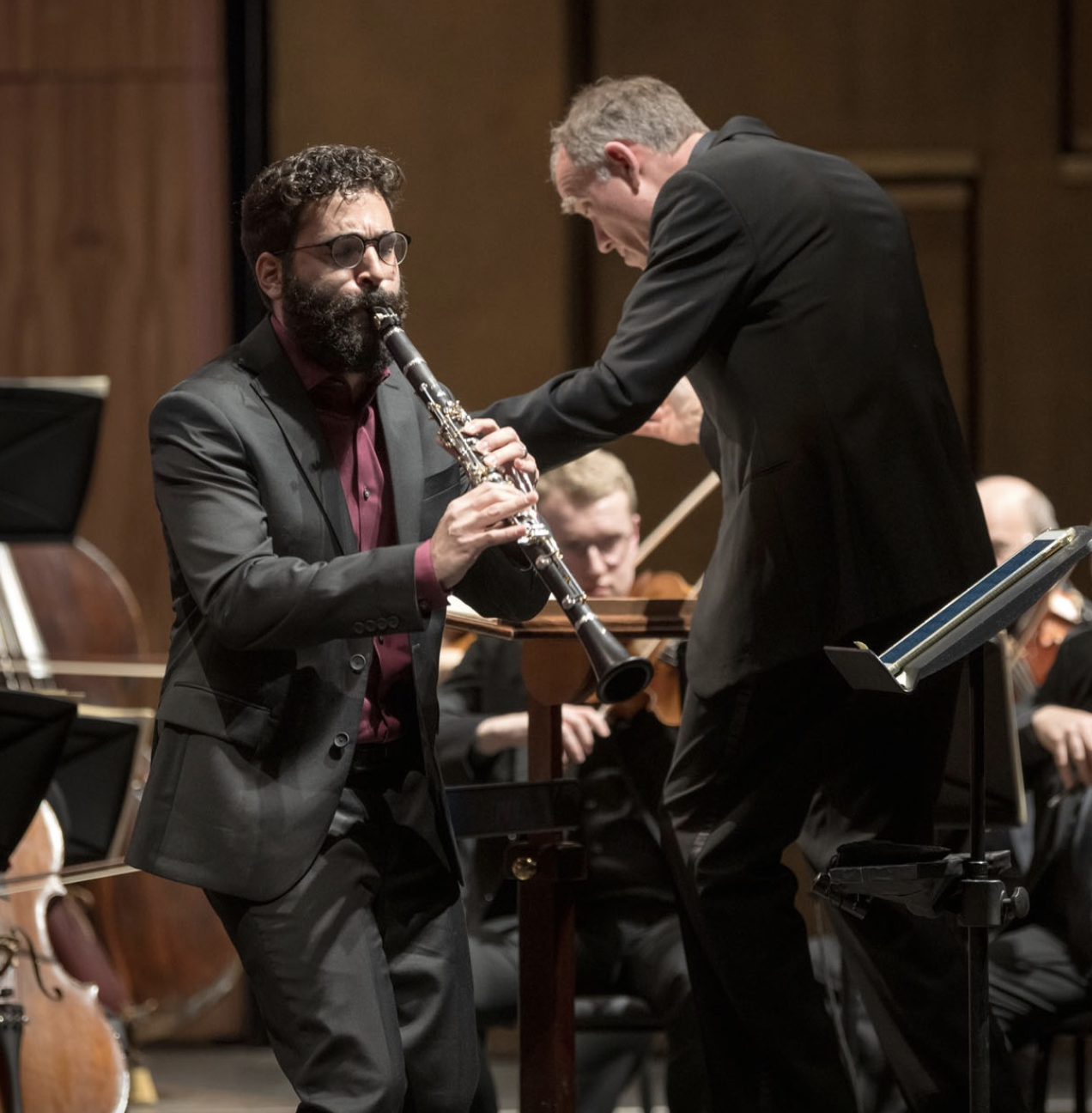 For his final appearance with the Akron Symphony on Saturday, March 29 at E.J. Thomas Hall, Amer Hasan went out in style. He was the agile and honey-toned soloist in the Mozart Clarinet Concerto, and for good measure, he occupied his soon-to-be vacant principal chair to play the works on the second half.
Employing the A-clarinet rather than basset horn — as the composer intended — Hasan chose deftness rather than force in the concerto. His frolicing up and down the instrument was enough to make any singer jealous. The Adagio was a serene balm of peace, and in the finale Hasan turned playful, goading the orchestra into sassy ripostes.
Christopher Wilkins and the orchestra were sensitive and generous collaborators throughout, underscoring and confirming the soloist’s interpretations like an ideal dance partner. Hasan offered up no extended cadenzas (Mozart wrote none) or encores for that matter, presumably saving his energy for the works on the second half.
 When Amer Hasan introduced himself to the Akron Symphony in 2019, he did so with the opening movement of Mozart’s Clarinet Concerto. “ It was the first piece that I played for Maestro Wilkins in my audition, behind the screen,” Hasan recalled in a recent interview. “So the first three minutes of the concerto is not only the first music I associate with auditions, but also with the Akron Symphony.”
 Unfinished works seem to be held in higher esteem for their being incomplete — the remaining music feeling more precious, conscious as we are of what else might have been lost. How to explain then, the impact of Mozart’s