

by Daniel Hathaway
 When the 17-year-old Felix Mendelssohn saw A Midsummer Night’s Dream with his sister, he ran right home to write a piano duet on the subject that turned into an overture and later a whole suite of incidental music. Did he have any idea that his music would be inextricably bound to Shakespeare’s play — or its march appropriated for countless wedding recessionals? [Read more…]
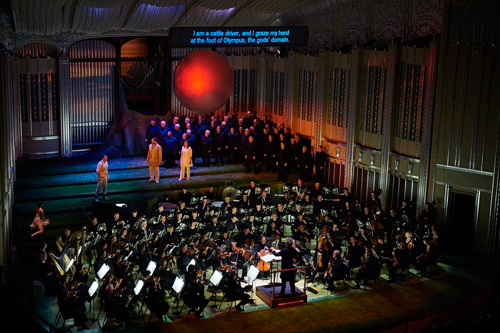 “Daphne” means “Laurel” in Greek, and Ovid’s tale in Metamorphoses of how a river nymph came to be transmogrified into a sacred tree has all the elements that an opera composer could wish for: a sylvan setting, gods meddling in human affairs, passion versus purity, jealousy that leads to murder, a drunken orgy, and an ennobling ending. Jacopo Peri took on the story in 1597 (one of several operas he wrote, now mostly lost), as did Marco da Gagliano (1608), Heinrich Schütz (1627, his only opera, entirely lost), Alessandro Scarlatti (1700) and, most recently, Richard Strauss (1938).