by Daniel Hathaway
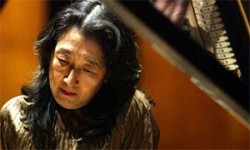 Mitsuko Uchida is in the course of revisiting selected Mozart concertos after completing a whole cycle of those ravishing pieces with The Cleveland Orchestra at Severance Hall from 2002-2007. On Thursday, April 3 she reprised No. 18 in B-flat and No. 19 in F. Between the two, the Orchestra offered Mozart’s early “Symphony” No. 23. The entire concert, including intermission, lasted about 90 minutes.
As Mozart did when he played the solo part, Uchida led the performance from the keyboard, in this case facing upstage at the lidless Steinway. Her graceful, flowing hand gestures served as manual choreography, shaping the music rather than keeping things together — not much of an issue with The Cleveland Orchestra, who are famously alert and responsive to each other.
The soloist’s bio in the program book notes that “Mitsuko Uchida is a performer who brings deep insight into the music she plays through her own search for truth and beauty.” That Apollonian approach to interpretation results in lovely, balanced, fluent and quite flawless performances, as the near-capacity audience who turned out for her latest appearance would surely agree. [Read more…]
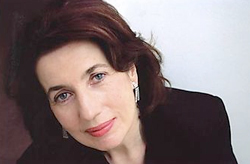 British pianist Imogen Cooper and British conductor Jane Glover will both be making their Severance Hall and Cleveland Orchestra debuts this weekend. I reached Imogen Cooper in London to talk about Beethoven’s first piano concerto, a piece that I tell her still gives me goose bumps and puts me in a good mood every time I hear it.
 Just a year ago, Boston-based soprano Amanda Forsythe dazzled Apollo’s Fire audiences with memorable performances in “Mozart and Papa Haydn”. Writing for this publication about arias she sang from the young Mozart’s Lucio Silla in Finney Chapel at Oberlin, Nicholas Jones said, “Ms. Forsythe gave us a rendition of pyrotechnics…that convinced us of its value, even as we recognized the immaturity of the composer. Staccato arpeggios, long legato lines, a mad scene with its requisite oddities — all were entirely enthralling.”
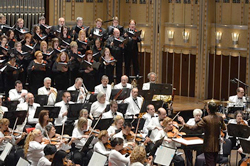 The Cleveland POPS Orchestra (Carl Topilow, conducting) and Chorus will present five Friday evening subscription concerts at Severance Hall next season, in addition to “The Magic of Christmas” at the Palace Theatre on November 30 at 2pm and its 19th annual New Year’s Eve Concert and Dance at Severance Hall on December 31 at 9 pm.
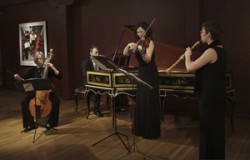 At its fifth anniversary benefit concert on April 12, Les Délices artistic director Debra Nagy announced that the ensemble, which specializes in French baroque music, would present four pairs of concerts next season with a bonus performance in September.
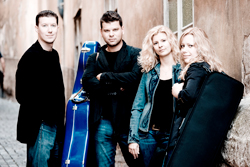 For their second appearance on the Cleveland Chamber Music Society series at Plymouth Church on April 8, the Pavel Haas Quartet scheduled two riveting twentieth-century works, Leos Janáček’s Quartet No. 1 and Benjamin Britten’s Quartet No. 2, followed by Beethoven’s “middle period” Quartet in e, op. 59, no. 2.
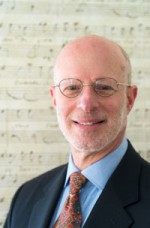 On March 13, Early Music America, the advocacy organization for performers, scholars, students and audiences, announced the selection of Donald Rosenberg as the next editor of Early Music America magazine. Founded in 1985 and now based in Pittsburgh, Early Music America (EMA) provides its membership with publications, advocacy, and technical support, in addition to publishing the quarterly magazine. (The term “Early music” includes Western music from the Medieval, Renaissance, Baroque, and Classical periods, performed on period instruments in historically-informed styles.
 Lorain County Community College’s Signature Series of 2013-14 ended on a brilliant note with a performance by the Omni Quartet on Monday evening, April 7. The quartet was established five years ago and is comprised of violinists Amy Lee and Alicia Koelz, violist Joanna Patterson Zakany and cellist Tanya Ell, all members of The Cleveland Orchestra. Their program consisted of Mendelssohn’s Quartet No. 2 in a, op. 13 and Beethoven’s Quartet No. 15 in a, op. 132.
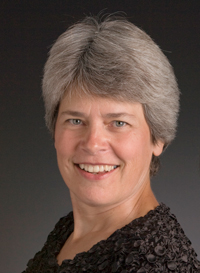 This past Saturday evening the Youngstown Symphony presented the season’s last classical music program with a twentieth-century musical emphasis. Soprano Kendra Colton served as guest artist for the evening in a performance of Samuel Barber’s poignant Knoxville: Summer of 1915.