



by Mike Telin
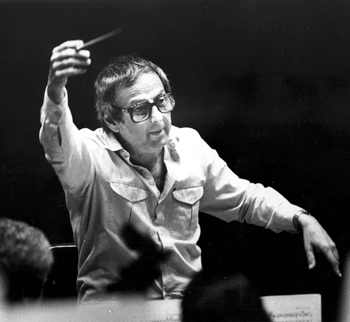 Steeped in desire, passion, and deceit, it’s no wonder that Tennessee Williams’ Pulitzer Prize-winning play A Streetcar Named Desire eventually found its place on the opera stage. On Friday, December 4 at 7:30 pm in Masonic Auditorium, Cleveland Opera Theater will present the Ohio premiere of composer André Previn’s and librettist Philip Littell’s 1995 opera based on Williams’ iconic play. The production will be repeated on Sunday, December 6 at 3:00 pm. (Left, Previn conducting the L.A. Philharmonic in 1986).
COT’s artistic director Scott Skiba recalled his first experience with the work, which was premiered at San Francisco Opera in 1998. “I remember sitting in the Oberlin Conservatory library watching it on a LaserDisc,” he told me over breakfast at a popular Ohio City café. “At first I wasn’t sure what to think of it, but nevertheless I found it interesting.”
The idea of producing Streetcar has been in discussion at COT for a few years, but when a reduction of the orchestra score was completed, taking the number of players down from 70 to 40, it suddenly became realistic to mount a production. [Read more…]
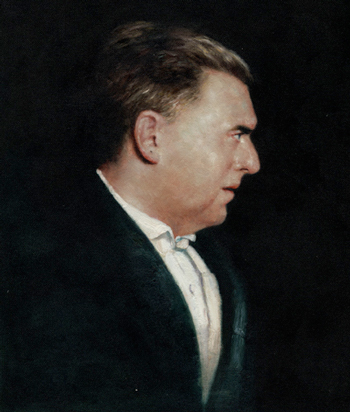 Composer Erwin Schulhoff, who perished in the Holocaust, wrote in his 1919 avant-garde music manifesto: The idea of revolution in art has evolved for decades…This is particularly true in music, because this art form is the liveliest, and as a result reflects the revolution most strongly and deeply — the complete escape from imperialistic tonality and rhythm, the climb to an ecstatic change for the better.
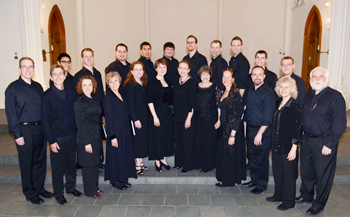 When Anglophones sing in a choir, they expect to encounter Latin, and perhaps some German. Spanish and French not so much, and rarely Finnish or Latvian. The 21 members of Quire Cleveland will find all those languages tripping off their collective tongues this weekend as the ensemble presents the seventh edition of “Carols for Quire from the Old & New Worlds.” Quire will sing three identical programs under the direction of founder Ross W. Duffin on Friday, December 4 at Trinity Cathedral and on Saturday and Sunday, December 5 and 6 at Historic St. Peter’s Church, all in downtown Cleveland (tickets available
 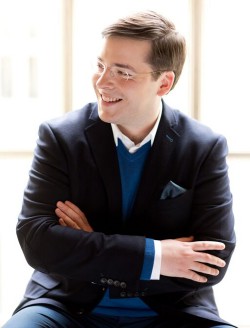 Former Cleveland Orchestra assistant conductor James Feddeck will return to perform in Cleveland this Sunday, but he’s leaving his baton at home this time. Feddeck will play a free organ recital in Gartner Auditorium at the Cleveland Museum of Art on December 6 at 2:00 pm, using one the other musical tools he honed at the Oberlin Conservatory of Music, where he simultaneously studied oboe, piano, and conducting along with organ.
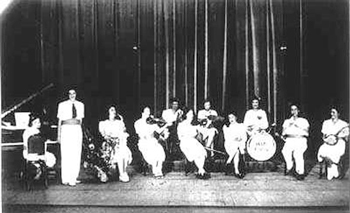 When Hedy Milgrom’s mother and relatives emerged from a cattle car at the Auschwitz concentration camp, the first thing they saw and heard was an orchestra playing on the train platform. “My mom turned to her sister and said, ‘See, there’s an orchestra here. There’s music. They’re playing violin. How bad could it be?’ Very bad, as they found out within minutes.”