
by Jarrett Hoffman

by Jarrett Hoffman

by Daniel Hathaway
TODAY’S ALMANAC:

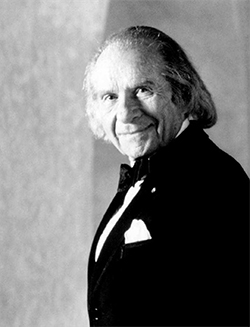
Conductor, composer, and double bass virtuoso Giovanni Bottesini left the world on this date in 1889. He took up the instrument that made him famous in order to win a scholarship to the Milan Conservatory, later endearing himself to opera patrons by playing fantasies on opera tunes from the stage at intermission of shows he conducted. Enjoy a rare performance of his Gran Duetto No. 1 played by Cleveland Orchestra principal Max Dimoff and his student Russell Thompson in 2013 at the Cleveland Institute of Music.
In 1897, composer and educator Quincy Porter was born on July 7 in New Haven, Connecticut, and later studied in his home town at Yale. He taught at the Cleveland Institute of Music twice with a sojourn in Italy in between, moving on to Vassar and the New England Conservatory before returning to Yale. Cleveland Orchestra member Eliesha Nelson performed his 1948 Viola Concerto on her all-Quincy Porter album in 2009. Listen to her performance here with John McLaughlin Williams and the Northwest Sinfonia, and click here to hear the violist and the conductor answer some questions.
Opera composer Gian-Carlo Menotti was born on July 6 in Cadegliano, Italy. His theater pieces are well-known, but not so often performed is his delightful fable, The Unicorn, the Gorgon, and the Manticore for chorus, dancers and chamber ensemble. In the days when network television was interested in cultural programming, the piece was telecast in November of 1957. A more recent performance in February, 2019, combined The Chamber Orchestra of the Springs, Colorado Ballet Society, and the Colorado Vocal Arts Ensemble, conducted by Thomas Wilson.
And on this date in 1968, American composer and organist Leo Sowerby died in Port Clinton, Ohio while teaching at a summer choir camp. [Read more…]
by Daniel Hathaway
MUSIC FOR INDEPENDENCE DAY WEEKEND:

Missing fireworks this year? We talked on Thursday about Frederick Fennell’s historic digital recording for Telarc in Severance Hall with the Cleveland Symphonic Winds. In addition to the Holst Suites and a J.S. Bach Fantasia, the eventual release included Handel’s Music for the Royal Fireworks. Listen to the entire album here (Handel begins at 27:22).
Or here’s a 2012 performance of the Fireworks Music from the BBC’s Proms at London’s Royal Albert Hall. Led by Hervé Niquet, Le Concert Spirituel performs on period instruments using Handel’s original specifications. Count all those oboes and bassoons!
To celebrate the contribution of one Black composer to the American canon, consider New York Times music critic Seth Colter Walls’ Independence Day weekend recommendation. William L. Dawson’s Negro Folk Symphony was recorded by Leopold Stokowski in 1952, by Neeme Jarvi and the Detroit Symphony in the 1990s, and in June on the Naxos label by the ORF Vienna Radio Symphony led by Arthur Fagen. Read Wells’ comments here.
ALSO ON THE WEB AND AIRWAVES THIS WEEKEND:
The MET Opera streams Donizetti’s Don Pasquale (Saturday), Rossini’s La Donna del Lago (Sunday), and Puccini’s La Bohème (Monday). Sunday afternoon’s Cleveland Orchestra on the Radio features pianist Uri Caine in his arrangement of Beethoven’s Diabelli Variations, plus Bernstein’s Symphonic Dances from West Side Story, and Walter Piston’s Suite from The Incredible Flutist. The first episode of Best of ChamberFest Cleveland on WCLV includes performances of Haydn, Kodály, and Schoenfeld from 2014. And a CREDO Chamber Music faculty recital by cellist Dmitri Kousov and pianist Yulia Fedoseeva streams on Monday evening. Details here. [Read more…]
by Daniel Hathaway
TODAY’S ALMANAC:

Janáček’s Sinfonietta was most recently performed by Franz Welser-Möst and The Cleveland Orchestra last January. Enjoy earlier interpretations led by George Szell (October, 1965) and Christoph von Dohnányi (September, 1988) here and here.
Music lovers of a certain age may recall hearing Deems Taylor’s intermission features on broadcasts of the New York Philharmonic, and others may recall his commentary as emcee for the 1940 version Walt Disney’s Fantasia (for which he helped choose musical selections). The writer, broadcaster, and music critic who died on this date in 1966, was also a composer whose operas were enormously popular for a time on the stage of the Met. Click here to listen to one of his most celebrated works, Through the Looking Glass, on subjects from Lewis Carroll, played by the Columbia Symphony under Howard Barlow in 1938.
And click here to enjoy Taylor’s analysis of Strauss’ tone poem Till Eulenspiegel’s Merry Pranks.
TODAY ON THE WEB AND AIRWAVES:
Dvořák’s “New World” Symphony, Haydn’s “Military” Symphony, and a Johann Strauss Jr. Quadrille are on the menu for Lunchtime with The Cleveland Orchestra on WCLV, and this evening, Ohio Light Opera veterans and current company members share messages and songs, while the MET Opera offers a 2011 production of Don Giovanni led by Fabio Luisi. Details here.
Want to go exploring on the web this weekend? Click here to consult Music America’s listing of classical music streams — both free and ticketed. [Read more…]
by Mike Telin
by Mike Telin

“After the shutdown there was a dash to develop online content,” Welsh said during a recent telephone conversation. “That sparked the Museum staff to create the curatorial video series On My Mind. So I stepped back and thought, instead of just inviting musicians to play on-screen, why not talk to them and hear what they have to say about how they’re confronting the situation and feeling in this weird moment.”
Hosted by Welsh, Behind the Beat features artists who have direct connections to CMA, and highlights the Museum’s rich legacy of music.
In Episode 1, Welsh speaks with composer Aleksandra Vrebalov and David Harrington of the Kronos Quartet. “Aleksandra’s new work Antennae was to have been premiered at CMA at the end of March, so that piece was the first big casualty of COVID-19,” Welsh said. After returning to Serbia, Vrebalov phoned Welsh, telling him that she had gotten in touch with Harrington, and had re-written a short excerpt from Antennae for string quartet. “That was Kronos’ first online-only production.” [Read more…]
by Daniel Hathaway
TODAY’S ALMANAC:

One of America’s most-recorded conductors, Fennell’s credits include 29 recordings on the Mercury label. He also made history for his collaboration with Jack Renner and Robert Woods, founders of Cleveland’s Telarc Records, who made the first-ever symphonic digital recording with Fennell conducting the Cleveland Symphonic Winds — including the wind, brass, and percussion sections of The Cleveland Orchestra — in Severance Hall in April, 1978. The recording of Gustav Holst’s Suites for Military Band similarly made history in 1983 when it became part of one of the first recordings to be released in the new compact disc format.
Read the history of making that recording in an article on Engineering and Technology Wiki, and listen to those performances of Holst’s Suite No. 1 in E-flat and Suite No. 2 in F here and here (where you can follow along with the reduced conductor’s score). And watch Frederick Fennell in action rehearsing the Indiana State University Wind Ensemble in 1997.
TODAY ON THE WEB AND AIRWAVES:
At noon, WCLV 104.9 Ideastream features music by Beethoven, Piston, and Mozart on Lunchtime with The Cleveland Orchestra. This evening, Oberlin Stage Left presents David Bowlin and Tony Cho performing Aaron Copland’s Violin Sonata (a conversation with the artists and ClevelandClassical.com’s Mike Telin considers why the work has been neglected and its enduring resonance). And it’s Carmen from the MET Opera Archives this evening, in a performance from 2014. Details here. [Read more…]
by Jarrett Hoffman

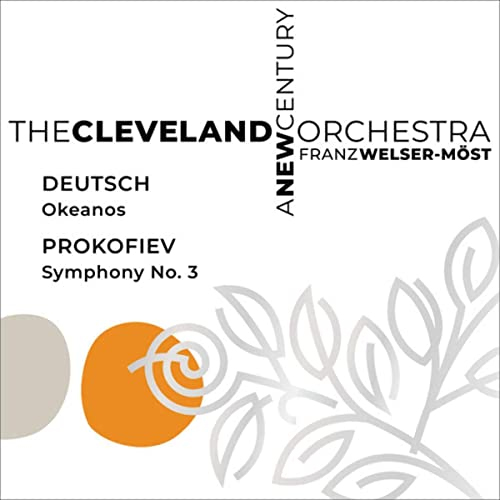
We begin with the world premiere recording of Okeanos, Bernd Richard Deutsch’s concerto for organ and orchestra, featuring Paul Jacobs as soloist. The title refers not only to the Titan of Greek mythology, but also “to an idea of immense (and sometimes unfathomable) greatness and breadth, which conjures up in my mind the thought of the organ,” as Deutsch writes in his notes. [Read more…]
by Mike Telin
by Mike Telin

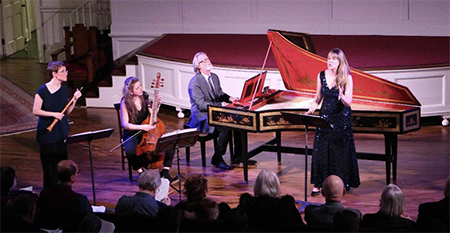
Cleveland-based period instrument ensemble Les Délices has decided the best path would be to create an all-virtual 2020-2021 season. One series, Embracing Change, will feature four new, 60-minute pre-recorded concerts complete with on-screen titles, program notes, artist interviews, and behind-the-scenes footage. First screenings will include live post-concert Q&A with the artists. Concerts will be available on demand for ten days and audiences can enjoy a closing “Reception” during the final day of each cycle. To view the season and purchase single tickets and subscription packages click here.
In a recent telephone conversation, Artistic Director Debra Nagy said that part of the genesis of Embracing Change was that she had already planned the 2020-21 season back in the fall of 2019. “I continued to tweak and build a budget and then COVID-19 hit in March of 2020.”
Nagy said she spent some time in denial and grieving, but as the weeks progressed, and studies were released about the possible dangers of singing and performing in large groups, she began to ask herself: what does this mean for Les Délices? [Read more…]
by Lilyanna D’Amato

“The Legacy of Black Classical Music” hopes to remind us of those musicians and composers whose voices went largely unheard, whose careers were left obscured by the pernicious disease that is systemic racism. In this weekly series, we will explore the lives and contributions of Shirley Graham Du Bois, Florence Price, Josephine Baker, William Grant Still, and Joseph Boulogne (Chevalier de Saint-Georges) — rich and valuable lives largely omitted from Western music history. Let us listen and learn together, celebrating their mastery while also taking the time to critically consider our own complacency in their erasure. For, in this admission lies the beginnings of vital change.
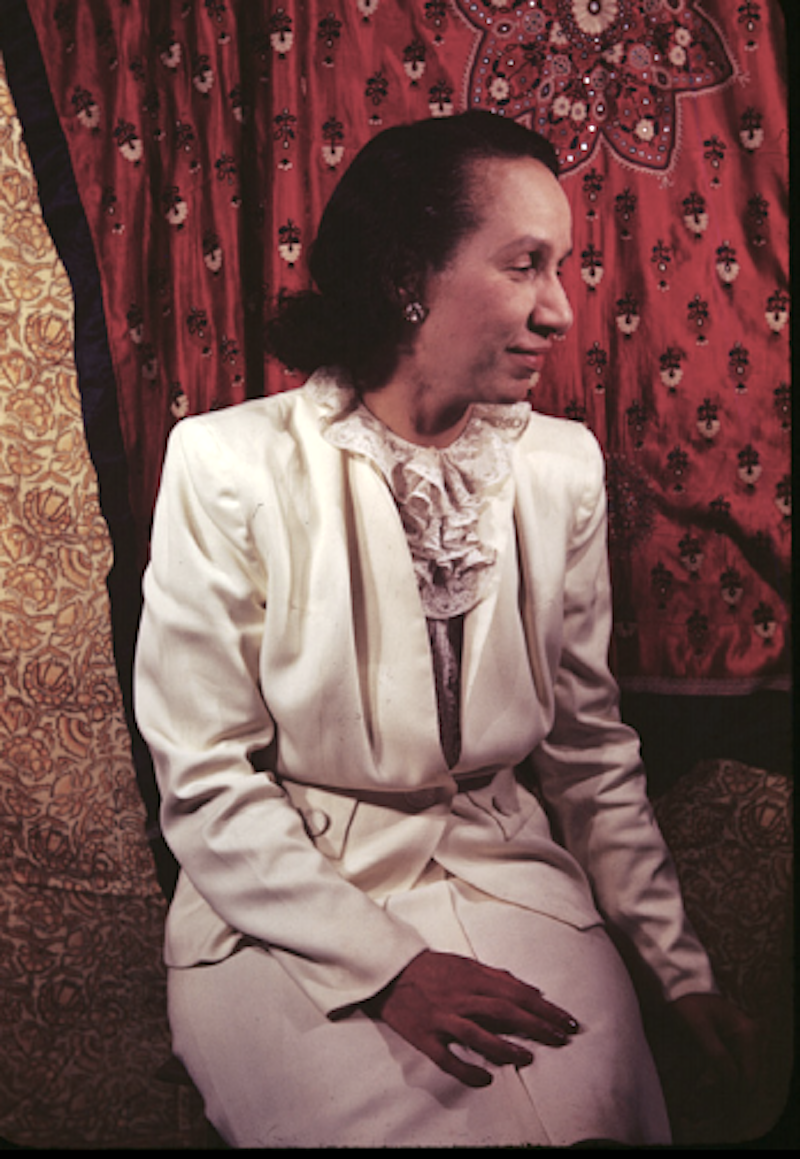
The first musician on our list is Shirley Graham Du Bois, whose tenacity, creative ferocity, outspoken personality, and intellectual prowess led her on a career spanning the globe. Born in Indianapolis in 1896, she spent her childhood immersed in the African Methodist Episcopal Church, where her father served as a preacher and activist. [Read more…]
by Daniel Hathaway

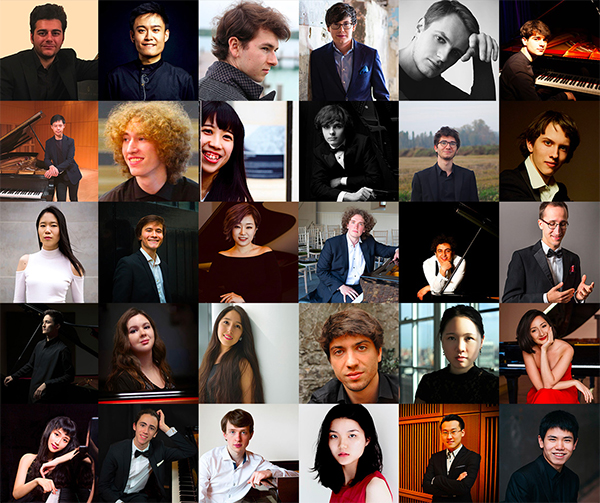
First-round sessions will be streamed nightly at 7:00 pm EDT beginning on July 30 on the Piano Cleveland website. After eliminations, the final round for the six remaining contestants will be streamed on August 7 and 8 (WCLV 104.9 Ideastream will air the final rounds on August 8 and 9 from 2:00 to 4:00 pm). Winners will be announced during an awards ceremony on August 9.
Competitors include Lorenzo Adamo (20, Italy), Kevin Ahfat (25, Canada), Jonas Aumiller (22, Germany), Martin Bartlett (24, United Kingdom), Sergey Belyavskiy (26, Russia), Elia Cecino (19, Italy), Han Chen (28, Taiwan), Michael Davidman (23, United States), Madoka Fukami (32, Japan), Martin Garcia Garcia (23, Spain), Francesco Granata (21, Italy), Arseny Gusev (21, Russia), Anna Han (24, United States), [Read more…]