

by Daniel Hathaway
 NEW CANTON SYMPHONY PODCAST:
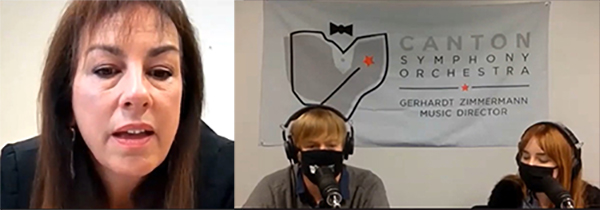
Episode 6 of “Orchestrating Change” features Marie-Hélène Bernard, president and CEO of the St. Louis Symphony since July, 2017, in conversation with the CSO’s Rachel Hagemeier and Matthew Jenkins Jaroszewicz [38:39]. Watch here.
Bernard talks about what it means to be a leader in the field of orchestral music, and about “her experience as both a female and an immigrant [from Canada] and how that has affected her leadership style and her view on the future of this field. She is dedicated to equity, diversity and inclusion in her organizations and strives to create an inclusive environment in her organizations so the future of orchestral music is more diverse and representative of the communities we serve.”
TODAY ON THE WEB:
COVID-19 has taken its toll on local in-person events, but the pandemic has also opened wide avenues to concerts around the globe.
Just today, at 1:00 pm you can teleport to the Krannert Center at the University of Illinois Champaign-Urbana and catch the Jupiter quartet in works by Beethoven and Kati Agócs, at 2:00 pm you can zip over to Amsterdam to hear Mozart’s Gran Partita in the main hall of the Concertgebouw or — at the same hour — show up at Saanen Church in Switzerland to enjoy Argentine pianists Martha Argerich and Nelson Goerner play music by Debussy and Rachmaninoff.
Then at 7:30 pm, in a musical handshake between the North and the East Coasts, No Exit new music ensemble hosts Transient Canvas from Boston performing music of emerging composers from Cleveland State, Kent State, and Baldwin Wallace Universities.
That’s globalism at its best. More details in our Concert Listings.
TODAY’S ALMANAC:
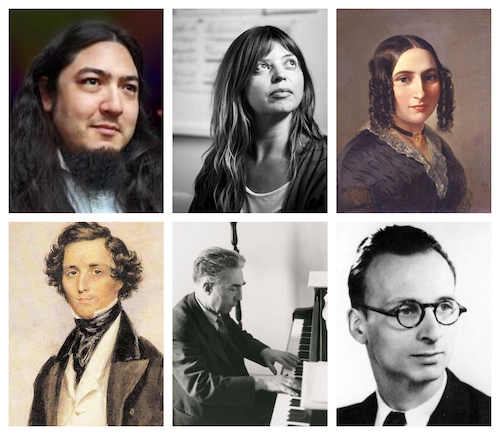
 On today’s date in classical music history, we gained two composers and lost one.
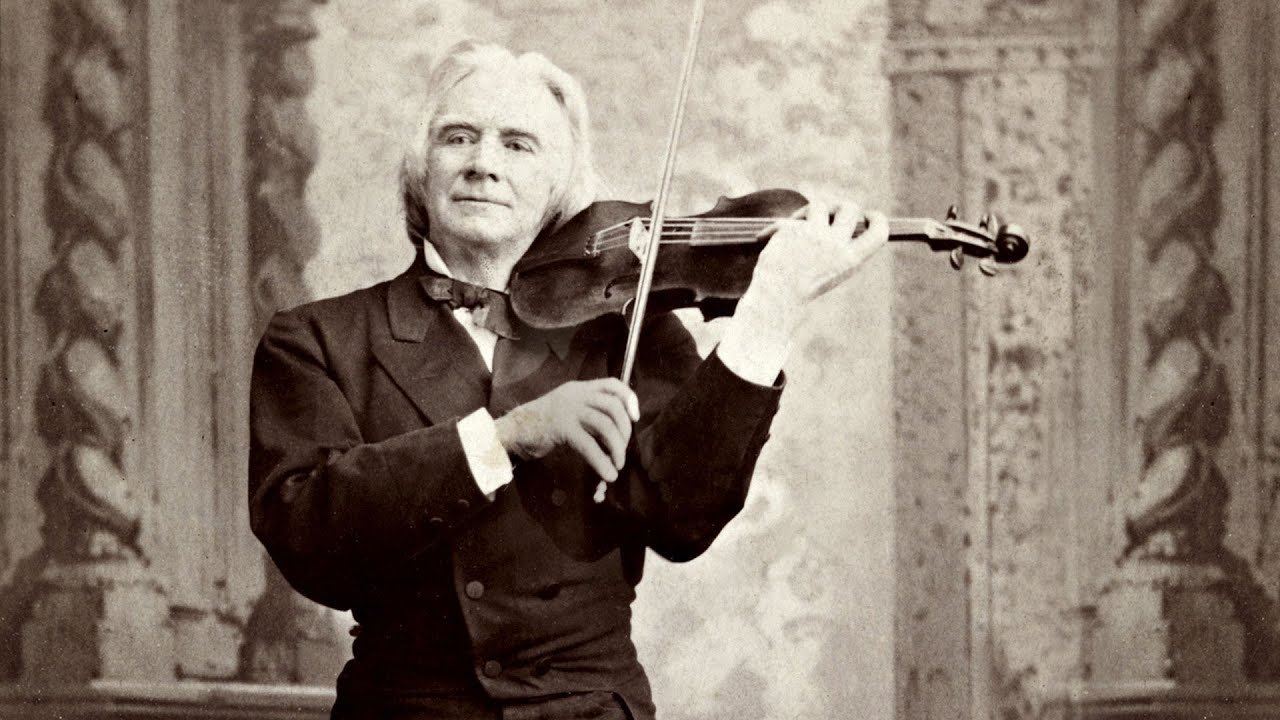
Norwegian composer and violinist Ole Bull entered the scene in Bergen in 1810.
The other two were born in France — Jacques Ibert in Paris in 1890, and Ivan Tcherepnin near Paris on this date in 1943. Ibert makes today’s honors list having written fine to his career in the French capital on February 5, 1962.
Bull figures importantly in the establishment of Norwegian independence from Sweden, including the co-founding of Det Norske Theater in Bergen, where Norwegian was established as the house language instead of Danish.
He also encouraged the talent of Edvard Grieg, whom he met in 1858 when Norway’s most famous composer-to-be was only 15, and leveraged his admission to the Leipzig Conservatory.
As one of the leading touring virtuosi of his era, Bull collected important violins, performed with Liszt, and made several tours to the United States, where he bought land and established Norwegian communities. As a result, today you can visit Ole Bull State Park in the Susquehannock State Forest, enter Ole Bull’s concert hall at Mammoth Cave in Kentucky, and check out Ole Bull Cottage in Eliot, Maine, originally meant to be a music school.
For a taste of Bull’s music, listen to his Grand Concerto, Op. 4, performed by Annar Follesø with Ole Kristian Ruud and the Norwegian Radio Orchestra, or his somewhat shorter Concerto Fantastico with the same artists.
And/or watch a documentary where two sisters, Ragnhild Hemsing and Eldbjørg Hemsing, go on a quest to discover the secrets behind the virtuoso’s tone.
Ivan Tcherepnin, who came from a family of Russian composers, studied with Leon Kirchner, Karlheinz Stockhausen, and Pierre Boulez, and taught at the San Francisco Conservatory and Stanford before becoming director of Harvard’s Electronic Music School from 1972 until his death in 1998.
Alas, I haven’t been able to locate recordings of what are said to be two of his defining works: the Double Concerto for Violin, Cello, and Orchestra that won the 1996 Grawemeyer Award, or his Samur Opera, which earned the Grand Prize at Austria’s 1982 Ars Electronica Festival. Any clues from our readers?
Jacques Ibert shared the predilection of 20th century French composers to write for wind instruments. Who could ask for a more alluring performance of his Trois Pièces Brèves than that played (and choreographed!) by Carion? Begin here and click here for the last two movements.
But for sheer cuteness, here’s a video posted by pianist Conrad Tao of his performance of Ibert’s Le petit âne blanc (“The Little White Donkey”), captured at the tender age of 6.
 EVENTS CELEBRATING BLACK HISTORY MONTH: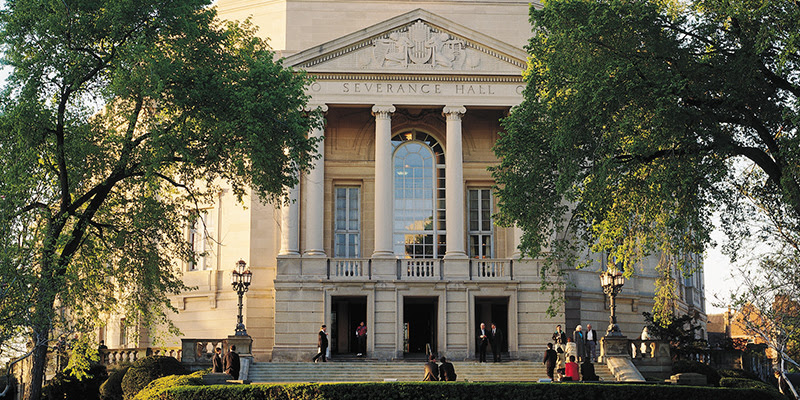
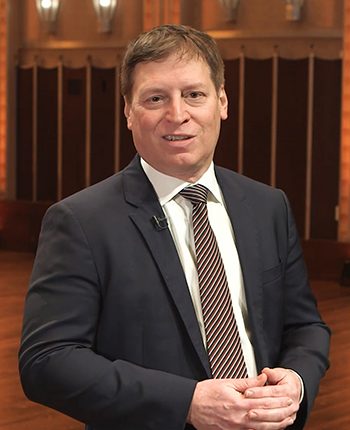 Cleveland Orchestra CEO André Gremillet announced on Wednesday afternoon that in-person performances at Severance Hall have been cancelled through June due to the continuing health risks of the COVID-19 pandemic. Watch a video of his announcement
 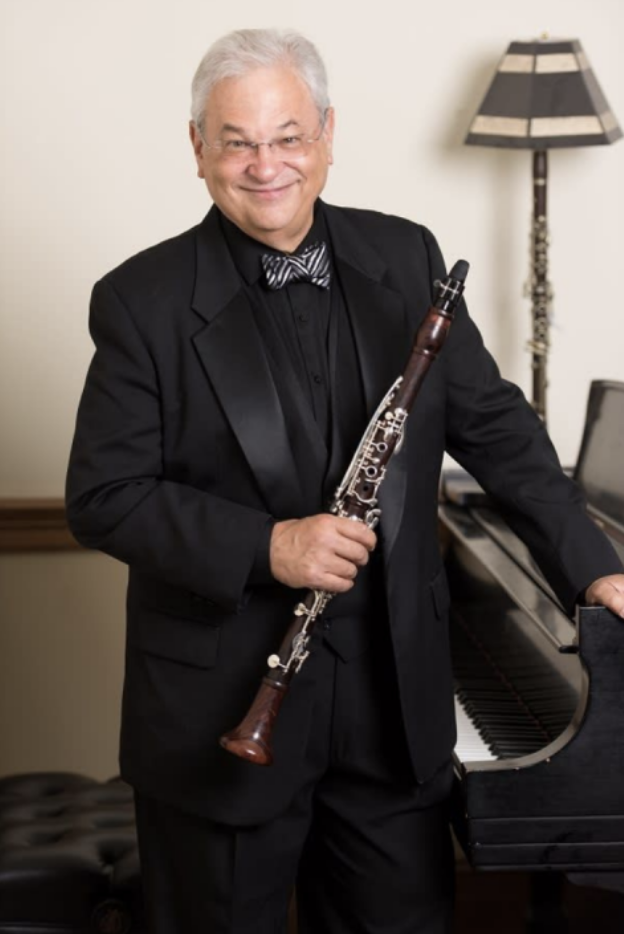 Through a partnership with the Chamber Music Society of Lincoln Center, the Cleveland Chamber Music Society is offering the steamed CMS Front Row National series free of charge.
 Beginning this week, Oberlin Conservatory will honor Black History Month with a series of events titled