

by Timothy Robson
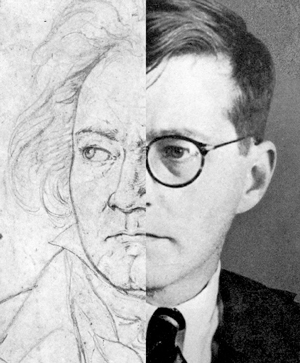 Severance Hall was sold out for Saturday evening for the third and final concert in The Cleveland Orchestra’s mini-series, Fate and Freedom: Music of Beethoven and Shostakovich. Music director Franz Welser-Möst conducted riveting performances of Beethoven’s Symphony No. 5 in C minor, Op. 67, and Shostakovich’s Symphony No. 10 in E minor, Op. 93. The orchestra and it soloists sounded in particularly top form from beginning to end.
The program book featured specially written essays by Welser-Möst and composer/journalist Frank J. Oteri on the relationship of Beethoven’s and Shostakovich’s music to politics. For Beethoven, especially composing the third, fourth and fifth symphonies following the French revolution and under the philosophy of the Enlightenment; and for Shostokovich, enduring the Stalinist period of World War II and the grim Soviet era 1950s following Stalin’s death.
Beethoven’s was a period of social upheaval and political protest; Shostakovich lived in an era of political repression, where a statement against the regime likely would have dire consequences. Both composers expressed their political views through their music: Beethoven the concept of the freedom of all humankind; Shostokovich the idea of political protest hidden in secret messages within his music. The appreciation of these two great symphonies is not dependent on awareness of their context—even when performed together; however, the written commentary did enhance the experience. [Read more…]