

by Daniel Hathaway
 EVENTS THIS WEEKEND:
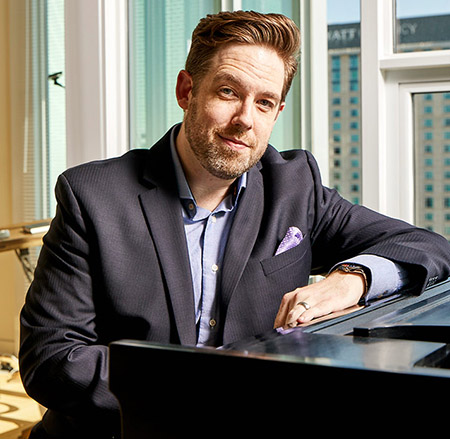
Presenters seem to be taking Saturday off, but there are five varied concerts to choose from on Sunday afternoon: Tuesday Musical’s Al Fresco Passport series (Zydeco on the lawn of Akron’s Historic Barder House both at 1 and 3 pm), Divinity Lutheran’s Parma Heights recital by Cleveland Orchestra musicians Elanya Duitman, violin, and Carolyn Warner, piano at 3 pm, an American Guild of Organists, Cleveland Chapter retrospective of Music by H. Leslie Adams (pictured) for piano, voice, violin and trumpet in Rocky River, and Spanish Renaissance music performed by Duo Mignarda with EnsAmble Ad-Hoc and baritone José Gotera at St. John’s Cathedral, both at 3 pm, followed by the Cavani String Quartet’s latest “Beyond Beethoven” episode on the Music From the Western Reserve Series in Hudson at 5 pm (LvB’s Op. 18, No. 5 and Op. 59, No. 3 plus Gabriela Lena Frank’s Leyendas: An Andean Walkabout.
Details in our Concert Listings.
INTERESTING READS:
In a September 22 entry on his blog, Unanswered Question, musical scholar and concert promoter Joe Horowitz discusses two examples of “Buried Treasure,” works by Black composers that he argues need to come into the mainstream.
Of the first, he writes, “It’s finally become inevitable that William Levi Dawson’s Negro Folk Symphony, premiered by Leopold Stokowski in 1934, will become known as a galvanizing achievement in American symphonic music. Incredibly, our major orchestras still haven’t gotten around to it – but they will.”
The second work, Arthur Farwell’s 1922 Hako String Quartet, will be released in October on Naxos in a performance by the Dakota String Quartet. Horowitz writes, “Farwell isn’t played for reasons political, not musical. As the leader of our Indianist movement in music, he’s today condemned as a cultural appropriator…He believed it was a democratic obligation of Americans of European descent to try to understand the indigenous Americans they displaced and oppressed — to preserve something of their civilization; to find a path toward reconciliation. His Indianist compositions attempt to mediate between Native American ritual and the Western concert tradition.” Read his article here.
And in an NPR story, Eleanor Beardsley writes about French pianist Colette Maze, who has just released her sixth album at the age of 107 (she records on Sundays in her 14th floor apartment overlooking the Seine, “when the neighbors are likely to be out and the building is quieter.”) Read or listen to the six-minute broadcast here.
THIS WEEKEND’S ALMANAC:
Two musicians born on September 26 figure in other entries in the weekend’s Diary. American composer and trombonist William Levi Dawson (1898 in Anniston, Alabama) is the composer of the Negro Folk Symphony mentioned in Joe Horowitz’s blog, and American composer Gabriela Lena Frank (1972, Berkeley, Caifornia) is the author of Leyendas: An Andean Walkabout, to be played on Sunday by the Cavani Quartet.
Why not spend some time today visiting recordings of those two works. Click here for Leopold Stokowski’s performance of the Dawson Symphony with the American Symphony Orchestra, and here for a performance of the string orchestra version of Frank’s Leyendas by Lina Gonzaléz-Granados and the New England Conservatory Philharmonia live streamed on October 17, 2020 from NEC’s Jordan Hall in Boston.
Other notables to acknowledge this weekend include Canadian pianist Glenn Gould (born on September 25, 1932, Toronto), and on September 26, French conductor Charles Munch (Strasbourg, 1891), and American composer George Gershwin (Brooklyn, New York, 1898. Those who left us on September 26 include colonial New England composer William Billings (Boston, 1800), and Bela Bartók (New York, 1945).
Archival recordings can put us directly in touch with these musical personalities. Click here to revisit the famous incident of Brahms’ First Piano Concerto involving Gould and Leonard Bernstein, here to watch Munch conduct Berlioz’ Symphonie fantastique with the Boston Symphony, here to listen to Gershwin play excerpts from the F-Major Piano Concerto, and here to enjoy Bartók’s own interpretations of excerpts from Music for Children.
Billings departed the scene too early for recordings, but Ross W. Duffin and Quire Cleveland brought his infectious motet I Am the Rose of Sharon to life in a concert at Historic St. Peter’s Church in April, 2014. Watch here.
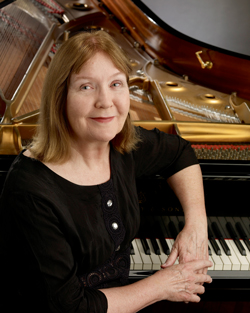 CIM violin professor Jaime Laredo celebrates his 80th birthday tonight at 7 by conducting the CIM Orchestra in works by Prokofiev, Mozart, and Brahms in a hybrid concert you can attend in person (free reservation required) or watch online.
 British conductor and musical scholar Christopher Hogwood died of a brain tumor in Cambridge on this date in 2014. One of the forerunners in the early music revival movement, Hogwood relaunched the 18th-century Academy of Ancient Music in 1973, clearing a pathway for such later conductors as Roger Norrington, John Eliot Gardiner and Trevor Pinnock. The AAM eventually outgrew its concentration on Baroque music and recorded the complete symphonies of Mozart and Beethoven, as well as all of Mozart’s piano concertos with Robert Levin.
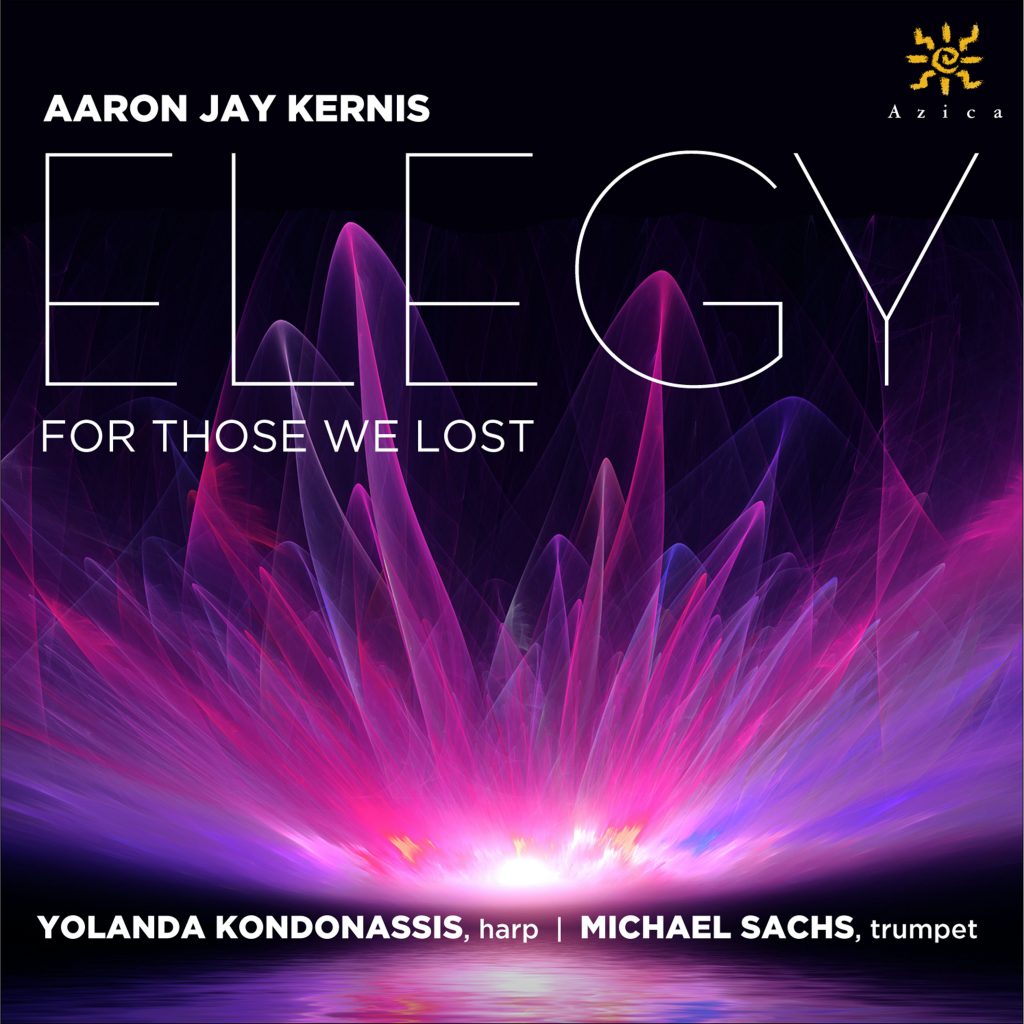 When British musicians have needed a piece of memorial music, their choice since the turn of the 20th century has often been the “Nimrod” movement from Edward Elgar’s
 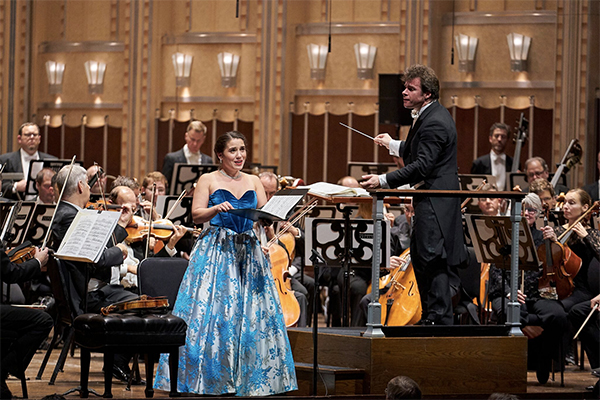 Frequent Cleveland Orchestra guest conductor Jakub Hrůša (pictured left in a 2019 performance of Mahler’s Fourth Symphony with soprano Joelle Harvey) is the subject of a New York Times interview this week in conjunction with the release of his recordings of Bruckner’s Fourth Symphony with the Bamberg Symphony.
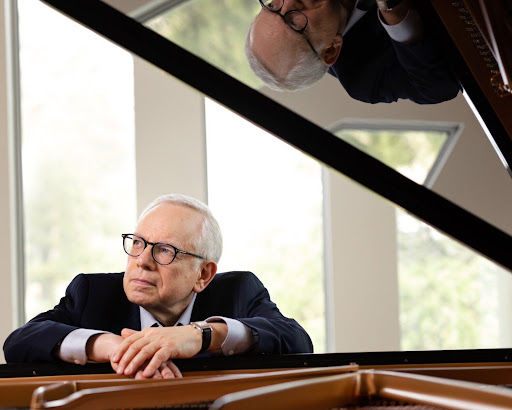 Oberlin piano professor Peter Takács celebrated the completion of a huge project in 2011 when his recordings of the complete Beethoven Sonatas were issued on the Cambria label in a handsome boxed set (read our review
 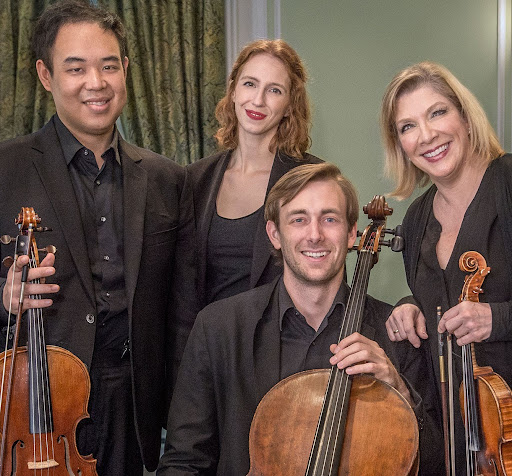 COVID-19 may have interrupted the celebration of Beethoven’s 250th Birthday in December 2020, but the Cavani String Quartet has made that event a moveable feast.
 HAPPENING THIS WEEKEND:
 NEWS BRIEFS:
 HAPPENING TODAY:
 HAPPENING THIS WEEKEND: