by Nicholas Stevens
 Let it never be said that the Vienna Boys Choir, which visited Akron for a concert at E.J. Thomas Hall last week, puts on a dull show. The singers themselves tend to stand stock still, yet this default mode of immobility makes the group’s occasional choreography — and director Manolo Cagnin’s energetic movements as both conductor and pianist — all the more exciting to watch. [Read more…]
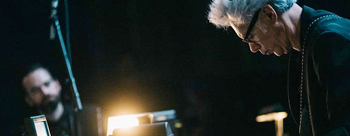 Of the many quotable lines issued by filmmaker and musician Jim Jarmusch at the Cleveland Museum of Art last week, two stood out: “I’m a self-proclaimed dilettante, and I don’t think that’s a bad thing,” and later, “The most beautiful thing humans do — have done — is music.” Both comments, given during a post-concert interview in the Museum’s Gartner Auditorium, shed light on the performance that Jarmusch and his bandmate Carter Logan had just staged.
 Kyoungtack Hong’s painting