

By Daniel Hautzinger
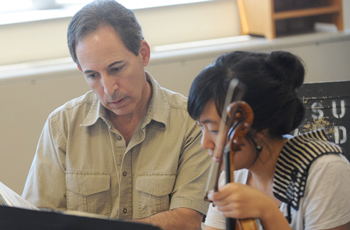 Ann Yeh wouldn’t be applying to graduate school for cello performance if it weren’t for Kent/Blossom Music Festival (KBMF). Now in her second year at the festival and entering her senior year at Vanderbilt University studying with Felix Wang, Yeh said that after “the incredible experience I had last time I thought that maybe I could make it as a musician.”
Such career-changing influence is what every educational festival and its faculty hope to achieve. And KBMF students find this festival particularly effective. “My experience so far has been extremely enjoyable and productive,” enthused violinist Gabe Napoli, currently studying at Northwestern University. “My peers are all amazingly talented and it’s so much fun to make music with them. The instructors are both inspiring role models and great coaches. It’s a privilege to learn from them.” [Read more…]
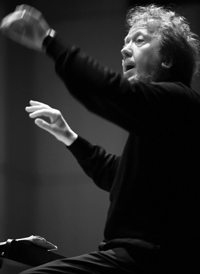 Conductor John Nelson has had a long career. Born in Costa Rica to American parents in 1941, he has been Music Director of the Indianapolis Symphony, Opera Theatre of St. Louis, and the Orchestre de chamber de Paris, has become a renowned opera conductor and interpreter of large Romantic and sacred choral works, won a Grammy for his recording of Handel’s Semele, and helped found Soli Deo Gloria, an organization which commissions sacred choral music from such respected composers as Christopher Rouse and Augusta Read Thomas.
 Each summer talented young musicians make their way to the Oberlin College campus to participate in Credo, where for three weeks they study chamber music with leading artist-teachers from around the world. But what makes a Credo experience different from many summer music camps and festivals is Credo’s commitment to community service. Participants perform concerts in prisons, nursing homes, early childhood centers and hospice facilities as well as volunteering at local food banks, homeless shelters and parks. “Credo is about chamber music and chamber music is about relationships,” Credo’s Artistic Director and Professor of Viola at Oberlin, Peter Slowik told us during a recent telephone conversation. “Credo is about catalytic relationships and it gives people a sense of what they can do with their music apart from the concert hall.”
 Learning and putting together Olivier Messiaen’s Quartet for the End of Time is a scramble against time. The piece features complicated rhythms (sometimes notated without time signatures), infinitely long phrases, and complicated layering of parts. György Ligeti’s Horn Trio and Schoenberg’s First Chamber Symphony are similarly difficult works. But students at Kent/Blossom Music Festival (KBMF) are assigned to learn them in two weeks for performance.
 “Bach was full of joy, and I think that really stems from his faith. He was a strong Lutheran and you see this in all of his music. He was a very complete, whole being. And yeah, I think he loved to throw back a few beers,” said cellist Steuart Pincombe over the phone.
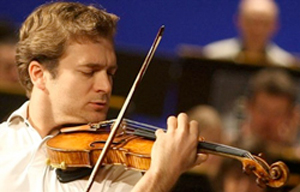 “I look forward to coming to Cleveland,” exclaimed French violinist
 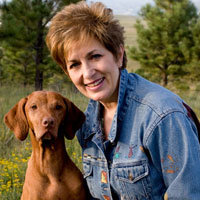 “I’m looking forward to being there, it’s going to be a lot of fun,” violinist and 2014 Kent/Blossom Kulas Foundation Guest Artist Ida Kavafian said enthusiastically by telephone. “Keith Robinson is somebody I’ve worked with for years and he’s talked about hosting me at Kent/Blossom for some time. We finally were able to work out the dates and come up with a project that will be a lot of fun and beneficial to the students.”
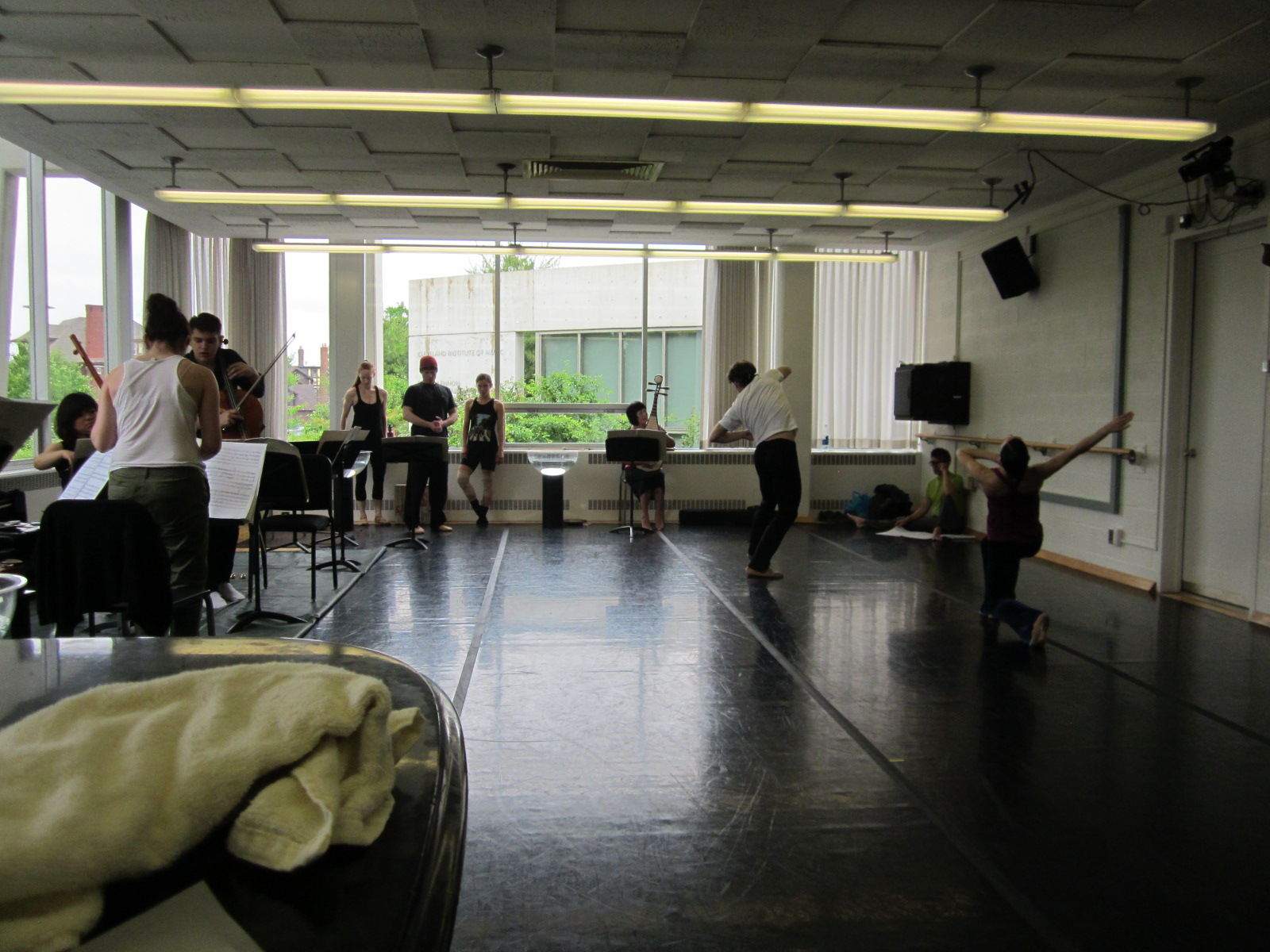 On Wednesday, June 25, Mike Telin had the opportunity to attend a ChamberFest Cleveland rehearsal of Tan Dun’s Ghost Opera for String Quartet and Pipa, with Water, Stones, Paper and Metal, which will be presented in Kulas Hall at the Cleveland Institute of Music on Saturday, June 28 at 8:00 pm. The performance will feature the world premiere of choreography by GroundWorks Dance Theater artistic director David Shimotakahara. The performance promises to be an emotional experience. Tan Dun’s music is captivating and the choreography adds a new and wonderful dimension to the music. The production is a collaboration that requires a lot of sharing of ideas between the musicians, the dancers and the collective. As violinist Amy Schwartz Moretti said, “I’ve never done anything like this before. You can only prepare so much at home, because everything needs to be discussed with your colleagues. But we’re all having a great time!” (Click on the images to enlarge.)
 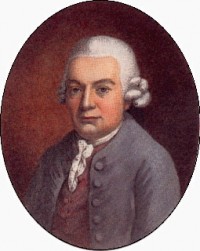 For the forty-third edition of the Baroque Performance Institute, which has drawn a hundred students of early music to the Oberlin Conservatory this summer, Kenneth Slowik, artistic director of the Smithsonian Chamber Music Society in Washington, D.C. and artistic director of BPI, has chosen to focus on the legacy of Johann Sebastian Bach. “It’s always a great pleasure to do the Bach legacy, but the other great spur was the 300th anniversary of Carl Philipp Emanuel Bach”, born in 1714 “into a remarkable family of musicians.”
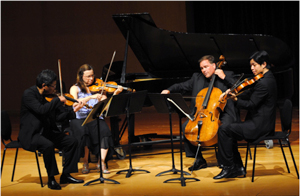 Every summer, young music students leave their conservatories to attend festivals, where they essentially continue the studies they undertake during the year, but with other teachers, and performances and master classes by exceptional visiting artists. Kent/Blossom Music Festival is no different: students descend upon Kent State University for five weeks to study with musicians from the Cleveland Orchestra, Kent Faculty, and guest artists. Throughout those five weeks, there are six faculty concerts and a performance with the Cleveland Orchestra, as well as eight student recitals (see our concert listings page for details).