


by Stephanie Manning
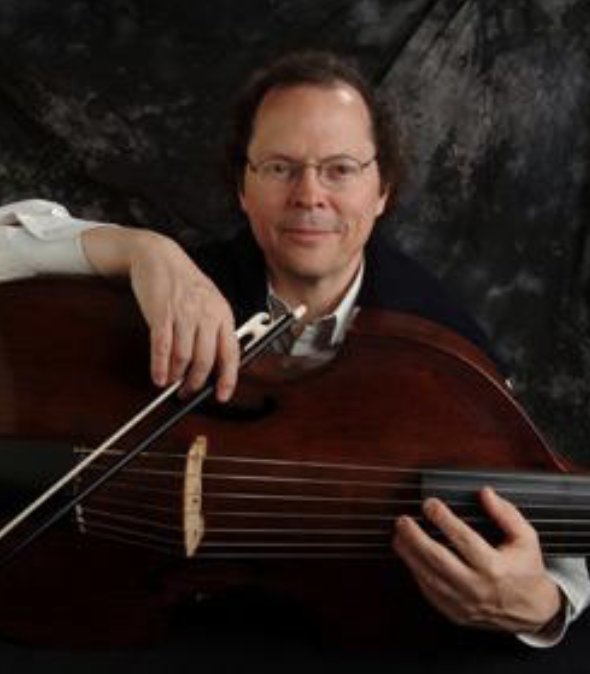 When Oberlin’s Baroque Performance Institute (BPI) began more than half a century ago, dedicated programs for studying and performing early music were almost nonexistent.
“ In the early seventies, it was really the only place where you could study that repertoire in the States,” artistic director Kenneth Slowik said in a recent interview. Thankfully, “nowadays, there are several different options.”
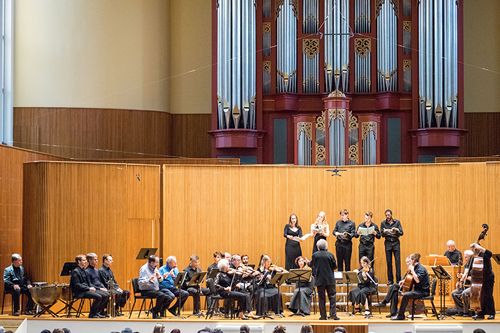
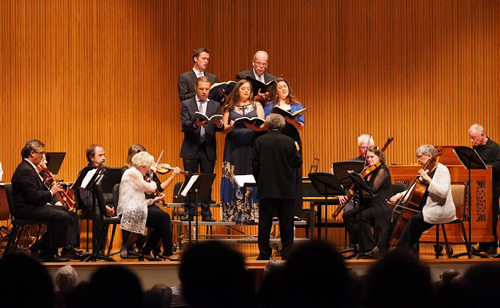
Throughout the decades, the renowned summer workshop has continued its annual meetings, with only a brief pause for the pandemic. From June 15–29, BPI will mark its 53rd year when it welcomes a group of both professional and avocational musicians to Oberlin Conservatory. Performers ages 15 and up will participate in workshops, master classes, and large ensembles under the theme “Music in England from Purcell to Handel.”
Where does BPI fit into today’s early music landscape? “ It still has its place, I think,” Slowik said. “Certainly, the people who come take away a two-week experience that’s unlike anything else they’ve done.”
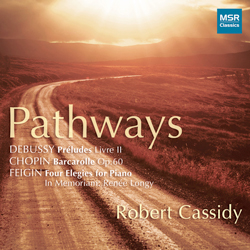 Although composer Claude Debussy rejected the term “impressionism” and referred to music writers who used the term as “fools,” today Debussy’s music is synonymous with the impressionist movement. On his self-titled CD from back in 2012, pianist Robert Cassidy captured the essence of the composer’s music with his performances of the twelve Préludes of Book 1. On his latest recording, Pathways, Cassidy once again demonstrates his affinity for this music with discerning interpretations of the twelve preludes that comprise Debussy’s second book, as well as works by Chopin and Feigin.
 “The Bach Legacy” is the overriding theme in this summer’s Oberlin Baroque Performance Institute, and artistic director Kenneth Slowik decided to devote the second faculty concert on Friday, June 21 to a partial replication of an historic benefit concert given in Hamburg in April of 1786 by Johann Sebastian Bach’s most celebrated son, Carl Philipp Emanuel Bach. (Program pictured here.)
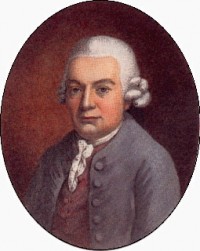 For the forty-third edition of the Baroque Performance Institute, which has drawn a hundred students of early music to the Oberlin Conservatory this summer, Kenneth Slowik, artistic director of the Smithsonian Chamber Music Society in Washington, D.C. and artistic director of BPI, has chosen to focus on the legacy of Johann Sebastian Bach. “It’s always a great pleasure to do the Bach legacy, but the other great spur was the 300th anniversary of Carl Philipp Emanuel Bach”, born in 1714 “into a remarkable family of musicians.”