


by Mike Telin
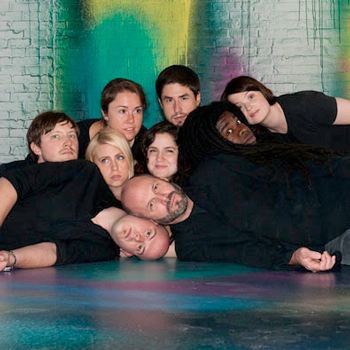 When Brad Wells founded the innovative vocal ensemble Roomful of Teeth in 2009, he wanted to explore all the possibilities of the human voice. “Before I studied classical technique, my experience with the voice was initially pop, rock, jazz, and then classical,” Wells said during a recent telephone conversation. “When I got into choral and solo singing, as well as composing for the voice, on the one hand the Western classical style struck me as very powerful, beautiful and expressive. But at the same time, I felt that from a composer’s point of view, there were all sorts of colors, gestures and timbres that were out there still waiting to be harnessed.”
On Friday, March 20 at 7:30 in Gartner Auditorium at the Cleveland Museum of Art, Wells and his eight-member ensemble, will present a concert featuring music from their 2014 Grammy-winning album, including ensemble member Caroline Shaw’s Pulitzer Prize-winning Partita for 8 Voices. [Read more…]
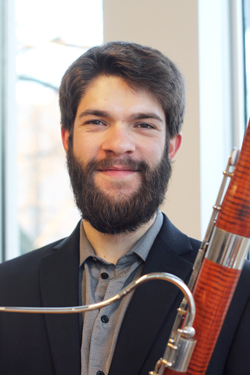 A gripping bassoon concerto from 1975, the world premiere of a cantata on a chilling subject, and a Buddist-inspired essay in instrumental colors written in 1997 provided Timothy Weiss and his Oberlin Contemporary Music Ensemble with plenty of opportunities to shine on Saturday afternoon, March 7, when they presented their fourth concert of the season in Gartner Auditorium at the Cleveland Museum of Art.
 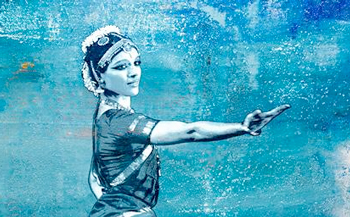 The Cleveland Museum of Art Performing Arts Series took the Gartner Auditorium audience on an exotic trip on Wednesday, February 11. Through the artistic world of the Ragamala Dance Company choreographers Aparna and Ranee Ramaswamy collaborated with jazz saxophonist Rudresh Mahanthappa to create a fusion of Carnatic Indian and American Jazz forms.
 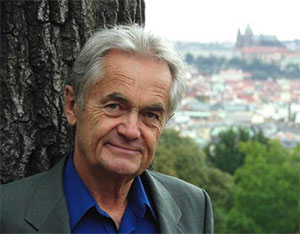 It may seem odd to those in other professions, but what’s a more natural way to celebrate a major milestone in the life of a musician than inviting him to perform at his own party? On Sunday, January 25, organist Karel Paukert returned to the Cleveland Museum of Art, where he served as curator of musical arts from 1974 to 2004, to mark his 80th birthday with a masterful performance of Olivier Messiaen’s La Nativité du Seigneur (1935).
 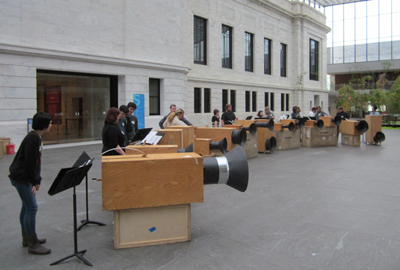 One person’s music is another’s noise. On Friday, January 16 in Gartner Auditorium at the Cleveland Museum of Art, Italian musicologist, composer and musician Luciano Chessa led a fascinating and brilliantly programmed concert by the “Orchestra of Future Noise Intoners” or “Intonarumori,” which challenged listeners to hear the musical possibilities that can be found in noise.
 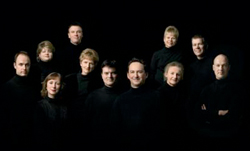 In the dark days of December, the seasonal need for light and hope seems to unite the faithful, the lapsed, the secular and even the skeptical in a desire for choral music. Tallis Scholars, the distinguished English choir, recently brought a program of great Renaissance vocal works to the Cleveland Museum of Art, singing with enough soul and skill to light us at least through the impending solstice.
 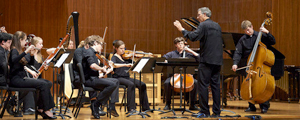 As part of its 2014/15 performing arts series, the Cleveland Museum of Art is presenting five concerts by the Oberlin Contemporary Music Ensemble, directed by Timothy Weiss. The third, featuring works by Pierre Boulez, Harrison Birtwistle and Richard Wernick, took place on Saturday, December 13, in Gartner Auditorium. The audience enjoyed top-notch performances, showing not only technical prowess but also a strong sense of the musicality of each of these difficult works.