
by Kevin McLaughlin
 There’s an old adage about the Danes: they are an amiable people, quick to embrace hygge and humor, yet they hide a deep streak of seriousness when it matters. The Danish String Quartet has made a career out of embodying that balance. Their concerts feel open-hearted, even playful, but the music-making is etched with an intensity as real as an icy wind — one they would probably shrug off if you asked them about it later.
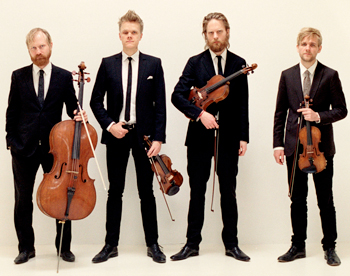
On Friday evening, November 21, in Oberlin’s Finney Chapel, three Danes (Frederik Øland & Rune Tonsgaard Sørensen, violins and Asbjørn Nørgaard, viola) and a Norwegian (Fredrik Schøyen Sjölin, cello) using, in their words, “four simple instruments made of wood” brought ease and gravity to a program that moved from Stravinsky and Jonny Greenwood to late Beethoven and to the folk traditions of their northern homes.
Their spoken introductions were casual in the best way: well-crafted, low-key, and quietly funny. In introducing the first half, Sørensen introduced Stravinsky’s Three Pieces and Jonny Greenwood’s Suite from There Will Be Blood, followed by the Beethoven, as if that were the most natural sequence in the world.
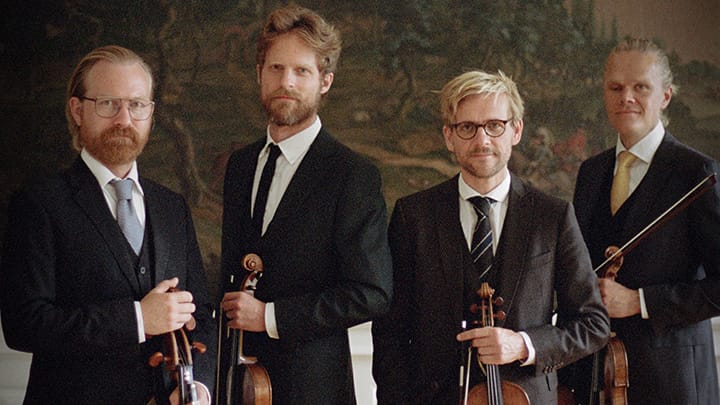 These days, the Danish String Quartet keep their touring schedule simple. Arrive in a new city in the morning, play a concert in the evening, and repeat. That’s not because the group doesn’t like exploring new places — it’s because they’ve got little ones waiting at home.
 Could the prodigiously talented players of the Danish String Quartet all be drinking from some magic source? By now among the world’s finest quartets — perhaps taking the top rung left by the Emerson Quartet after their recent retirement — they perform with such easy excellence and intuitive musical consensus that you wonder: is this the product of hard work and long hours of rehearsal, or some magic potion?
 On a recent visit to Grafton Correctional Facility, students from Credo Music Festival performed for and talked with some of the residents in the prison’s chapel, with an audience of about 50 and a backdrop of multiple green plants. This was part of Credo’s weekly service day, during which young musicians engage with the community in multiple ways — from picking up trash along the side of the highway, to performing at places that aren’t often filled with music.