


by Daniel Hathaway
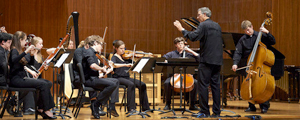 “Too frequently, new music gets performed without enough preparation. These meticulously rehearsed performances were confident and settled, yet sounded completely fresh. Any composer would be thrilled to have their music treated with the level of care that Timothy Weiss and the CME lavished on the four pieces we heard on Saturday.”
That’s what ClevelandClassical.com wrote about the first of five performances by the Oberlin Contemporary Music Ensemble at the Cleveland Museum of Art during the 2014-2015 season. After a year’s absence from the Museum’s Performing Arts Series, Weiss and his young players will return to Gartner Auditorium on Saturday, November 5 at 2:00 pm for the first of four weekend concerts this season. [Read more…]
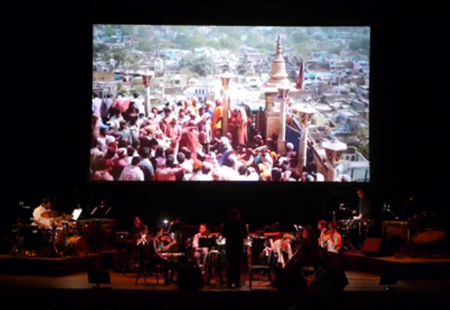

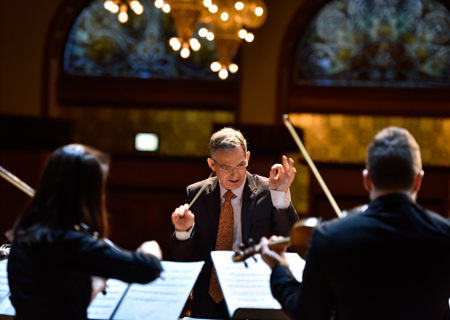
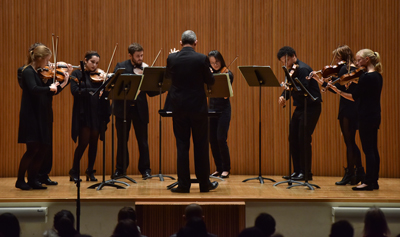 Timothy Weiss and the Oberlin Contemporary Music Ensemble wrapped up their fall term on Wednesday, December 9 in Warner Concert Hall at the Oberlin Conservatory with impressive performances of works by Andrew Norman, Jesse Jones, Augusta Read Thomas, Elizabeth Ogonek, and Carlos Sanchez-Gutierrez — five living composers, all born since 1964.
 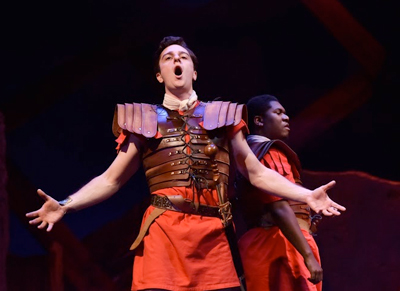 At once historical and metaphorical in its subject, Benjamin Britten’s The Rape of Lucretia delivers a lot in a compact package. The eight singers of Oberlin Opera Theater and fifteen instrumentalists of the Oberlin Contemporary Music Ensemble delivered an outstanding performance of the British composer’s 1946 chamber opera last Wednesday evening in Hall Auditorium — one that left the audience with a lot to think about.
 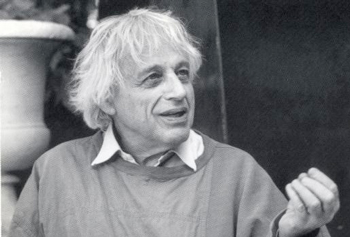 Born in Romania, displaced by the Nazis, educated in Hungary, and finally settling first in Vienna then in Germany after the 1956 Hungarian revolution, György Ligeti spent a lot of his life on the move. Musically nomadic as well, he chased after a number of different compositional styles. Two of Ligeti’s pieces composed thirty years apart formed the backbone of the Oberlin Contemporary Music Ensemble’s arresting program in Gartner Auditorium of the Cleveland Museum of Art on Saturday afternoon, April 11.
 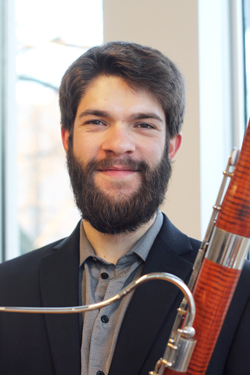 A gripping bassoon concerto from 1975, the world premiere of a cantata on a chilling subject, and a Buddist-inspired essay in instrumental colors written in 1997 provided Timothy Weiss and his Oberlin Contemporary Music Ensemble with plenty of opportunities to shine on Saturday afternoon, March 7, when they presented their fourth concert of the season in Gartner Auditorium at the Cleveland Museum of Art.
 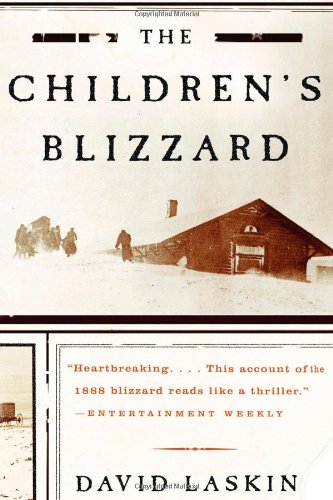 In his book, The Children’s Blizzard, author David Laskin chronicles the events of January 12, 1888. That morning the temperatures in the upper Midwest were unseasonably warm, so warm in fact that children walked to school without coats, hats or gloves. That afternoon one of the deadliest winter storms in U.S. history left thousands stranded as they attempted to make their way home. By the next morning, the storm had claimed more than 500 casualties, many of them school children.