by Guytano Parks
Violinist
by Guytano Parks
Violinist
by Timothy Robson
We can
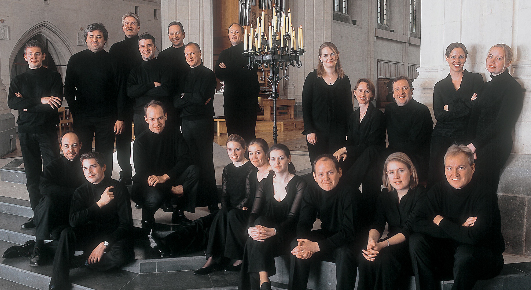
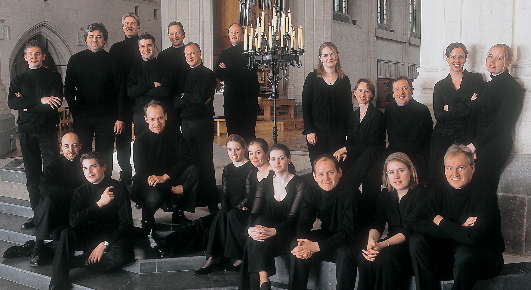
Tenebrae added elements of theatricality into its performance. Many of the lights in the cathedral’s nave were dimmed, lending a mysterious and contemplative atmosphere. “Come, let us worship God, our King,” the first movement from Sergei Rachmaninoff’s Vespers (known also as the All Night Vigil) opened the concert and was sung in Russian from the rear of the nave. The group has the very low bass singers required for effective performance of the Russian choral repertoire [Read more…]
by Daniel Hathaway
Martin Kessler
An anonymous member of Pennsylvania’s Susquehanna Valley Chorale made a donation in 2007 toward commissioning a piece dealing with Alzheimer’s disease in honor of his parents, who had both died of that irreversible neurological condition. A blog was set up in cooperation with Garfein (the librettist for Elmer Gantry and Rosenkranz and Guildenstern are Dead) to collect stories from chorus and community members who had dealt with the disease. The work was premiered in October, 2009 at the Weis Center at Bucknell University in Lewisburg, Pennsylvania, along with works by Cohen’s teacher, Ron Nelson, and was recorded for radio and television by PBS. (Read the libretto and listen to excerpts here). [Read more…]
by Mike Telin
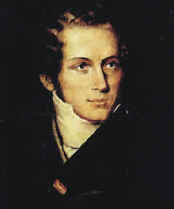
Opera composer Vincenzo Bellini
“It is a story of feelings and how people act and react to those feelings. It is about the psychology of human nature,” says soprano and Opera Circle executive director Dorota Sobieska, who will perform the role of Norma, the Druid high priestess, who is forced to make difficult life choices (read a synopsis here). For people who may not be familiar with the work, Sobieska likens it to a psychological thriller; “The opera is full of internal tragedy and you need to get into the psychology of the characters.” [Read more…]
by J.D. Goddard
On Thursday
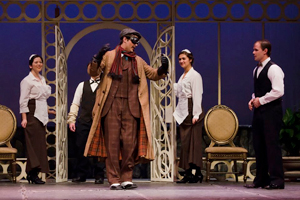
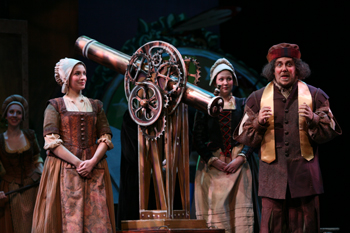
In 1792, Emperor Leopold II commissioned Domenico Cimarosa to write his opera Il matrimonio segreto on a libretto by Giovanni Bertati based on the play The Clandestine/Secret Marriage (1766) by George Colman and David Garrick. The opera was premiered in Vienna in 1792, two months after the death of Mozart. Love triangles and romantic chicanery in 18th century Italy permeate this two-act opera, which unfurls slowly in the first act and becomes more frolicsome in the second. [Read more…]
by Mike Telin
When the
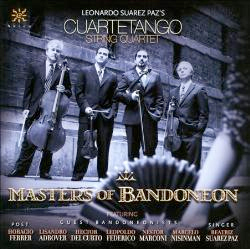
“I first met Leonardo after the performance of Romance de Tango that he created for the Cleveland Museum of Art’s VIVA! & Gala series in 2009,” Bise told me over coffee. That performance featured Paz’s award-winning string quartet Cuartetango, as well as eight dancers. Bise said that he struck up a conversation with Paz, one thing led to another, and soon they were working together on the recording project. The project also took Bise on his first visit to Buenos Aires, a trip that he calls life-changing. “First, the musical life in the city is intoxicating, and Tango is the national soundtrack of Argentina that plays 24/7.” [Read more…]
by Nicholas Jones

French Baroque opera, now generally seen as recherché to the extreme, was once so popular that its tunes were madly sought after. As every garage band today wants to cover Justin Bieber, so many in the mid-eighteenth century wanted a bit of Rameau, even if they couldn’t be at the court of the Sun King.
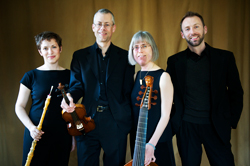
Following their lead, Les Délices, Cleveland’s inventive and efficient baroque group showed us how opera could fit in the pocket. (But…did they have pockets then? Well, never mind! [Read more…]
by Daniel Hathaway
Thanks to 
Subjects drawn from classical antiquity were important to French baroque artists and musicians, and the story of Ulysses’s torturous return to Ithaca after the Trojan War was rich with possibilities. This recording begins and ends with movements from Rebel’s Ulysse (his only attempt at opera), and incorporates cantatas by Bourgeois and de la Guerre depicting the lure of the Sirens and Ulysses’s sea battle with Neptune in retaliation for the blinding of Polyphemus. [Read more…]
by Daniel Hathaway
Joseph Haydn
by Daniel Hathaway
The great
Short launched Tenebrae in 2001 with concerts in London and Switzerland, after a singing career at both Westminster Abbey and Westminster Cathedral, with the Tallis Scholars, the King’s Consort and the King’s Singers as well as in opera productions with the English National Opera and Opera North. He was so committed to the idea of performing by candlelight that he commissioned ten medieval-style iron candle stands from a Swiss ironmonger, each to hold twenty-five candles. [Read more…]