
by Peter Feher

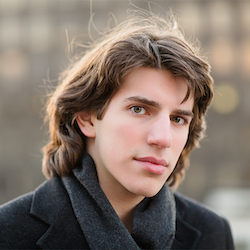
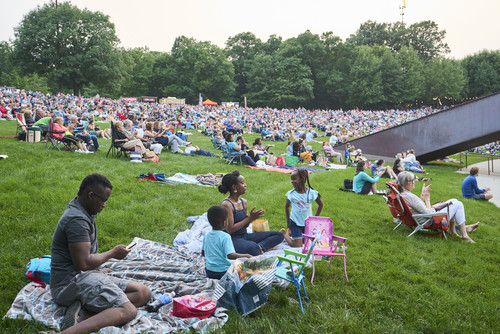
Practical reasons aside, there aren’t many ensembles who can put together an all-Mozart evening as elegantly as The Cleveland Orchestra. [Read more…]
by Peter Feher
by Peter Feher

Practical reasons aside, there aren’t many ensembles who can put together an all-Mozart evening as elegantly as The Cleveland Orchestra. [Read more…]
by Daniel Hathaway

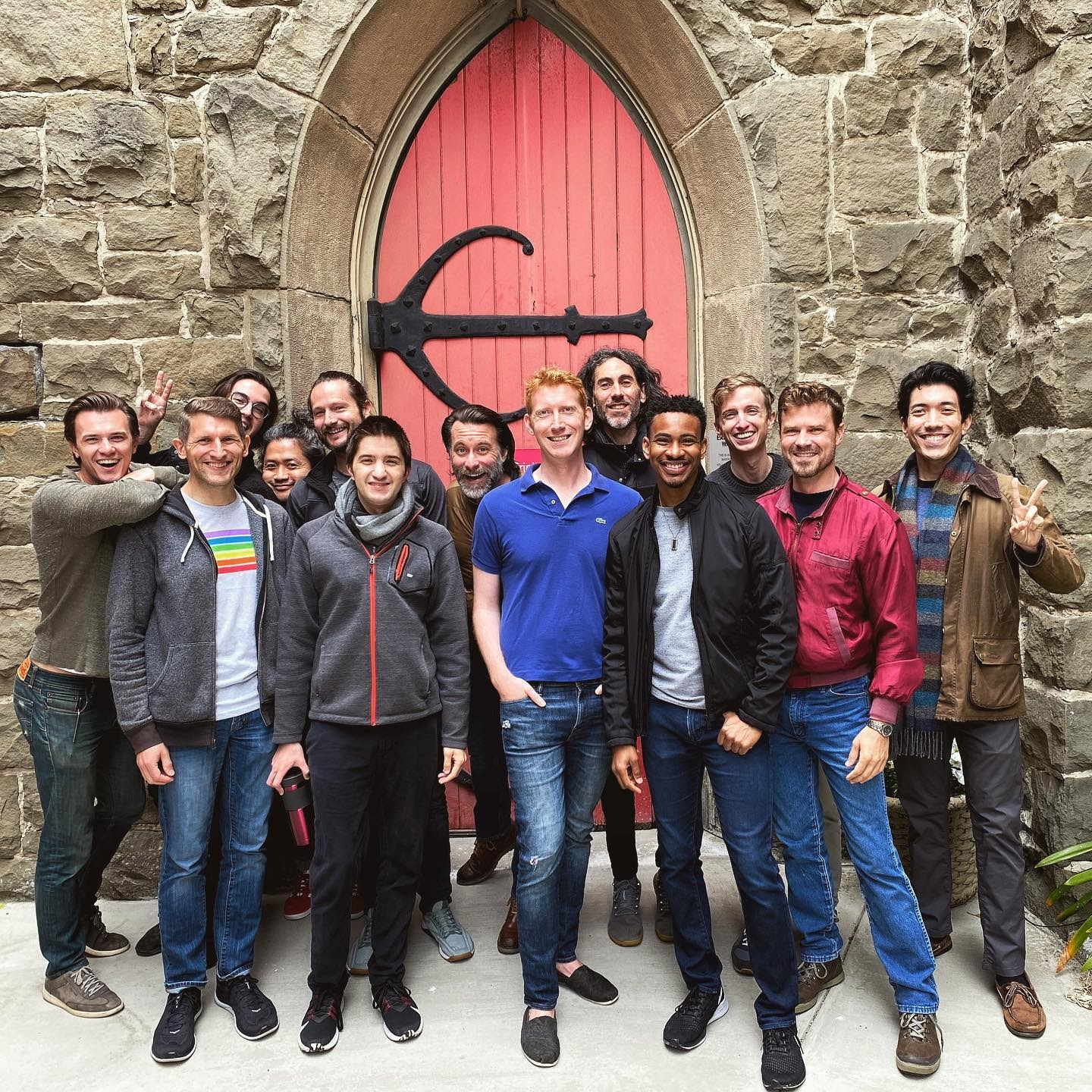
San Francisco’s celebrated 12-voice male choir stops in Akron tonight on their first tour since the pandemic shut singing down for over a year. Read about how the ensemble coped with the situation in this interview with music director Tim Keeler.
Tuesday Musical, the sponsor for the 7:30 pm performance in E.J. Thomas Hall, has emailed these details to ticket holders and prospective attendees:
Seats in the orchestra level start at $19. For the best selection, order on-line now. If seats are still available, tickets will also be sold at the door.
After the concert, we’ll celebrate with a festive drinks-&-desserts reception for the entire audience!
Complimentary parking in the EJ Parking Deck and adjacent surface lots.
Are you a student? Receive a free ticket! Simply bring your student ID to the EJ Ticket Office that evening.
EJ Ticket Office opens at 6:30 p.m. Doors open at 7 p.m. Program begins at 7:30 p.m.
The singers of Chanticleer ask that everyone wear masks, regardless of vaccination status. Complimentary disposable masks will be available at the door.
TODAY’S ALMANAC:
This is the week when the Cleveland International Piano Competition moves into a new phase with the arrival of eight pianists who will enter the Semifinal Round two-by-two, live and in person beginning on Thursday at the Cleveland Museum of Art. We’ll concentrate today on keyboard composers and performers who mark anniversaries on July 27.
French composer and harpsichordist Elisabeth Jacquet de La Guerre entered the Elysian Fields in Paris on this date in 1729. Born into a prominent family of musicians and artisans, she was educated by her father on an equal basis with her brothers, and became an early favorite of Louis XIV at Versailles. She composed in all contemporary forms, although not all of her works have survived.
Click here to watch Cleveland’s Burning River Baroque perform her cantata, Judith. Soprano Malina Rauschenfels and harpsichordist Paula Maust are joined by Sarah Lynn, baroque flute, and Glenna Curren, baroque cello, for a concert in Foxburg, PA in March, 2019.
For a sampling of her keyboard music, listen here to Elisabetta Guglielmin’s performances of several suites for the clavecin. Follow along with the score to see how one harpsichordist realizes the notation of the prélude non-mensuré, a popular way of encouraging a quasi-improvisatory performance.
Another death to report on July 27: Italian composer Antonio Vivaldi in Vienna. An odd feature of his legacy is that the “Red Priest” who authored more than 500 concertos wrote none that featured keyboard instruments. That hasn’t stopped others from arranging various concertos for performance by keyboardists, beginning with Johann Gottfried Walther, who repurposed several for organ solo. Click here to watch Bálint Karosi play Vivaldi’s RV 275 concerto in Walther’s arrangement (oddly attributed to a ‘Sigr. Meck’) on the organ of the Kreuzkirche in Suhl, Thuringia (Germany).
And the harpsichord duet of Tom Pixton and Edward Parmentier have recorded several Vivaldi concerto arrangements for Titanic Records. Listen here to their performances on instruments built by Pixton and Keith Hill.
Moving on to more recent, piano virtuoso-influenced times, July 27 marks the birth of Russian pianist Vladimir de Pachman in Odessa in 1848, and the death of Italian-German composer and pianist Ferruccio Busoni in Berlin in 1924 at the age of 58.
Pachman specialized in playing the works of Chopin, as well as for a long list of performing eccentricities. He was an early adopter of new recording technologies that emerged in the first decade of the 20th century. This RCA Victor Red Seal 12-inch recording from January 17, 1911 preserves his take on Liszt’s concert paraphrase of Verdi’s Rigoletto. And in posting his 1925 rendition of the “Minute” Waltz, YouTube contributor Beckmesser2 commented, “This recorded performance is probably the best documentation of what it was like to attend a Pachmann recital during the pianist’s final years.”
Pachman’s life, career, and eccentricities are documented in exquisite detail in this spreadsheet, compiled by Nigel Nettheim, which provides an interesting rabbit hole for piano addicts to explore.
We featured Busoni in the Diary on this date in 2020. Click here to listen to his recordings of several works captured in London in 1922. Known especially for his Romantic piano elaborations of works by Bach (click here to watch Antonio Pompa-Baldi play his arrangement of the great Chaconne in Mixon Hall at CIM in October of 2020), Busoni crowned his keyboard works with his immense Piano Concerto. Pianist Garrick Ohsson recorded it in the late 1980s with Christoph von Dohnányi, The Cleveland Orchestra and the men of the Orchestra Chorus. Thirty years later, Ohlsson revisited the piece with the Orchestra in February, 2019, and prefaced the performance with some of his thoughts.
by Mike Telin

Sanchez-Werner concluded his set with Chopin’s Etude in a, Op. 25, No. 11 (“Winter Wind”) Although his tempo erred on the safe side, his playing was technically precise. His sound was powerful but never overpowered the music. [Read more…]
by Stephanie Manning

In light of recent attacks against the Asian American community, prominent Asian classical musicians are speaking out in two recent articles in the New York Times.
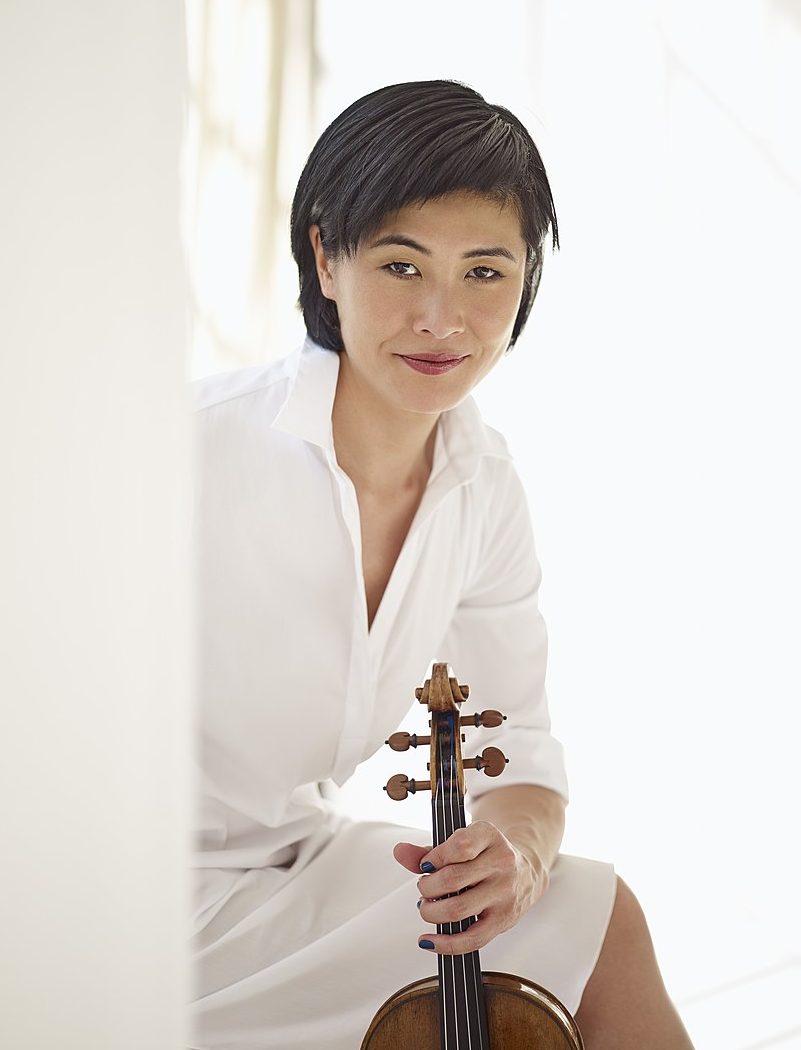
In “A Violinist on How to Empower Asian Musicians,” Jennifer Koh (pictured) calls on the classical music industry to do better when it comes to artists of Asian descent. The renowned soloist, who graduated from Oberlin, details her experience as an Asian American woman in classical music, writing: “It is highly misleading to say that Asian Americans are overrepresented in what remains an overwhelmingly white and male field.” Read the full article here.
And in “Asian Composers Reflect on Careers in Western Classical Music,” Tan Dun, Du Yun, Bright Sheng, Unsuk Chin, and Huang Ruo discuss both their shared experiences and individual stories from their time in the Western classical world. Two of the five artists, Du Yun and Huang Ruo, are also graduates of Oberlin Conservatory. Read these powerful interviews here.
TODAY’S ALMANAC:
On this day in 1882, Richard Wagner‘s opera Parsifal premiered in Bayreuth, Germany. The German composer’s last completed opera, Parsifal (or Parzifal, as it was originally spelled) is based on an epic poem from the 13th century that tells the story of the knight Parzifal and his search for the Holy Grail.
This was the first work Wagner composed specifically for the acoustic of the Bayreuth Festspielhaus, which had opened seven years earlier. This year, in partnership with Deutsche Grammophon, the Bayreuth Festival will stream its 2016 performance of Parsifal online for free on August 10. Learn more here.

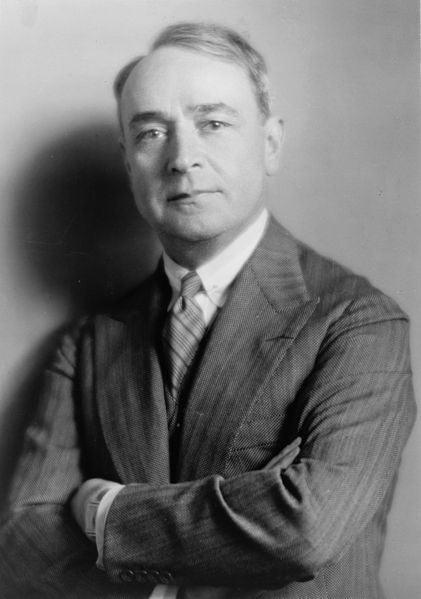
These recordings were made during the Russian-American conductor’s final years with the Orchestra, which he led from 1924 to 1949. His tenure was an exciting time of change, as the conductor commissioned works from major composers such as Stravinsky (Symphony of Psalms), Hindemith, Barber, and Copland.
Before his conducting career, however, Koussevitzky was a double-bassist who performed as principal bass at the Bolshoi Theatre Orchestra. He also gave solo recitals around Europe, and his repertoire included his own double bass concerto, composed in 1902. Listen to a performance by Luis Cabrera Martin and the Netherlands Philharmonic here.

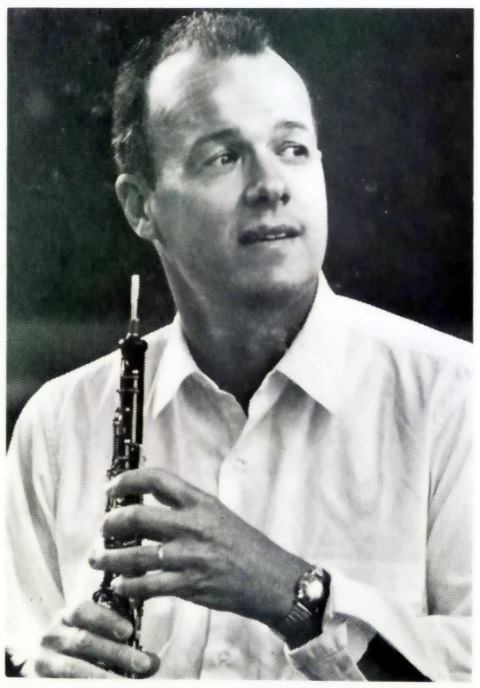
While in Germany, de Lancie repeatedly visited Richard Strauss in the town of Garmisch-Partenkirchen, and suggested the composer write an oboe concerto. Strauss initially refused, but published one soon after, which is widely regarded as one of the best solo oboe works of the 20th century. The autograph of the score bears the inscription “Oboe Concerto – 1945 – suggested by an American soldier.” Read more about that story here.
After returning to America, de Lancie joined Philadelphia as second oboe and succeeded Marcel Tabuteau — his former teacher — as principal when Tabuteau retired. He remained in that position for 23 years, from 1954 to 1977, before passing off the seat to his student Richard Woodhams — extending the Tabuteau oboe lineage into the next generation.
by Cait Winston

The third movement consists of highly complicated textures with many quickly moving parts, all mastered by Ye, who brought out nuances with consistently effortless technique and poignant drama. [Read more…]
by Stephanie Manning

by Cait Winston

Liu’s playing never lost its composure through the highly dramatic material of Beethoven’s Sonata No. 32 in c — he maintained a consistent tempo through the swift passages, playing them with excitement and grace. Liu demonstrated impressive virtuosity during the extended trills, creating a light, delicate sound — a tremendous technical feat. [Read more…]
by Daniel Hathaway

Saturday and Sunday provide piano fans with their last opportunity to get to know the 26 contestants in the Cleveland International Piano Competition — after Sunday’s Round 2, Session 6 performances, the field will be whittled down to eight hopefuls as the competition moves into the Semifinal, Chamber Music, and Concerto Rounds. The early round sessions have been pre-recorded from locations around the globe, and you can tune in on Saturday and Sunday at 2:00 pm to listen in for free (or catch them later, on-demand).
Alas for procrastinators, Saturday’s Ohio Light Opera performance of Trial by Jury and Stars in the Classics’ garden concert are both sold out. But on Sunday evening at 7:00 pm, guest conductor Rafael Payare and violinist Stefan Jackiw will appear with The Cleveland Orchestra at Blossom in music by Prokofiev and Dvořák, and lawn and pavilion tickets are available here. (Photo by Roger Mastroianni from last weekend, courtesy of The Cleveland Orchestra.)
INTERESTING INTERVIEW:
Musical America editor Susan Elliott holds a one-on-one conversation with Harold Brown, who took on the position of chief diversity and inclusion officer for the Cincinnati Symphony last March with the mandate “to effect change and broaden the institution’s personnel profile to better reflect its diverse community.” Watch here.
THIS WEEKEND’S ALMANAC:
We’ll start by mentioning the birth of Swiss-American composer Ernest Bloch in Geneva on July 24, 1880, who served as the first president of the Cleveland Institute of Music from 1920-1925.
Then we’ll move on to celebrate the anniversaries of two of the great vocalists of the 20th century: soprano Adele Addison, born in New York on July 24, 1925, and contralto Maureen Forrester, born (as Kathleen Stewart) in Montréal on July 25, 1930.
Although trained in opera, Addison appeared most frequently in the 1950s and 60s in orchestral concerts and recitals. Listen here to her performance in the solo quartet of the finale of Beethoven’s Ninth Symphony with The Cleveland Orchestra under George Szell in April of 1961 (bonus: Richard Lewis is the tenor).
Addison’s supple voice was well suited to Baroque music, and she became a favorite of Leonard Bernstein. Listen here to Handel’s “Come unto him” from Messiah with Bernstein and the New York Philharmonic in 1956.
Among her other credits, Addison’s voice was dubbed in for Dorothy Dandridges’ in the 1959 film version of Porgy and Bess, and she was soprano soloist for the world premiere of Poulenc’s Gloria with Charles Munch and the Boston Symphony in 1961. Listen to “Bess, you is my woman” here (the voice of Robert McFerrin — father of Bobby — is also dubbed in, this time for Sidney Poitier).
As a young singer in Canada, Forrester made strong impressions on CBC talent shows, and received her big break in New York when Bruno Walter chose her as one of the soloists for Mahler’s Second Symphony. She also sang in the conductor’s farewell performances with the New York Philharmonic in 1957.
A true contralto, Forrester’s vocal gifts come to the fore in this 1957 performance of Brahms’ Alto Rhapsody with the Orchestra de Radio-Canada, led by Igor Markevich. But her singing could also be light and lively, as in this duet from J.S. Bach’s Cantata BWV 78 with soprano Lois Marshall and pianist Yehudi Wyner from a 1974 recital at Mt. Orford, Québec. “Wir eilen mit Schwachen doch emsigen Schritten” translates as “We run with eager but faltering footsteps,” an image that the composer captures brilliantly.
by Daniel Hathaway
TODAY’S EVENTS:

Online, tonight at 7:00 pm, the Cleveland International Piano Competition continues with Round 2, Session 4, featuring pre-recorded, 30-minute programs by Roman Lopatynskyi (27, Ukraine), Martín García García (24, Spain), Svetlana Andreeva (32, Russia), and Byeol Kim (31, South Korea).
Both live and online, the Kent Blossom Music Festival faculty recitals continue with the Miami String Quartet, who perform at 7:30 pm in Ludwig Recital Hall at KSU. Violinists Benny Kim and Cathy Meng Robinson, violist Scott Lee, and cellist Keith Robinson will play Haydn’s Quartet No. 30 in E-flat (”Joke”), Erwin Schulhoff’s Quartet No. 2 (1925) & Dvořák’s Quartet No. 10 in E-flat.
Details in our Concert Listings.
NEWS BRIEFS:
Oberlin Jazz Percussion Professor Billy Hart has been named a Jazz Master by the National Endowment for the Arts. Read the Oberlin news release here.
And the Oberlin-Como Piano Festival, a five-day virtual celebration of the Conservatory’s partnership with Italy’s Accademia Internazionale Del Pianoforte Lago Di Como, recently offered online, is now available for on-demand viewing.
The sessions include interviews and master classes with Yefim Bronfman (“Piano Concerti of Beethoven and Brahms”), William Grant Naboré (“The Marvel of the Baroque on the Pianoforte”), Dang Thai Son (“Conversations with Chopin”), Robert Spano (“Performing Piano Concerti: A Conductor’s View”), and Oberlin-Como Director Stanislav Ioudenitch (“The Golden Age of Piano Virtuosity: Legacy of Lake Como”). Watch here.
TODAY’S ALMANAC:
Italian composer and harpsichordist Domenico Scarlatti died on this date in 1757, perhaps from exhaustion after composing 555 sonatas which have become favorite recital openers for many modern pianists, and technically demanding exercises for keyboardists in general. Thanks to the Petrucci Library, all of them are available here in eleven volumes edited by Kenneth Gilbert. Keyboardists: hone your sight reading by taking on one sonata every day, a challenge that will either thrill or frustrate you for the next year and a half!
Johann Sebastian Bach left us some 200 church cantatas, and speaking of challenges, British composer and conductor William Gillies Whitaker, born on this date in 1876, set out to perform all of them. He succeeded, presenting a third of them in Newcastle and the rest in Glasgow with his Bach Choir.
A number of conductors have recorded all the sacred cantatas, including Karl Richter, Masaaki Suzuki, John Eliot Gardiner, Helmuth Rilling, Nikolaus Harnoncourt with Gustav Leonhardt, and Ton Koopman. I’ve had friends who made it a habit to listen to one cantata every Sunday morning, an inspiring regimen that could take four years to complete. It would be interesting to listen to a single conductor’s interpretations, or to mix and match them. Time to get started!
July 23 marks the birthdates of a number of American composers who may not be familiar household names: Ben Weber (born in 1916 in St. Louis), Jerome Rosen (1921 in Boston), David Noon (1946 in Johnstown, PA), John Carbon (1951 in Chicago), and Steven L. Rosenhaus (1952 in Brooklyn, NY).
Another challenge: get to know the works of these sometimes prolific figures, using the following as points of departure. For Weber, his Piano Concerto (performed by William Masselos with the NY Philharmonic and Leonard Bernstein). For Rosen, his String Quartet No. 1. For Noon, his Saxophone Quartet No. 1. For Carbon, his Fantasy-Nocturne for piano and orchestra. And for Rosenhaus, a “Meet the Composer” interview on Zoom, and his chamber work for soprano, string quartet and piano, Thirteen Ways of Looking at a Pigeon.
by Mike Telin
by Mike Telin
TODAY’S EVENTS:

Also at 7:00 pm is Round 2, session 3 of Cleveland International Piano Competition. Contestants perform their Second Round solo recitals of 30 minutes from around the world. Ziyu Liu (22, China), Daria Parkhomenko (29, Russia), Rafael Skorka (32, Israel), and Bowen Li (24, China). Click here at start time. Free.
At 8:30 pm it’s Ohio Light Opera’s Rare and Well Done, a concert comprising thirteen songs connected with historical personages, composed by such operetta luminaries as Jacques Offenbach, Franz von Suppé, Arthur Sullivan, and George Gershwin. Characters range from queens to sculptors to actors to composers. Live streamed from Wooster’s Freedlander Theatre, no audience present. $20. Buy tickets here.
IN THE NEWS:
The Violin Channel wants to know what you’re thinking. Click here to access the article and online survey.
INTERESTING READS:
There are two interesting New York Times articles: in one, Javier C. Hernández examines the question “Asians Are Represented in Classical Music. But Are They Seen?” Click here to access the article. The other is a conversation with conductor Oksana Lyniv, who, after 145 years, will become the first woman to lead a production at the Bayreuth Festival. Click here to read.
TODAY’S ALMANAC:

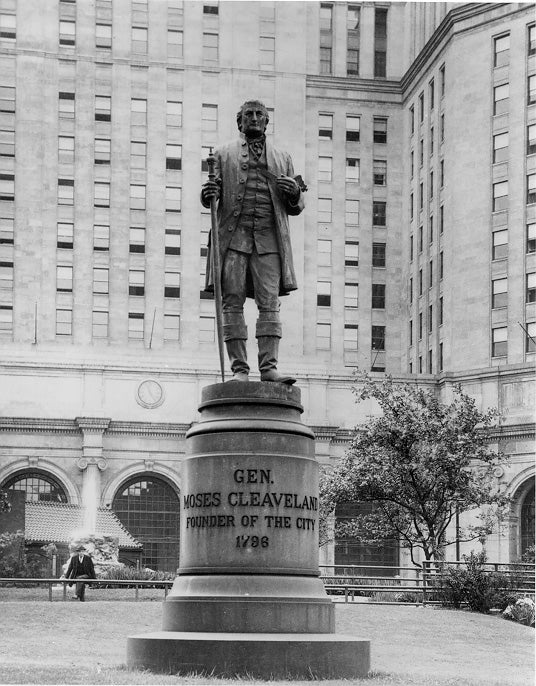
Culture took even longer to arrive on the banks of the Cuyahoga River, a history laid out by Cleveland State University professor J. Heywood Alexander in his article in The Encyclopedia of Cleveland History. Jazz began to flourish in the early 20th century (read a parallel article by Joe Mossbrook and Chris Columbi here.)
Fast forward to 2020 to take a tour of the city with Cleveland Orchestra cellist Alan Harrell, who plays Bach in a number of different locations, and follows that up by popping up all over Northeast Ohio in a second video.
And on this date in 1933, soprano Caterina Jarboro appeared in the role of Aïda at the New York Hippodrome, the first Black female opera singer to perform in the United States. A year earlier, Jules Bledsoe made history by singing the role of Amonasro in the same opera, the first Black singer to appear in that role. His performance came in the second and last season of Stadium Opera at Cleveland Municipal Stadium, a series whose first season, sponsored by The Cleveland Press, also saw the premiere of Shirley Graham’s Tom-Tom. Alas, no recordings are available.
On this day in 1949, Alan Irwin Menken was born in Manhattan. A prolific composer and songwriter, Menken is best known for his scores and songs for Disney films. The Little Mermaid (1989), Beauty and the Beast (1991), Aladdin (1992), and Pocahontas (1995) have each earned him Academy Awards. A personal favorite is his score for Little Shop of Horrors. Click here to listen to “Dentist!” from the 2003 Broadway Revival Cast Recording.