


by Daniel Hathaway
 HAPPENING TODAY:
If the weather gods are smiling, at 6:30 pm today, Idle Twittering: a flock of flutes, will perform outdoors at the Streeter Arboretum in Wooster. George Pope, Jane Berkner, Kyra Kester, and Linda White, will bring along a batterie of flutes of all shapes and sizes for an event sponsored by Ohio Regional Music Arts and Cultural Outreach (ORMACO). It’s free, but registration is recommended. There are rain plans in case the gods are being uncooperative.
And the Church of the Western Reserve will present a free outdoor concert by the a cappella group Zero to Sixty tonight at 7. Details in our Concert Listings.
Live online at 7 pm, the weeklong Bard Music Festival continues with “Nadia Boulanger & Her World VIII,” featuring music written for Parisian avant-garde salons, “especially those of Boulanger’s colorful friend and patron, the sewing machine heiress Winnaretta Singer, Princesse Edmond de Polignac.” Leon Botstein conducts. Details and tickets here.
TODAY’S ALMANAC:
On this date in 1655, German instrument maker Johann Christoph Denner was born in Leipzig. Often credited with the invention of the clarinet — well, he did add a register key to the chalmeau, a single reed instrument with many historical antecedents — Denner’s innovations helped pave the way for the future development of one of the most versatile instruments in the woodwind family.
The clarinet achieved an important level of sophistication during Mozart’s time, as his concerto and quintet for the instrument demonstrate. They were written for Anton Stadler, the composer’s favorite clarinettist, but the concerto can hardly have had more loving treatment than it did in the hands of Franklin Cohen and his “all-star” ChamberFest Orchestra in 2015. Watch the performance here.
A more recent work that Cohen introduced to the ChamberFest audience just this summer is Carbarkapa Maljokovic’s Sonata for Four Clarinets. Click here to watch the performance by Cohen, Benjamin Chen, Amitai Vardi, and Hugh Shihao Zhu on June 11 at the Grove Amphitheater in Mayfield Village.
And since the instrument comes in all sizes from the shrill, E-flat clarinet to the subterranean contrabass, it has inspired various arrangements like the Orchestra Siciliana di Clarinetti-Choir’s version of Gustav Holst’s Suite in F for military band.
And on August 13, 1900, English musicologist Sir George Grove died in London at the age of 79. Trained as an engineer, Grove’s love for music got him appointed director of orchestra concerts for the Great Exhibition of 1851 at the Crystal Palace in Hyde Park, London. He continued administering a concert series there after the building had been moved to Sydenham, and crafted admirable program notes for the benefit of amateur listeners. “I wrote about the symphonies and concertos because I wished to try to make them clear to myself and to discover the secret of the things that charmed me so; and from that sprang a wish to make other amateurs see it in the same way.”
One thing led to another, and Groves was invited by the publishers Macmillan and Company to produce a musical encyclopedia. Grove’s Dictionary of Music and Musicians was eventually issued by Macmillan in alphabetical volumes over a dozen years, ending in 1889.
One of Grove’s passions was the music of Schubert, then little appreciated in England. He was instrumental in discovering the score and parts for the incidental music to Rosamunde, the 1823 play by Helmina von Chézy, during an exploratory visit to Vienna in 1867. In honor of that find, listen to a studio recording of excerpts from Rosamunde with George Szell and the Royal Concertgebouw Orchestra made in Amsterdam in December, 1957.
Grove ended his career as director of the refounded Royal College of Music. His Encyclopedia lives on — online.
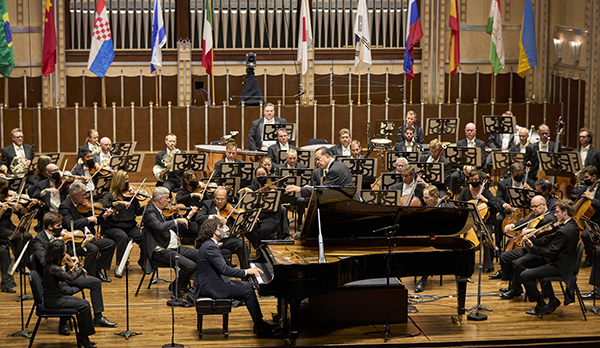 The audiences for the Concerto Round of the Cleveland International Piano Competition on August 6 and 7 — both in-person and online — were eager to hear the four finalists play, but they were also about to enjoy the extra treat of hearing The Cleveland Orchestra live, back on its home turf, and at full strength for the first time since March of 2020.
 HAPPENING TODAY:
 HAPPENING THIS WEEKEND:
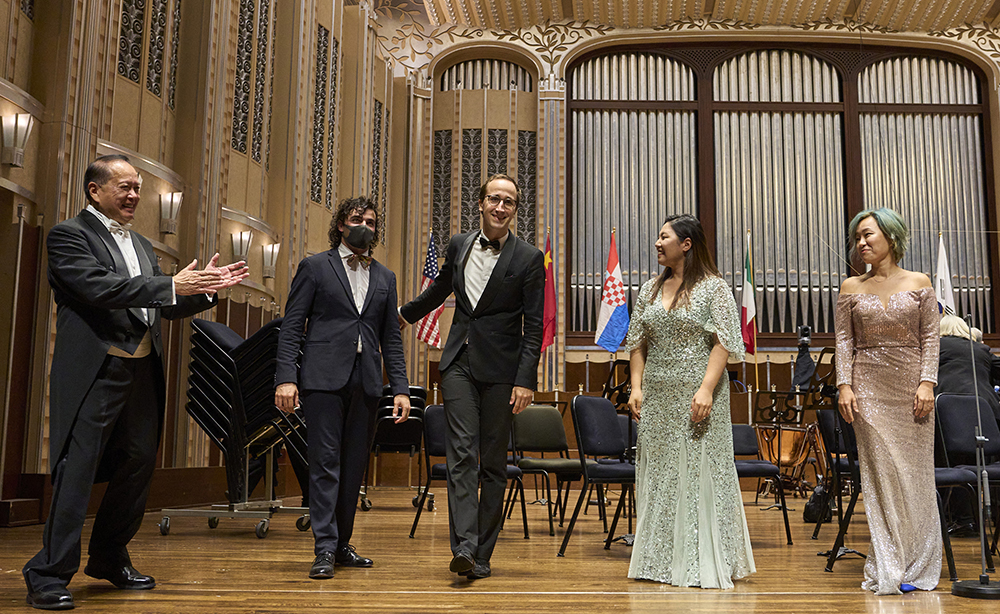
 Why put international piano competition finalists through a chamber music test between their solo and concerto rounds? Because there’s no better indicator of musicianship than one’s ability to function in a team. And since pianists tend to spend long hours all by themselves in practice rooms, collaborating in chamber music with other musicians is a healthy, socializing activity that can produce wonderful results. (Photo: Yaron Kohlberg welcomes the audience on August 3.)
 CIPC MOVES TO SEVERANCE:
 On this date in
 TODAY’S EVENTS:
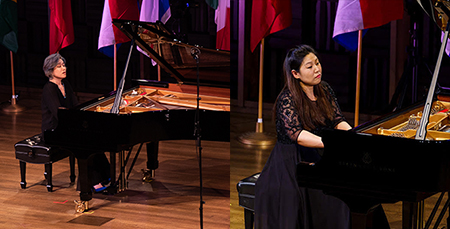
 Following the fourth session of the Semifinal Round at the Cleveland Museum of Art on Sunday afternoon, the jury named the four finalists in the 2021 Cleveland International Piano Competition. They will play chamber music with the Escher String Quartet on Tuesday and Wednesday at the Art Museum and concertos with Jahja Ling and The Cleveland Orchestra on Friday and Saturday at Severance Hall according to the following schedule:
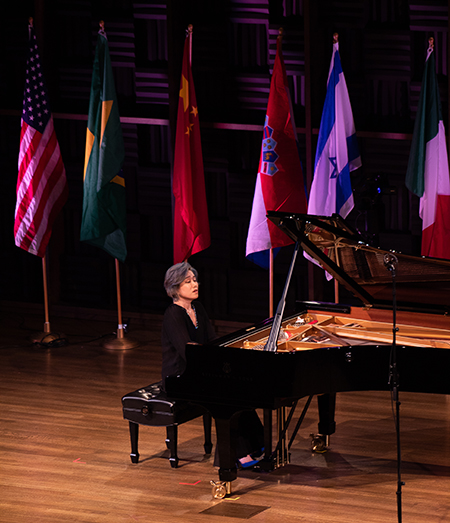 The playlists of the last two contestants in the Semifinal Round of the Cleveland International Piano Competition on Sunday afternoon at the Cleveland Museum of Art represented two markedly different approaches to programming.